Eleven places, ten Medical Points — one of them had to move and now carries a different name. The first opened in 2013; for a while seven were running at the same time, four are active today, all in Idlib province. Treatment and medicine are free, for everyone.
11 places since 20134 active todayfree for everyone
Travel Chronicle
Dr. Adnan Wahhoud documents his aid trips to Syria in detailed reports. 44 travel reports plus one special earthquake report now cover the period 2016–2026 — from the trip in November 2016 to the historic journey shortly after the fall of the regime in December 2024 and the most recent consolidation in January 2026. The reports themselves are in German.
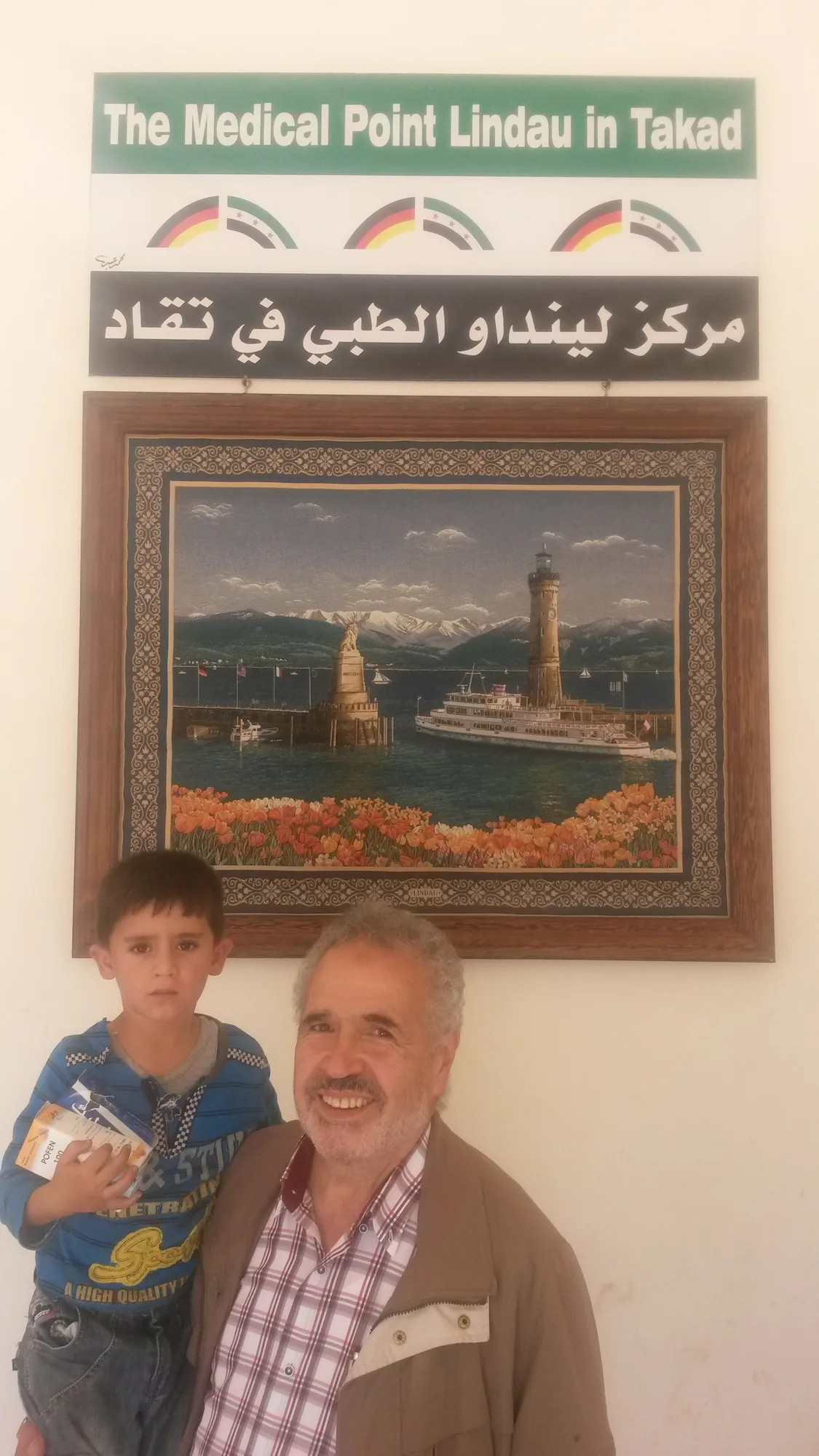
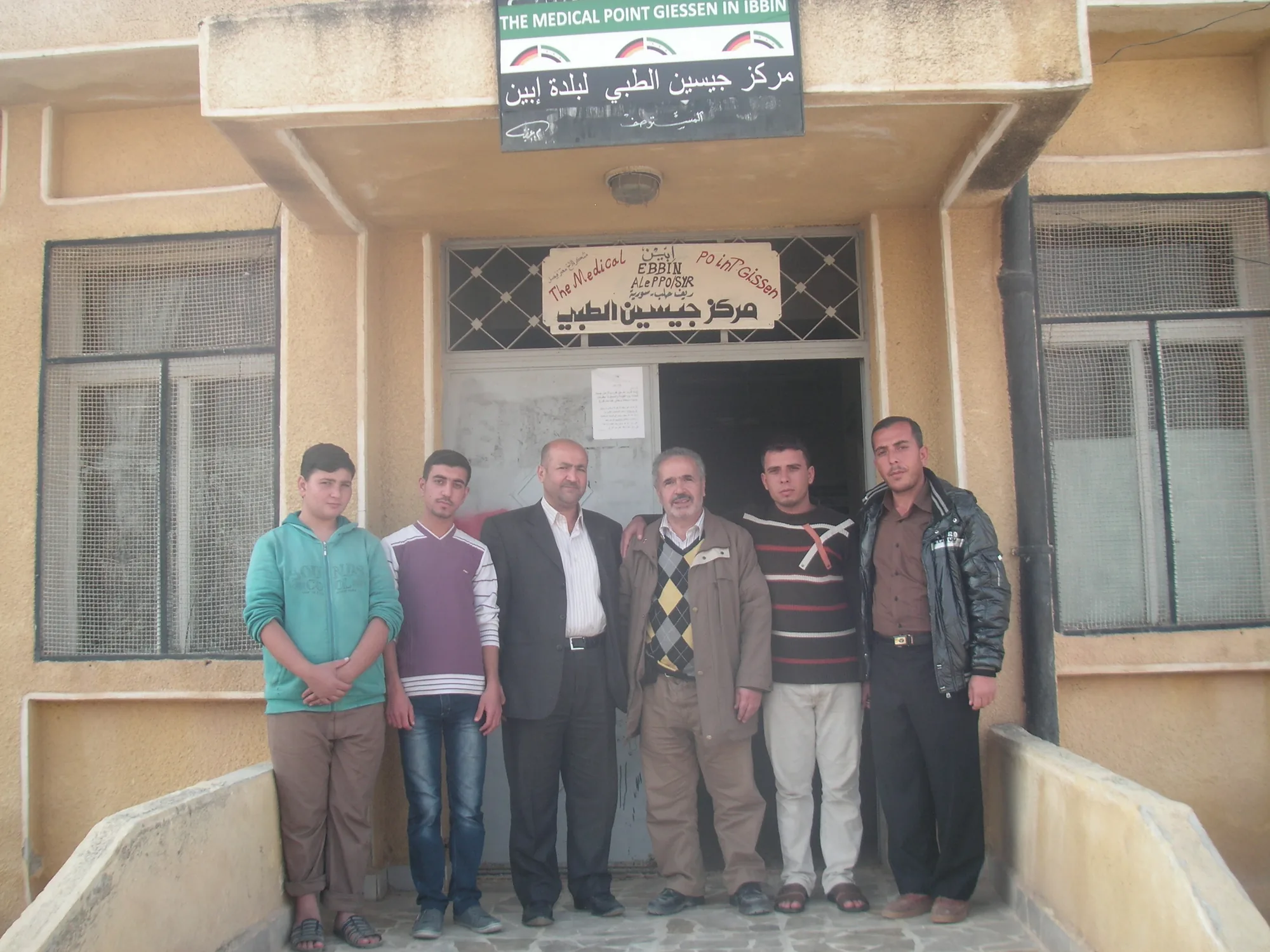
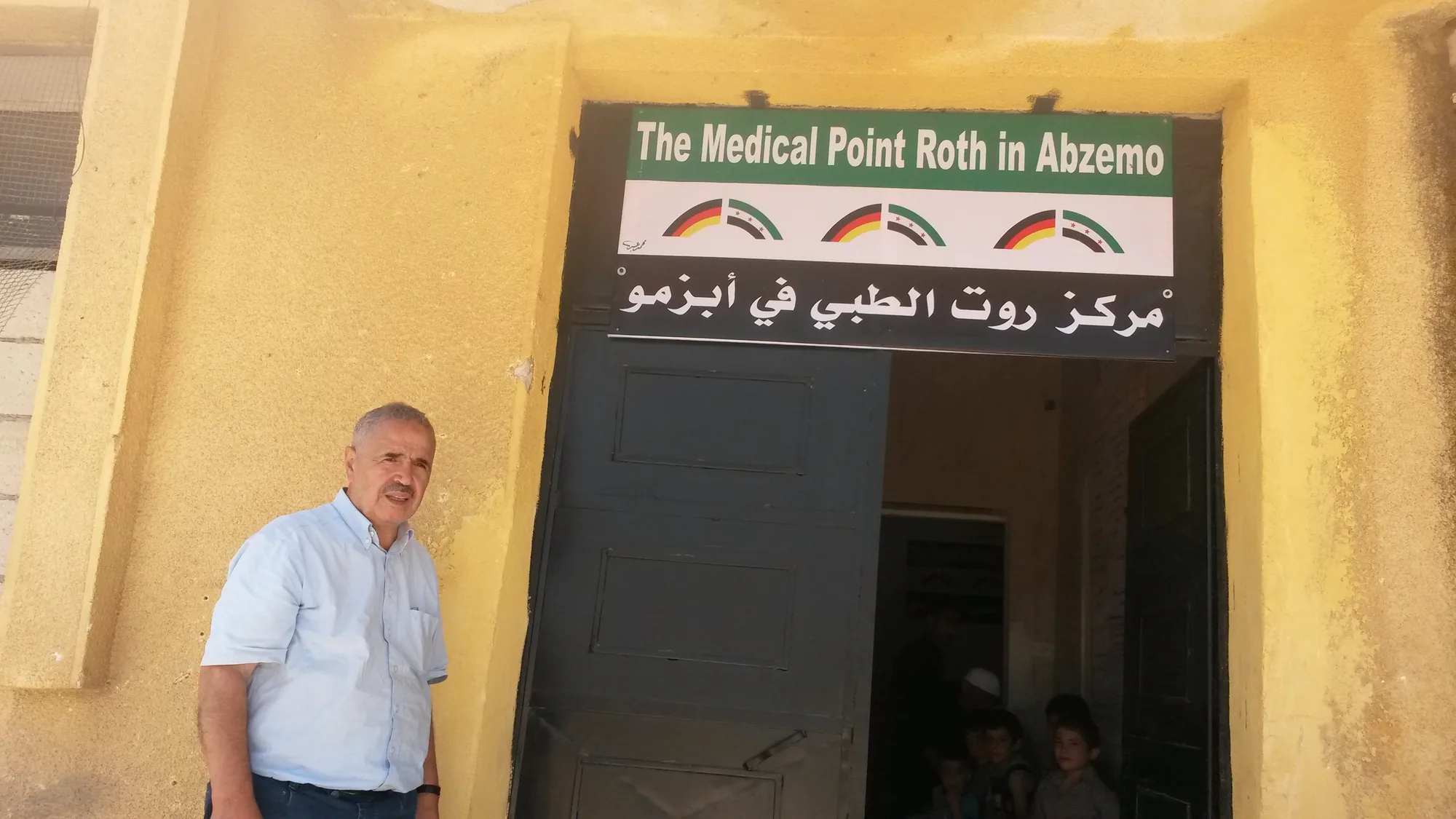
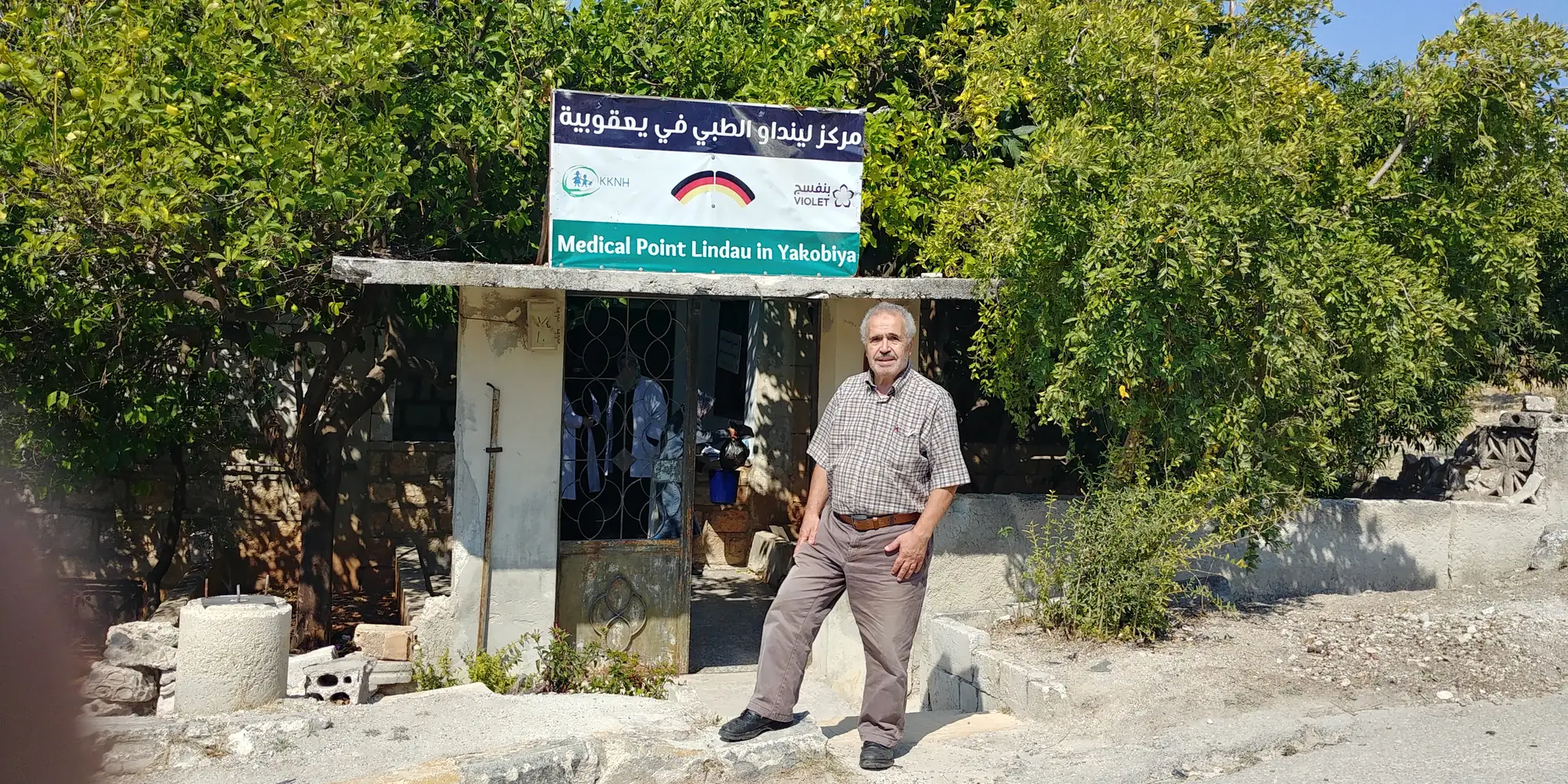
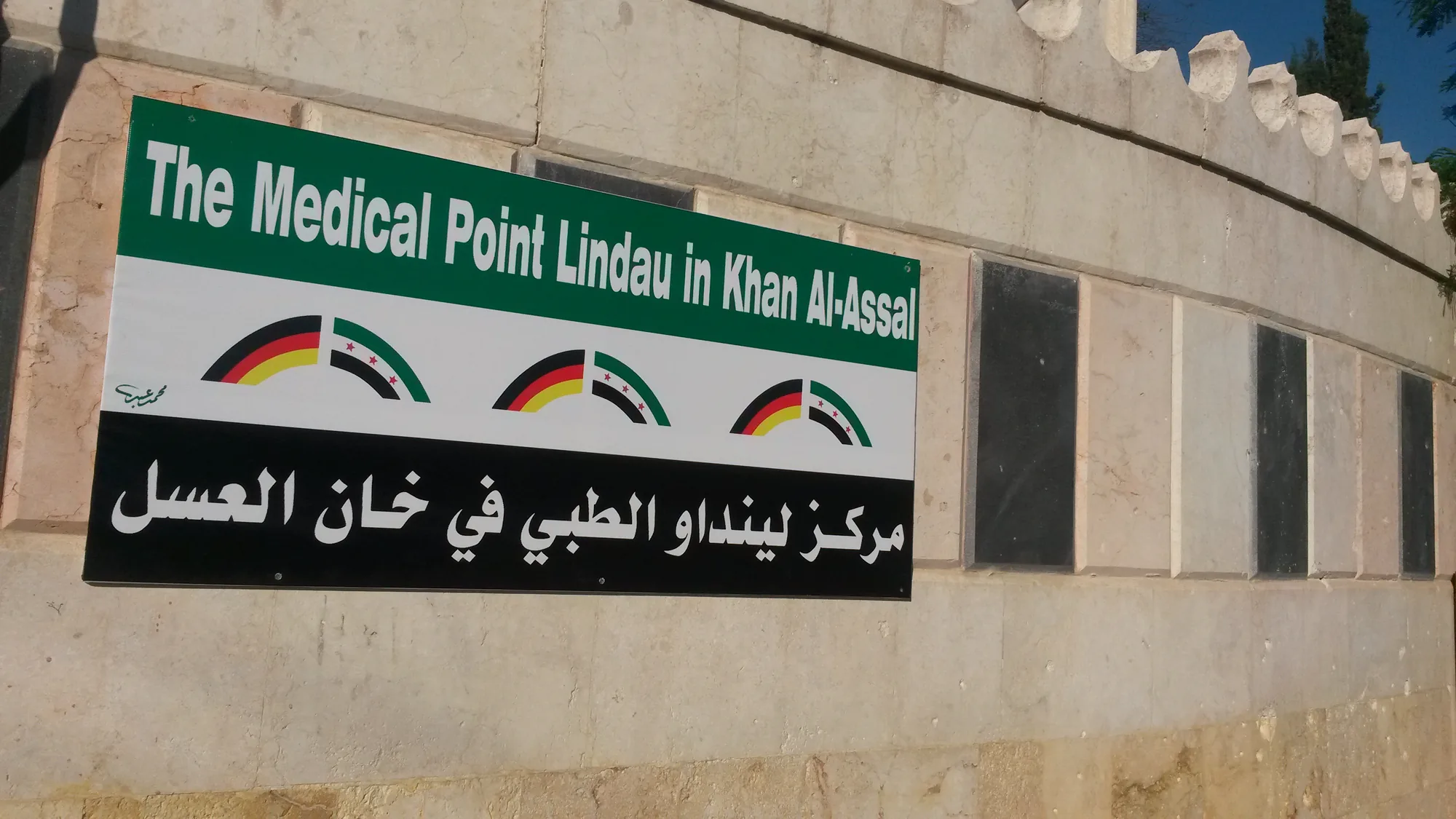
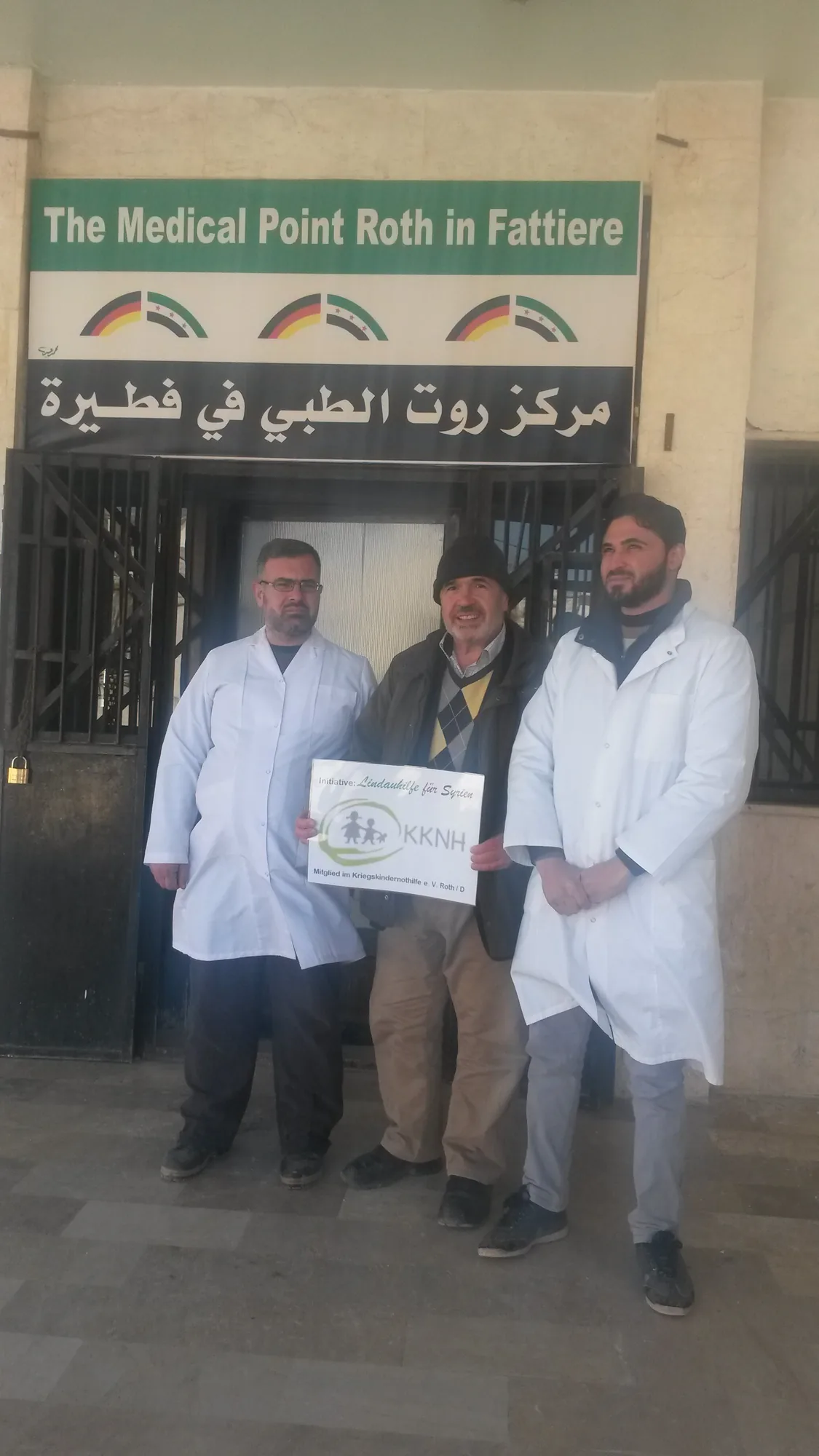
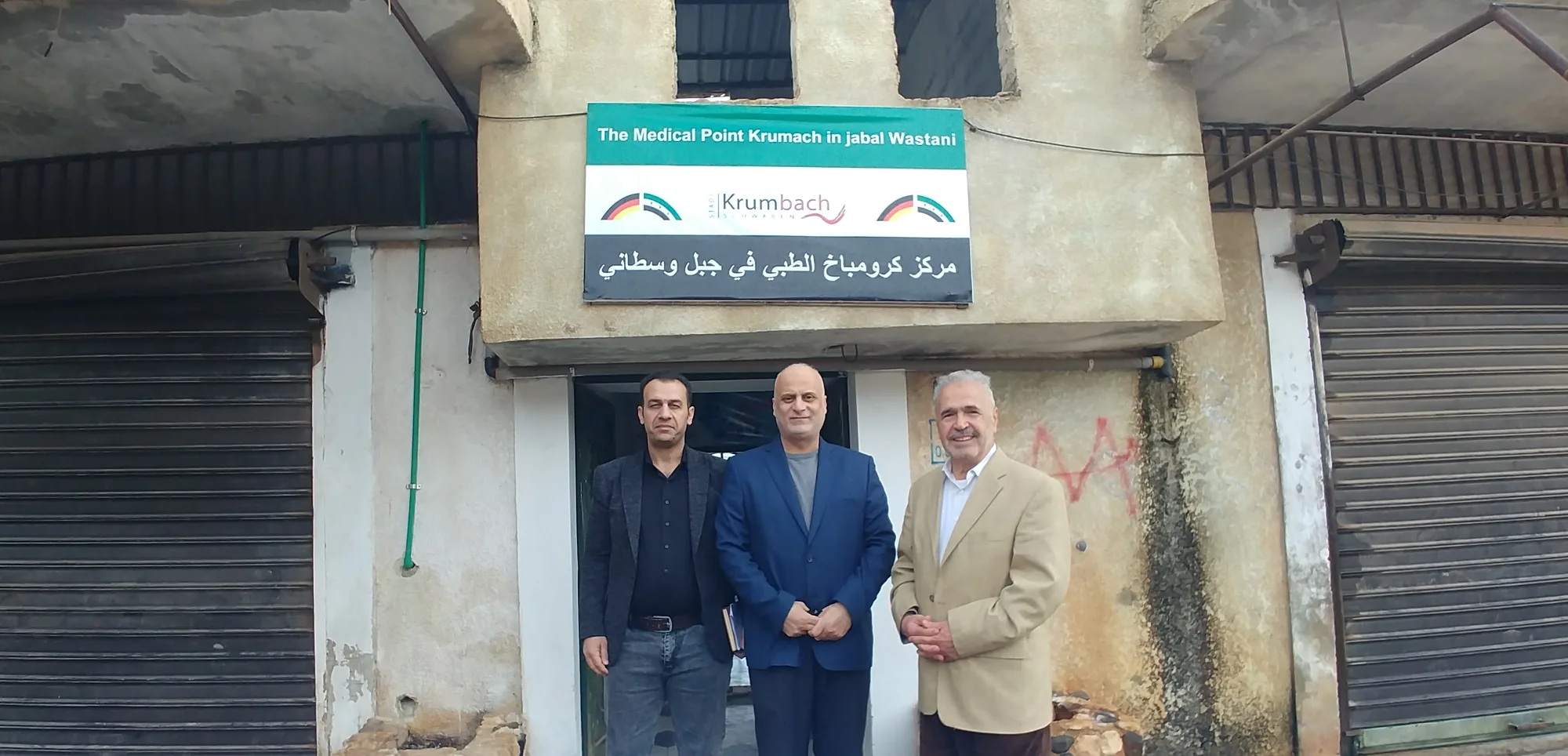
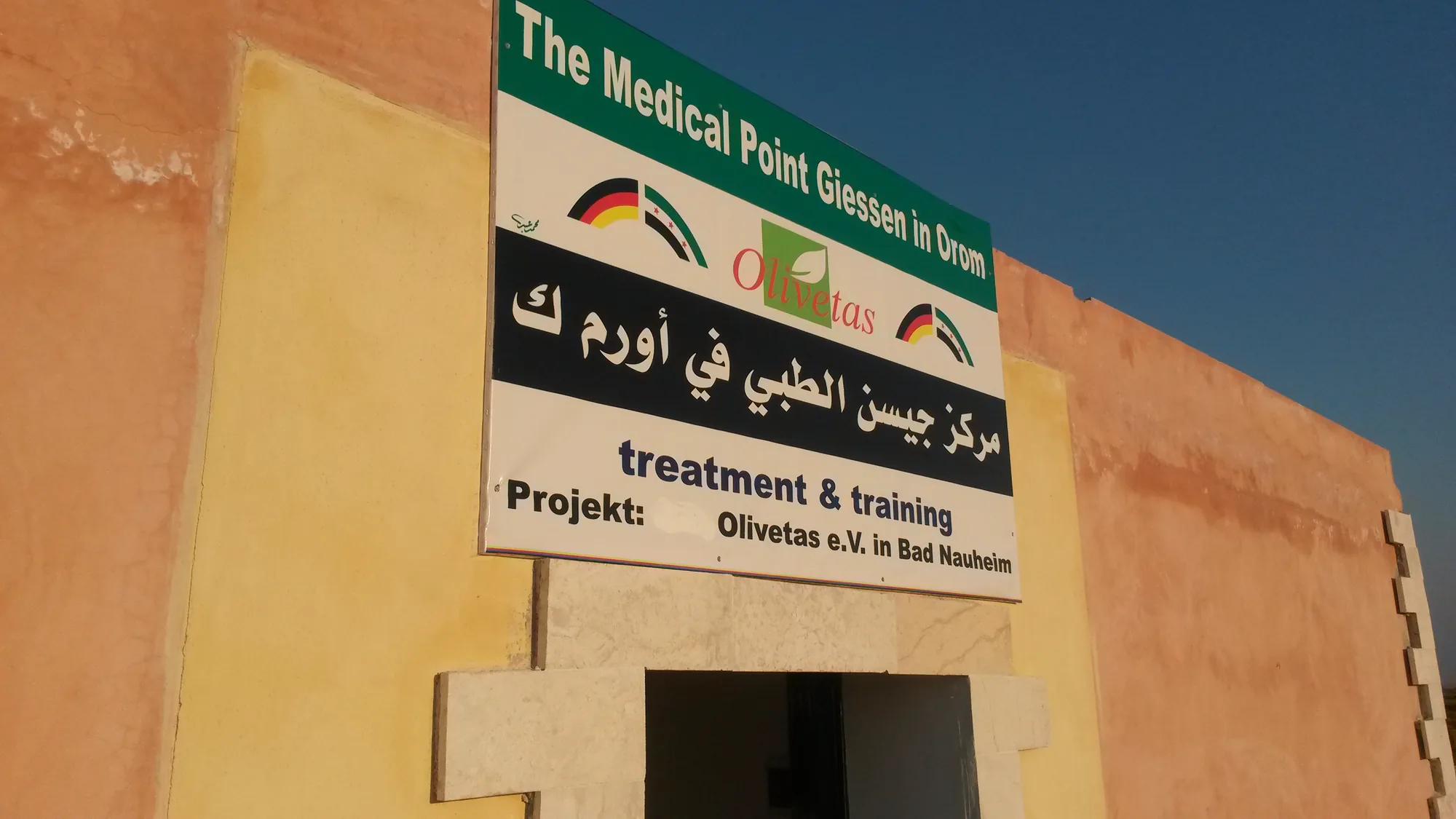
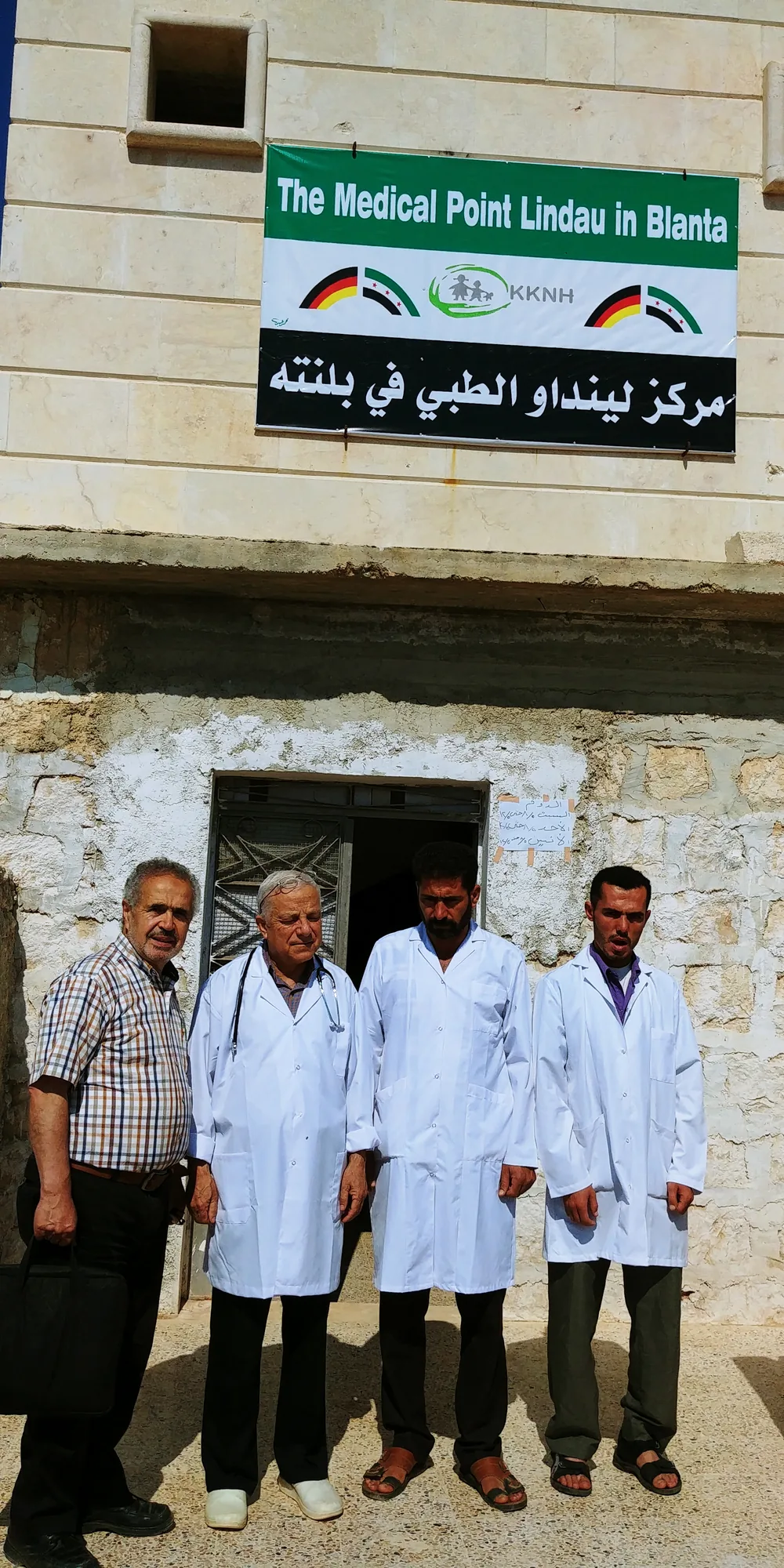
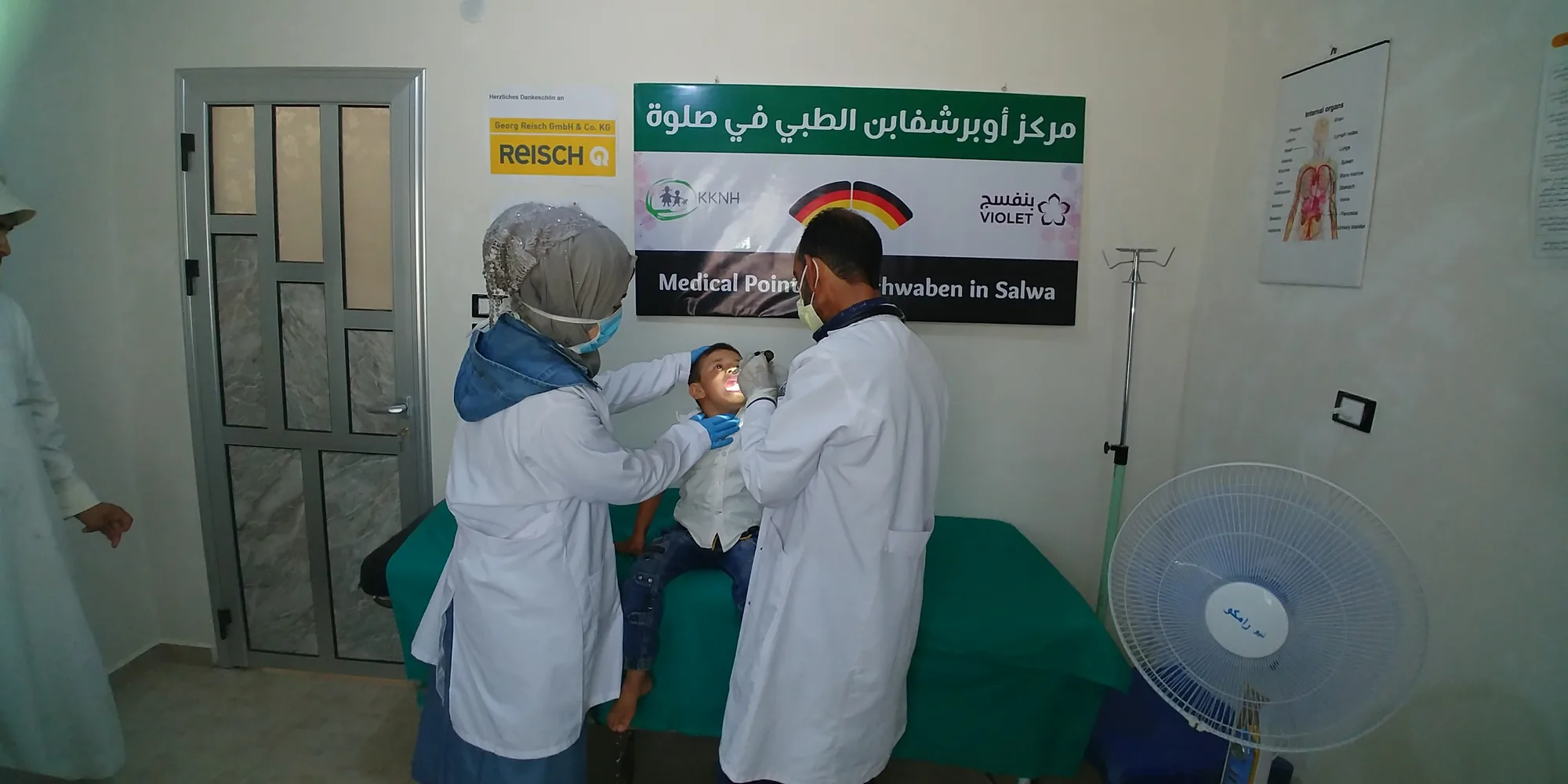
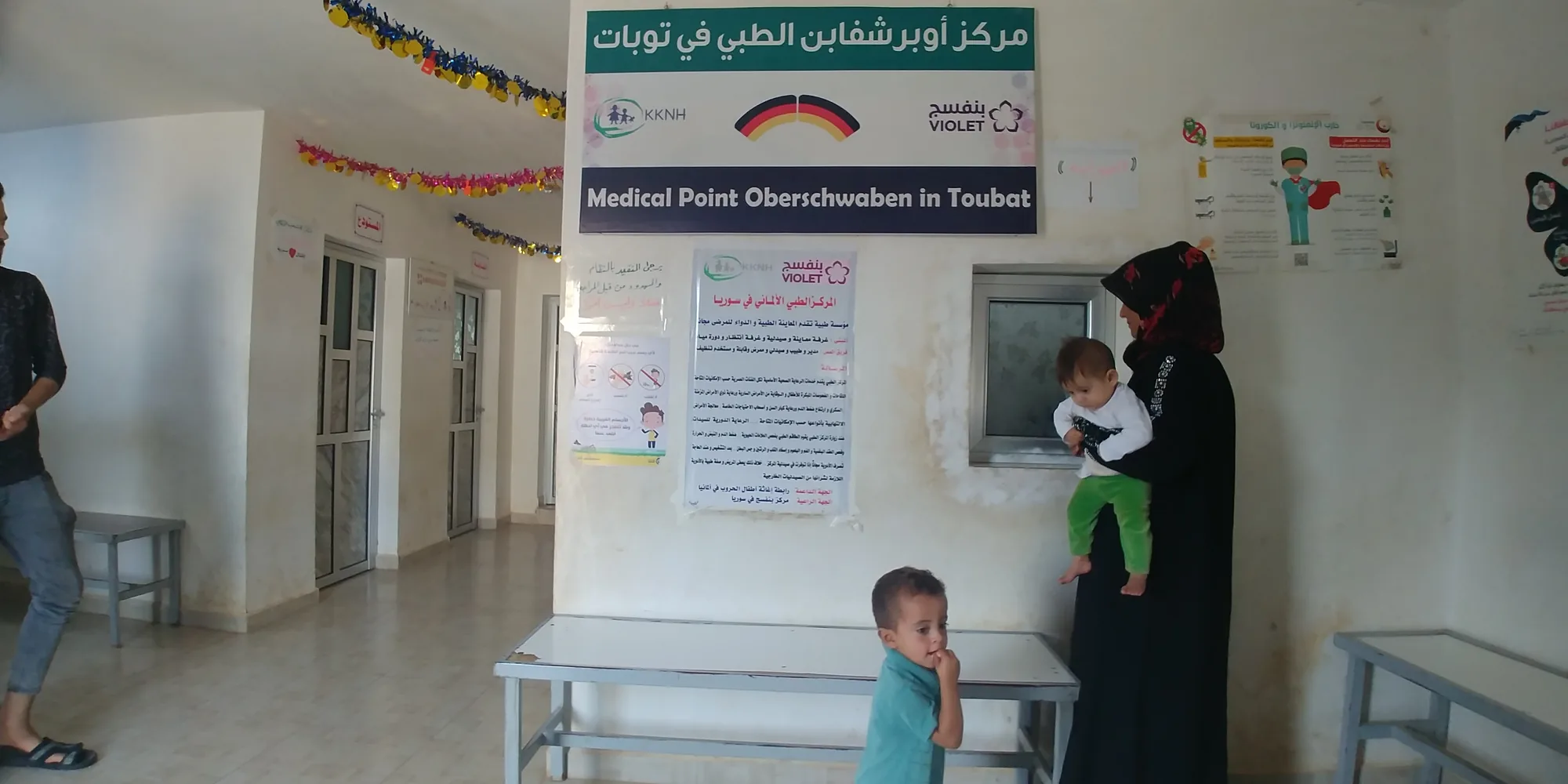
Every Medical Point carries the name of the German town the donations came from. The signs are all built the same way: the green band with the English name at the top, the arcs of the German and Syrian flags in the middle, the Arabic line at the bottom. One place has two signs — it changed its name along the way.
The Medical Point Lindau in Takad11 October 2015
THE MEDICAL POINT GIESSEN IN IBBIN24 November 2013
The Medical Point Roth in Abzemo7 August 2014
Medical Point Lindau in Yakobiya30 September 2021
The Medical Point Lindau in Khan Al-Assal13 June 2014
The Medical Point Roth in Fattiere1 February 2017
The Medical Point Krumach in jabal Wastani18 November 2024
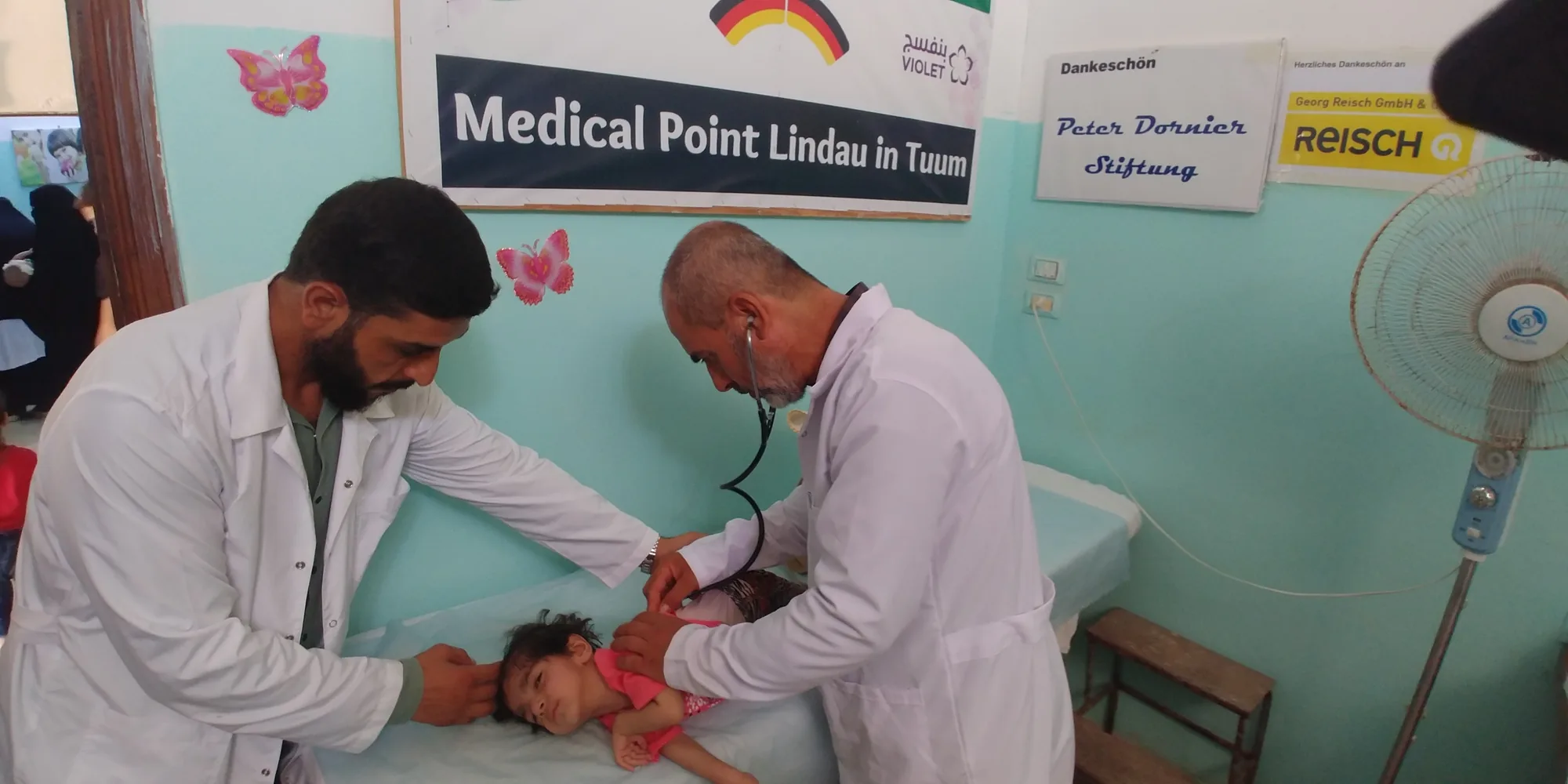
Medical Point Lindau in Tuum15 August 2024
The Medical Point Giessen in Orom29 March 2017
The Medical Point Lindau in Blanta4 June 2018
Medical Point Oberschwaben in Salwa2 July 2020
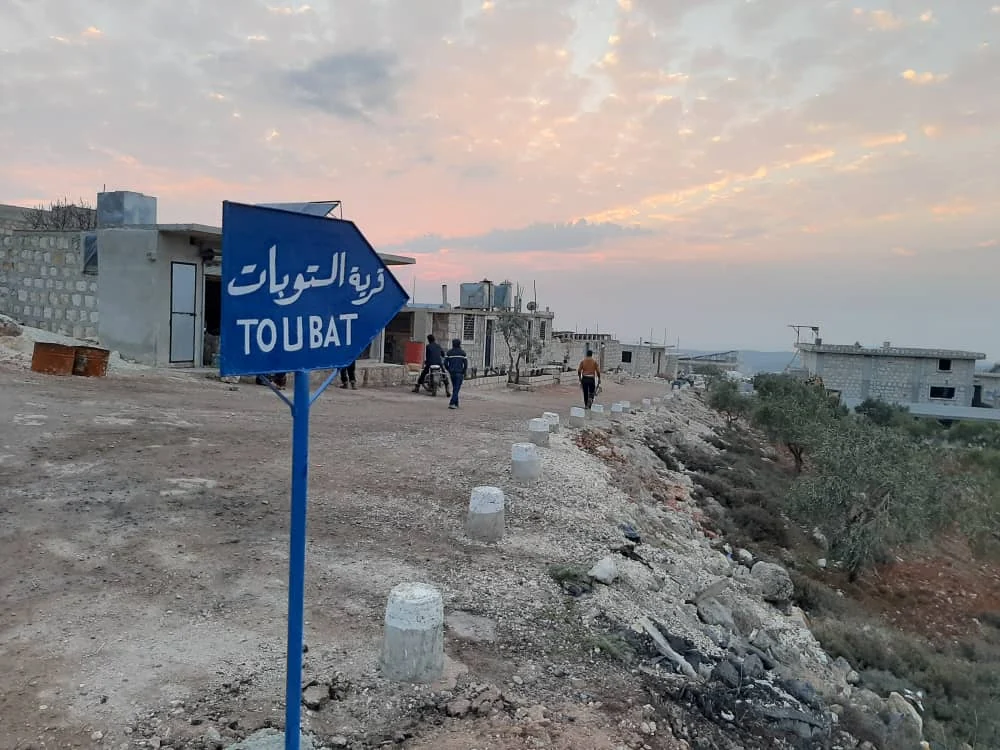
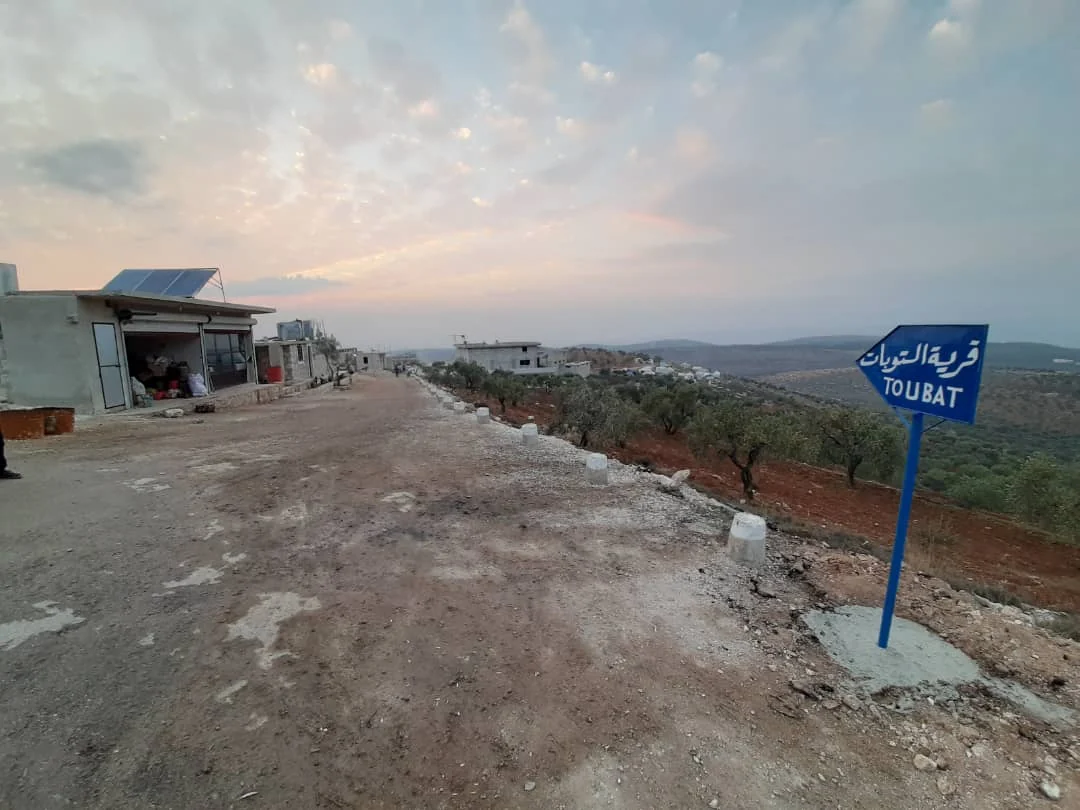
Medical Point Oberschwaben in Toubat27 September 2023
Active today
MP Lindau in Yakobiya
active
Idlib · Christian village near the Turkish border
In the Christian village of Yakobiya, between the neighbouring villages of Qnayya and Jdaida. Christians and Muslims work here in the same team and treat patients from both communities. A midwife has been part of the staff since July 2021. For its tenth anniversary in October 2024, the health minister of the self-administered areas came to visit.
since October 2014
MP Krumbach in Jabal Wastani
active
Idlib · highlands, around 1000 m altitude
At around 1000 metres altitude in the Jabal Wastani highlands, the “middle mountain”. The Medical Point serves the inhabitants of fourteen remote villages and is housed in a rented family home. It is supported by the textile company UTT in Krumbach. Since August 2024 this location also has an ultrasound scanner — all four are now equipped with one.
MP Lindau in Tuum
active
Idlib · north-east of the city of Idlib
Opened in January 2017 as the fourth clinic to carry the name Lindau, in the village of Tuum north-east of the city of Idlib. In March 2019 the Medical Point moved into larger rooms. It is the first stop when Adnan Wahhoud travels round the four locations.
since January 2017
MP Oberschwaben in Toubat
active
Northern Idlib · Toubat settlement on Salwa land
One Medical Point, one move, three names. In Blanta it went into service in March 2018 and out of service on 15 February 2020. Three and a half months later it reopened, newly built, in the settlement on Salwa land, staffed by the people from the lost points in Fattiere and Takad. Later the sign changed from the municipal name Salwa to the village name Toubat — Salwa is attested until May 2021, Toubat from May 2022; no source gives the month of the change.
BlantaMarch 2018 – February 2020In operation from March 2018, at first under the name Lindau, from January 2019 under Oberschwaben. Out of service on 15 February 2020.
SalwaJune 2020 – April 2022Newly built in the settlement: two examination rooms, pharmacy, waiting room. Staff and 85 refugee families came from Fattiere and Takad.
Toubatsince May 2022The same place — only the name on the sign changed, from the municipal name Salwa to the village name Toubat.
since March 2018
History
Six locations are no longer in operation.
MP Lindau in Takad
destroyed
Western Aleppo
The first Medical Point, opened in June 2013. For seven years it was the only place to seek medical help for Takad and the neighbouring villages. On the night of 15 February 2020 the inhabitants had to leave their village; the same day the Medical Point was bombed. Its team has been working in Salwa ever since.
June 2013 – February 2020
MP Gießen in Ibbin
closed
Western Aleppo · about 35 km west of the city
The first Medical Point supported by Gießen. On 17 November 2013 a hand-painted wooden sign still hung above the door; six days later the printed board was mounted above it — a photograph of 23 November 2013 shows both together. The Lindauhilfe orphan project also began in Ibbin: in March 2014 it supported 37 families with 109 half-orphans, by June 2014 already 54 families with 175 children. An overview map from November 2014 lists Ibbin as one of five locations. When the Medical Point closed is not documented.
from November 2013 · end not documented (last evidence: November 2014)
MP Roth in Abzemo
closed
North-west Syria
Supported by the district of Roth. Fitting out the premises took from June to August 2014 — shelving, painting, plumbing, doors, locks; the list of costs runs to sixteen items. The opening notice of 12 July 2014 names two consultation days a week, the handbill from August already four. Alongside the consultations, infant formula was handed out. For 2015 the report to the district records 11,736 patient visits, 63 per cent of them children; from January to September 2016 a further 11,409 followed. When the Medical Point closed is not documented.
from July 2014 · end not documented (last evidence: September 2016)
MP Roth in Fattiere
destroyed
Southern Idlib
The southernmost location and for years the largest: up to 2,900 patient visits a month, with no other medical facility within twenty kilometres. In August 2019 a barrel bomb struck a hundred metres from the building; by October the team was working again. On 1 February 2020 the Medical Point had to close for good, and shortly afterwards it was destroyed.
until February 2020
MP Lindau in Khan Alassal
closed
Western Aleppo · at the gates of the city
Right at the gates of Aleppo. In November 2016 the Medical Point had to close for the first time because of the air raids, and was able to reopen in February 2017. From March 2019 it was staffed only two days a week for lack of doctors — many had left the country. On 1 February 2020 it closed for good.
until February 2020
MP Lindau in Orom
closed
North-west Syria
In operation from February 2017, first supported by the Olivetas association in Bad Nauheim, from October 2017 by the Lindauhilfe. The only Medical Point with its own maternity care: in September 2017 alone, twelve births were attended there. A nurse and a pharmacy assistant were also trained here. In November 2017 Orom was the largest of all locations with 2,680 patient visits.
February 2017 – November 2017
What we do on the ground
Primary medical care
Examinations, wound care and treatment of acute illnesses for adults and children.
Mother & child care
Pregnancy support, birth assistance and infant care under difficult conditions.
Medication supply
Procurement and distribution of essential medicines — purchased directly in-country, against pain, infections and chronic illness.
Local staff
Employing Syrian doctors, nurses and care workers — help that creates dignity and jobs.
Orphan aid
Monthly support of about 225 half- and full orphans from 119 families — co-funded by the Peter Dornier Foundation.
Bridge Germany — Syria
Transparent coordination between German supporters and Syrian partners on site.
Wahhoud’s own hand
“Roof Over the Head” — the Toubat settlement
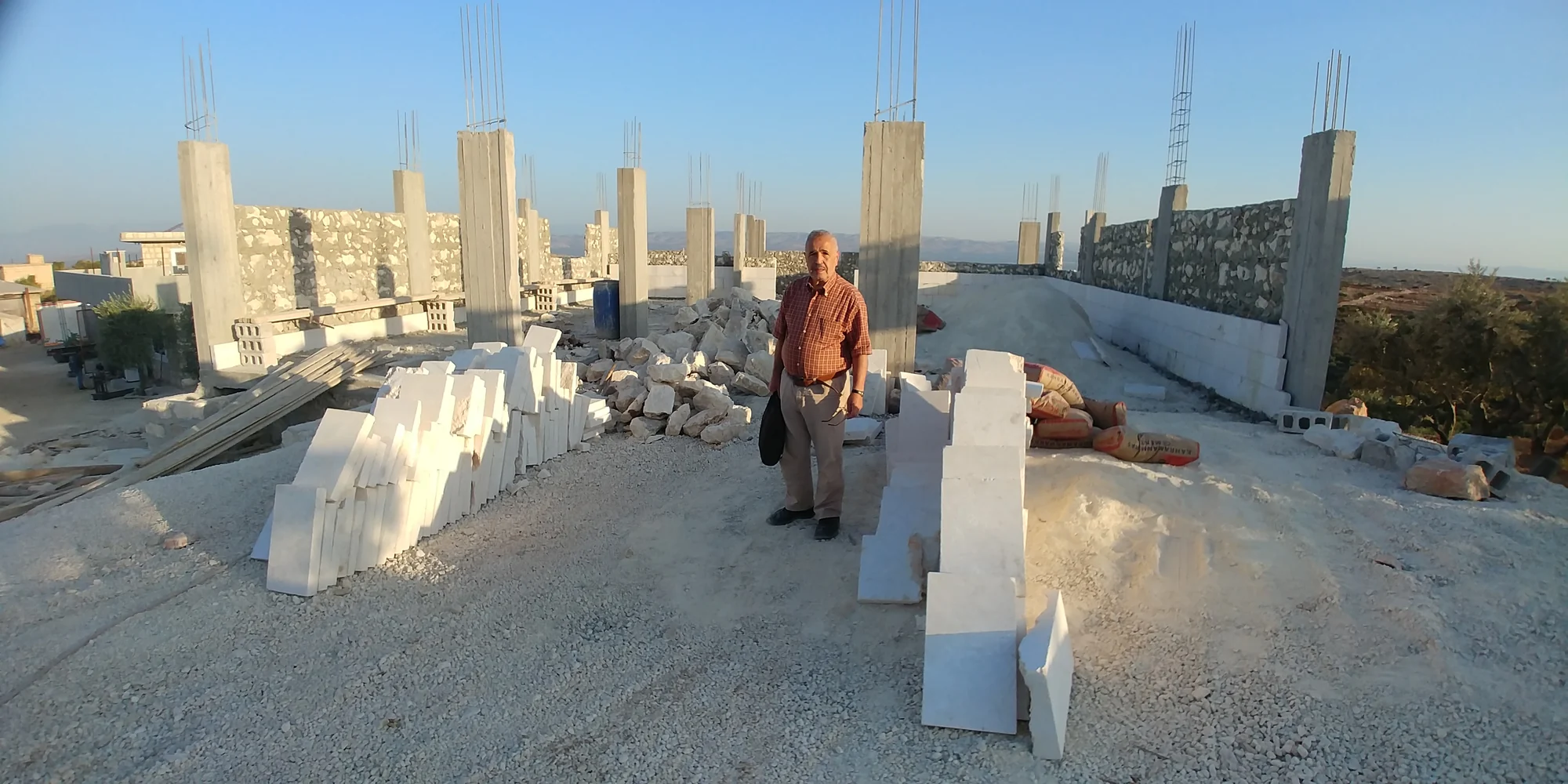
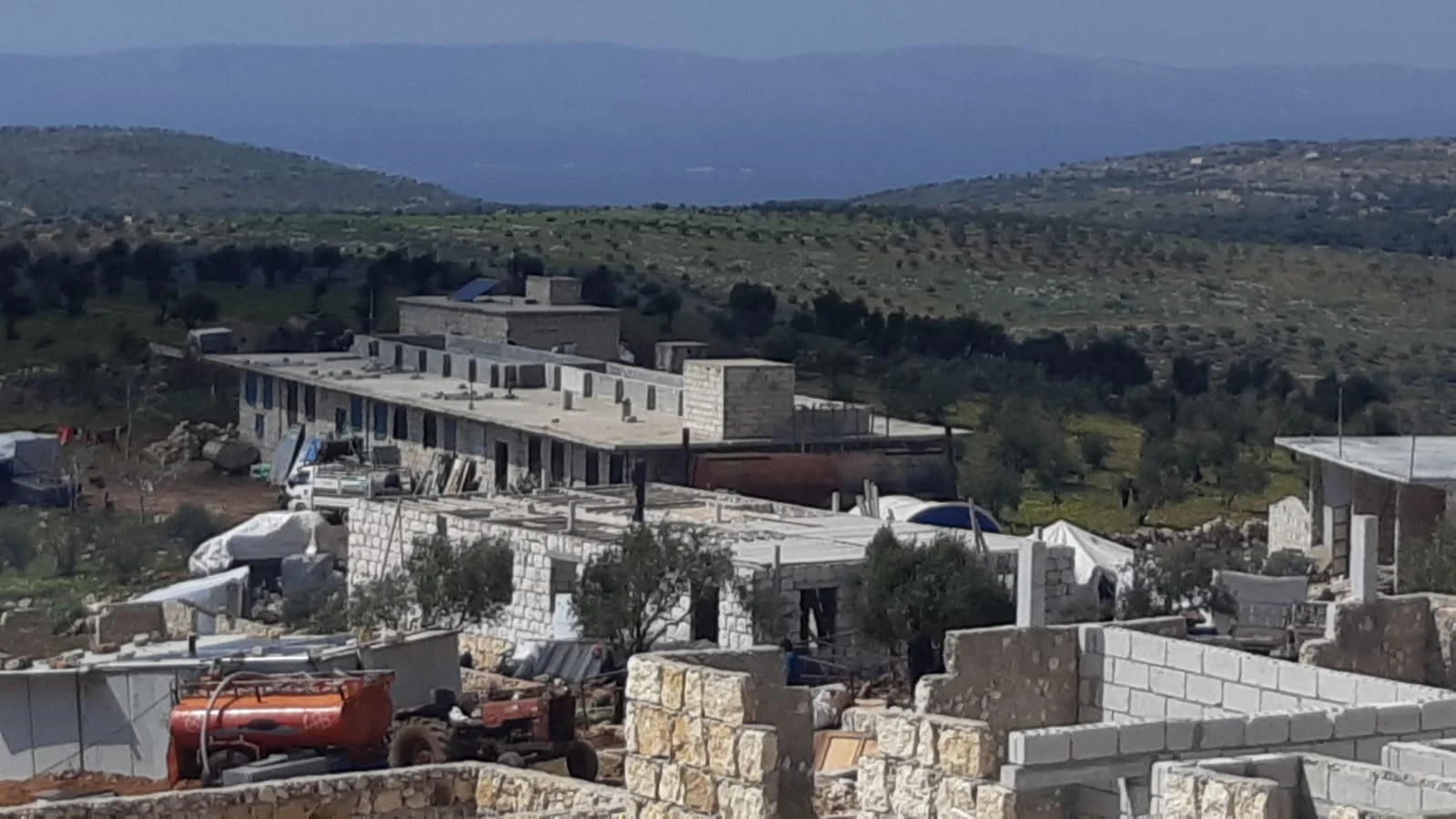
Displaced families should not have to pitch a tent somewhere and spend the winter in the open. That sentence became a village: 20,000 square metres in Idlib province, construction started on 10 December 2019. Each family receives a plot of 8 × 8 metres with a foundation, plus 800 US dollars as an interest-free loan, repaid in instalments of 10 dollars a month.
20,000 m²site in Idlib125families$800per family, lent interest-free2wells with solar pumps
From blueprint to village
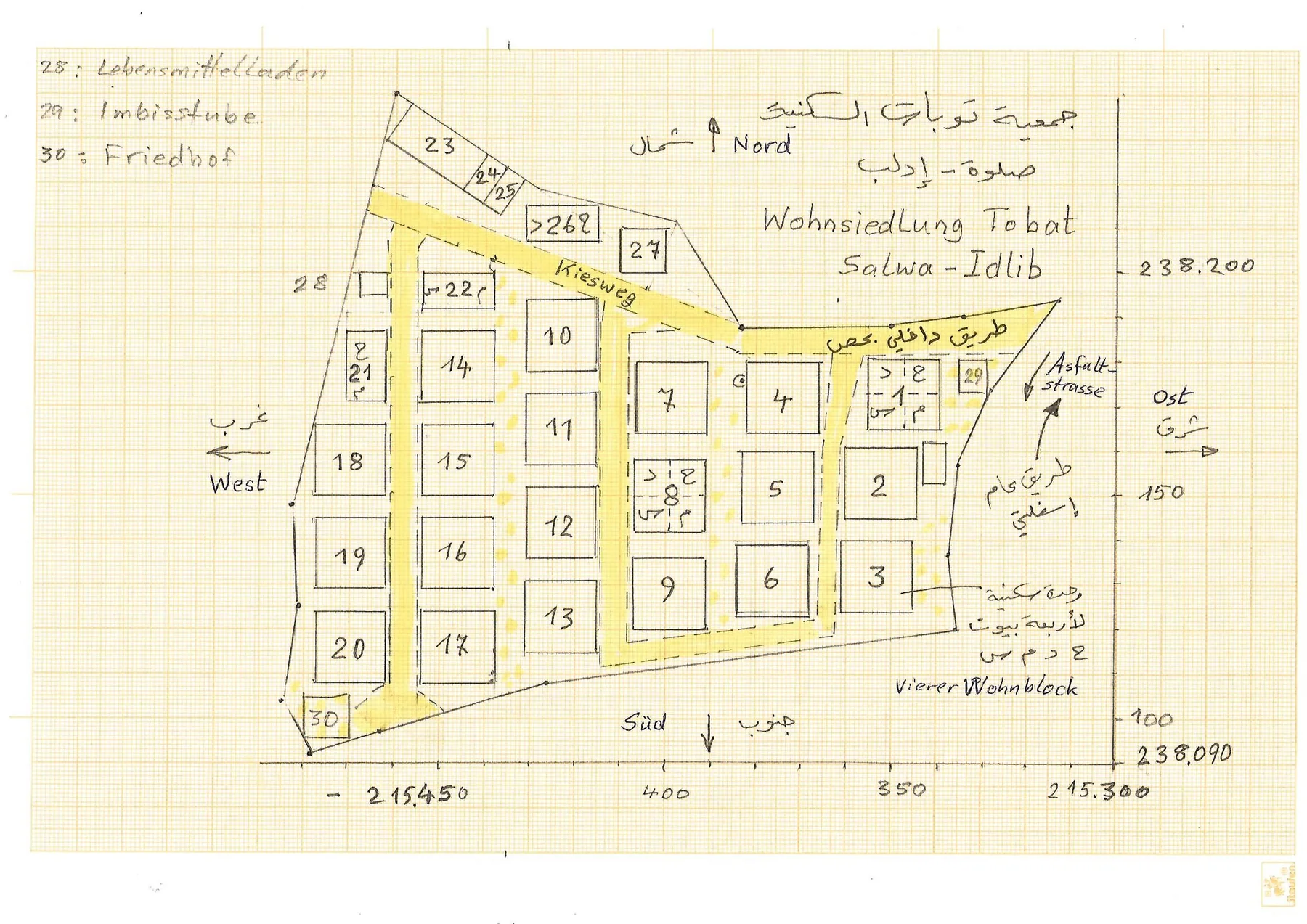
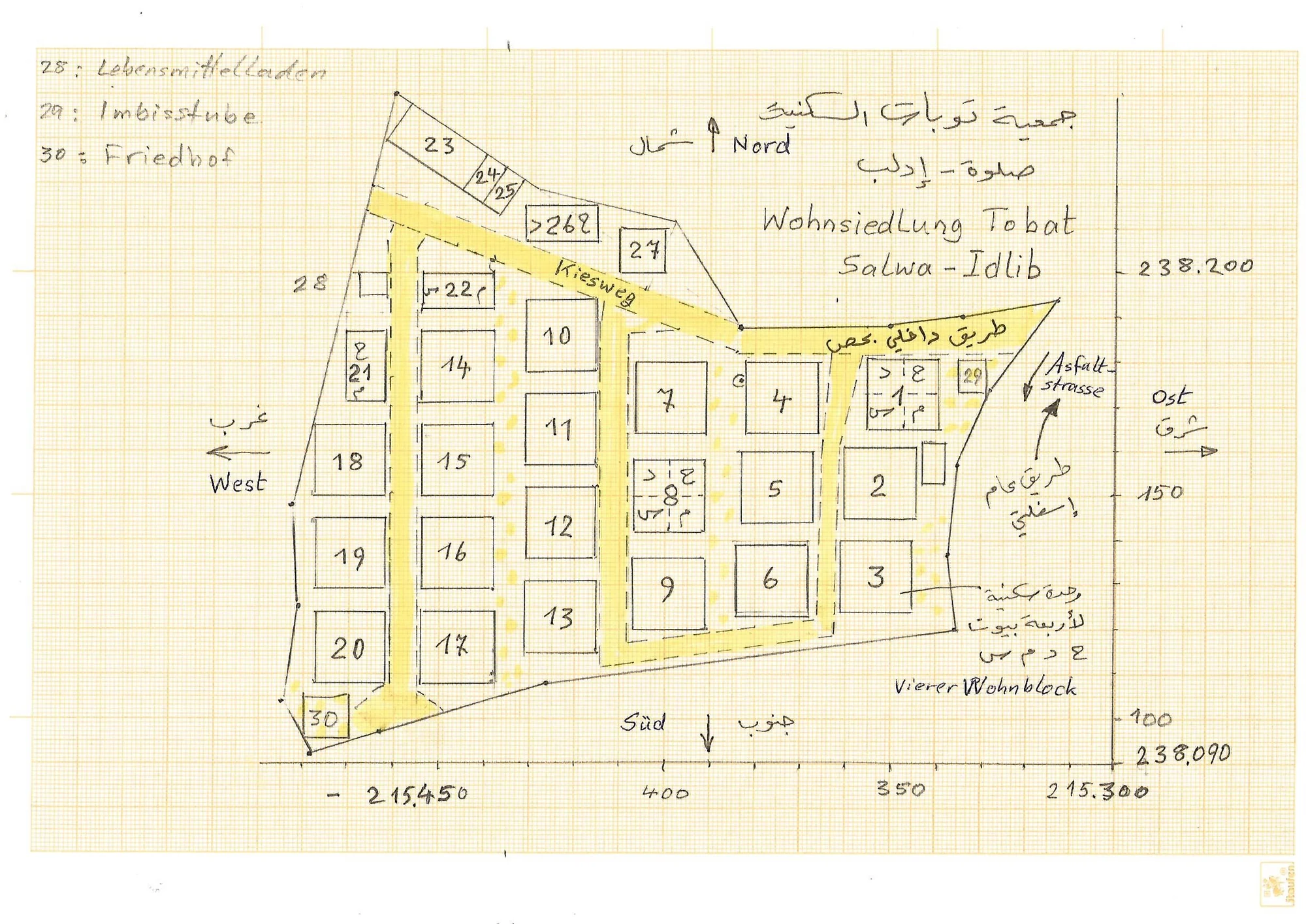
Before Toubat existed, there was this sketch: Dr. Wahhoud drew the complete development plan himself on graph paper — 30 numbered plots, a grocery store (28), a snack bar (29), a cemetery (30), four-house residential blocks, mosques, asphalt and gravel paths. The annotations are bilingual in German and Arabic.
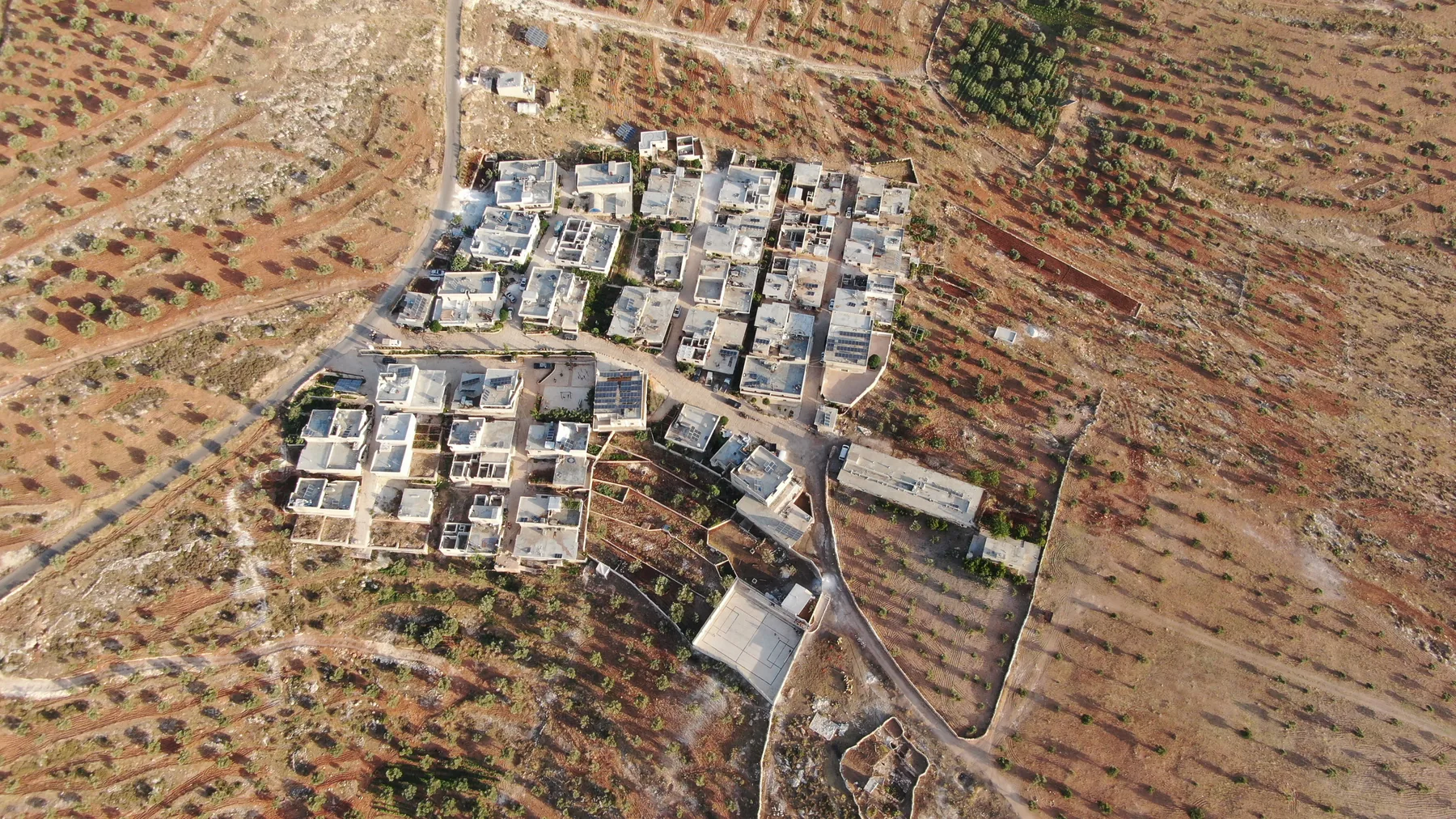
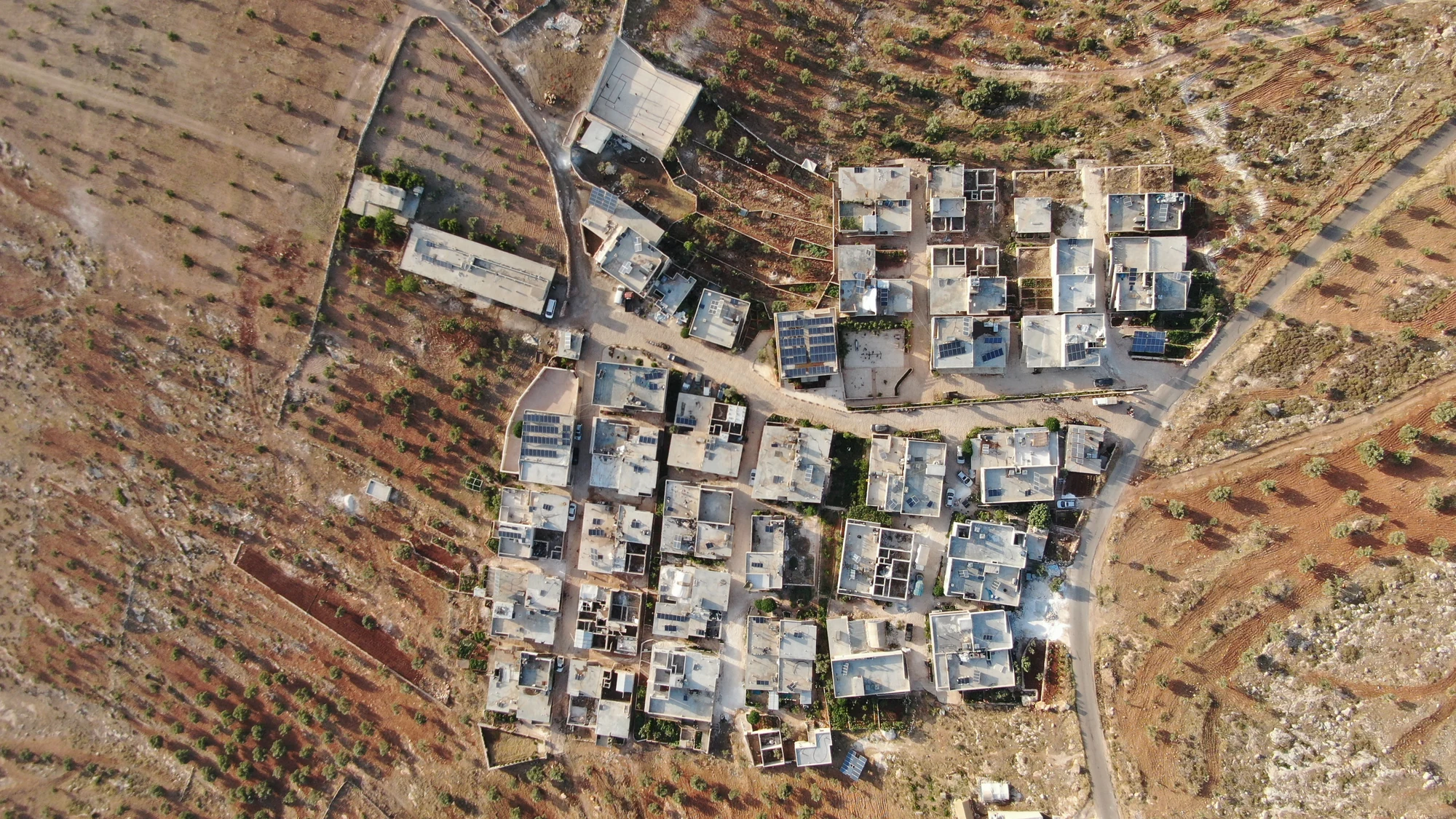
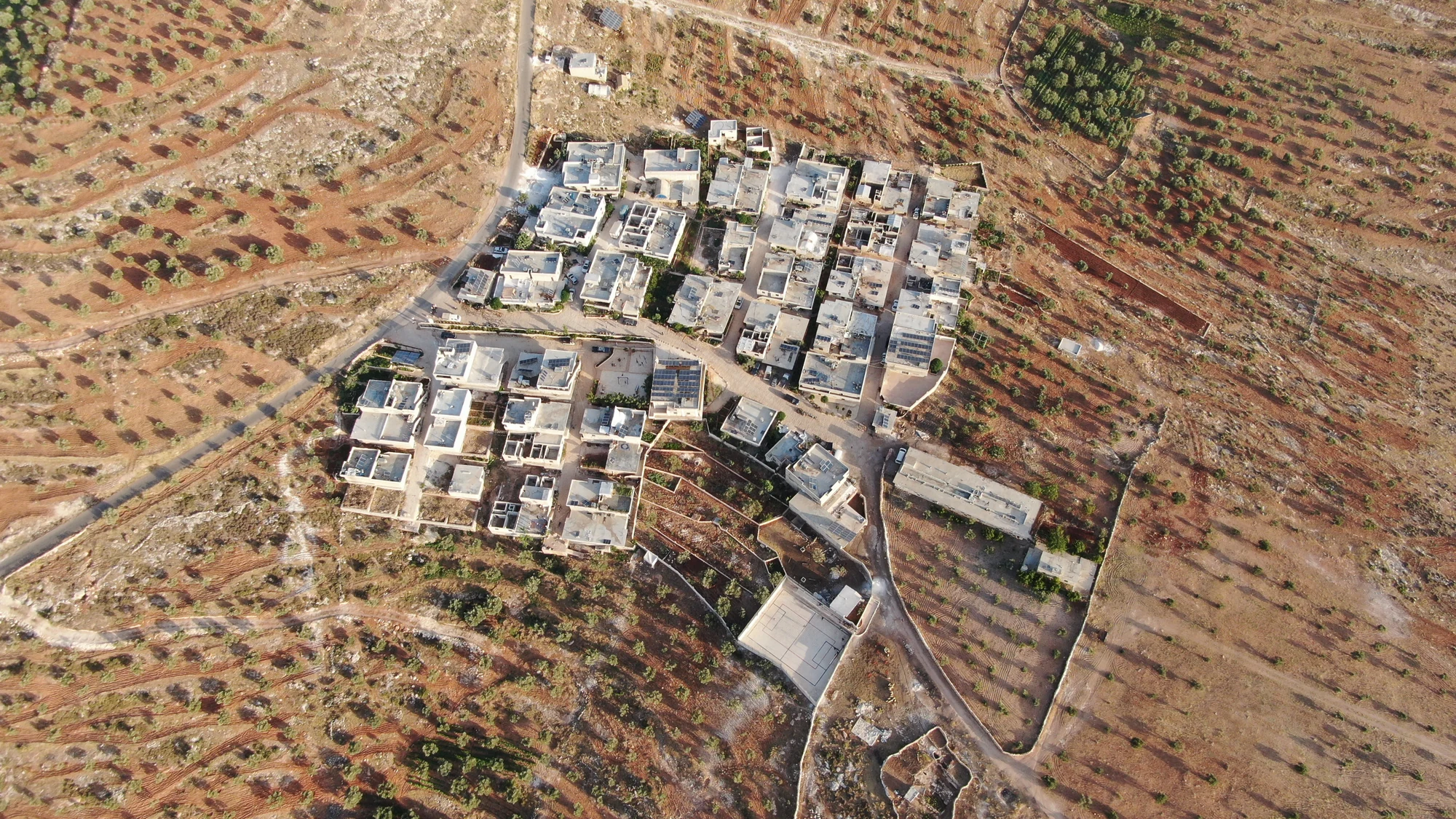
What began as pencil strokes on graph paper now stands on 20,000 square metres in Idlib — home to 125 families.
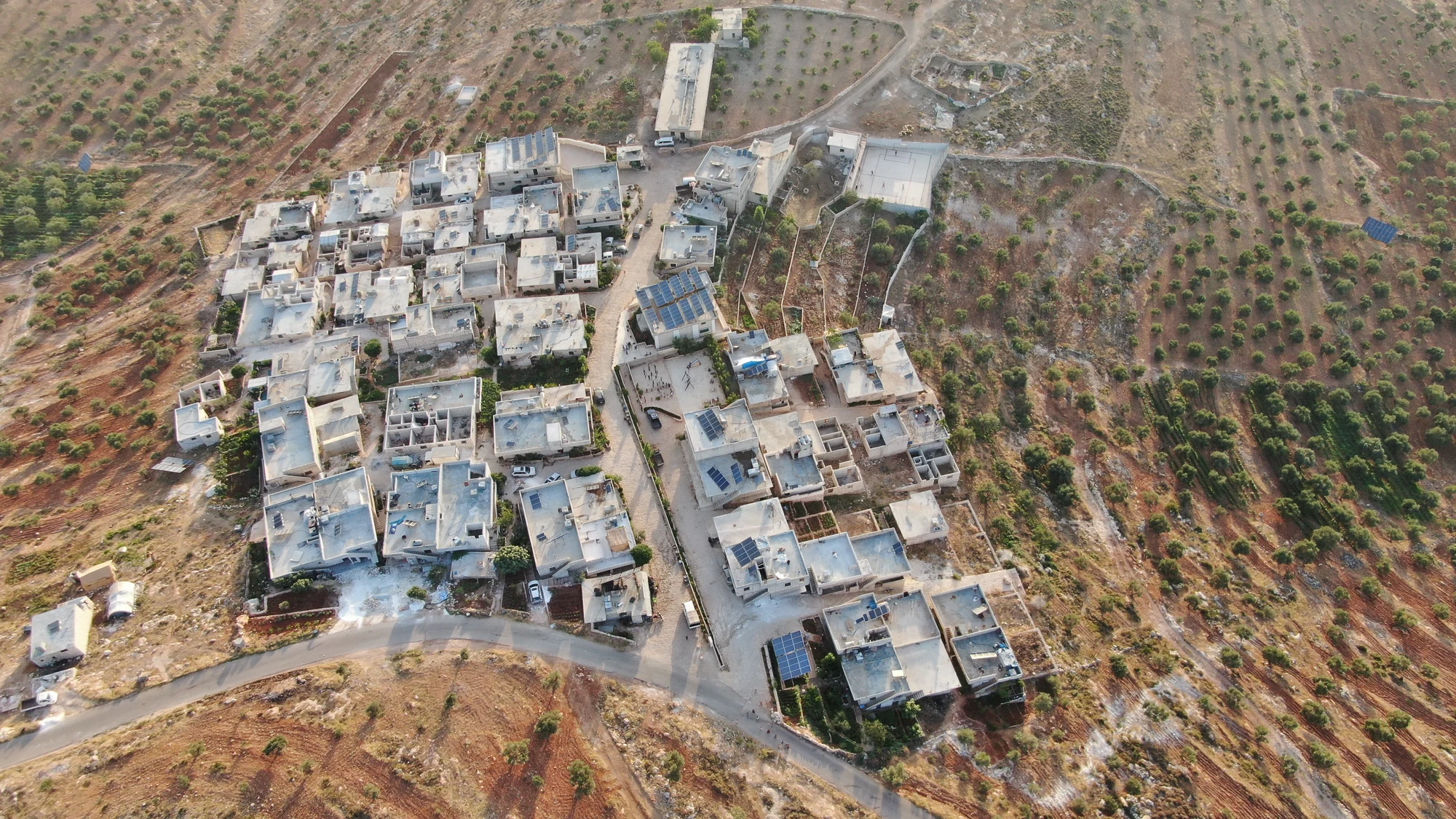
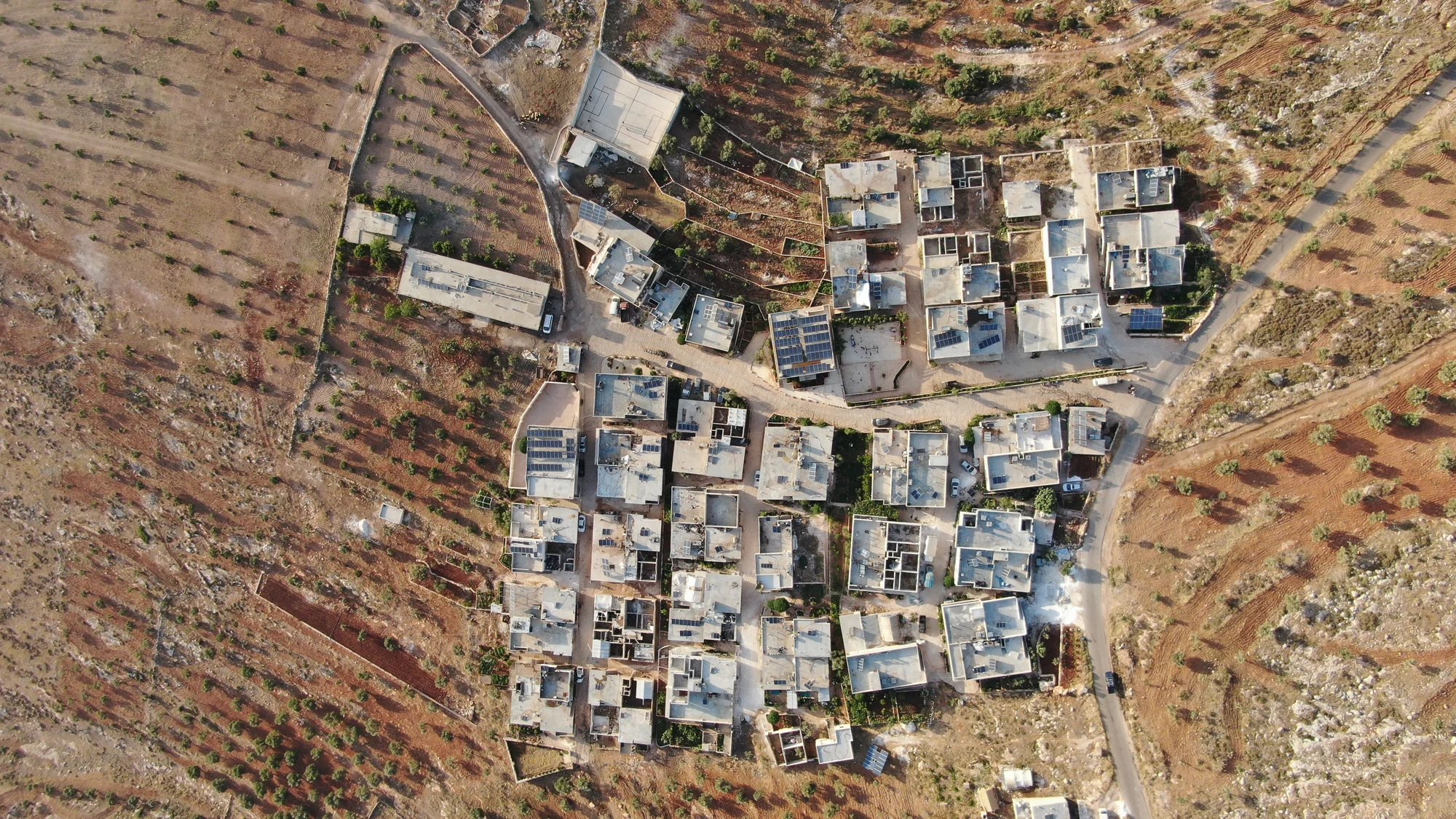
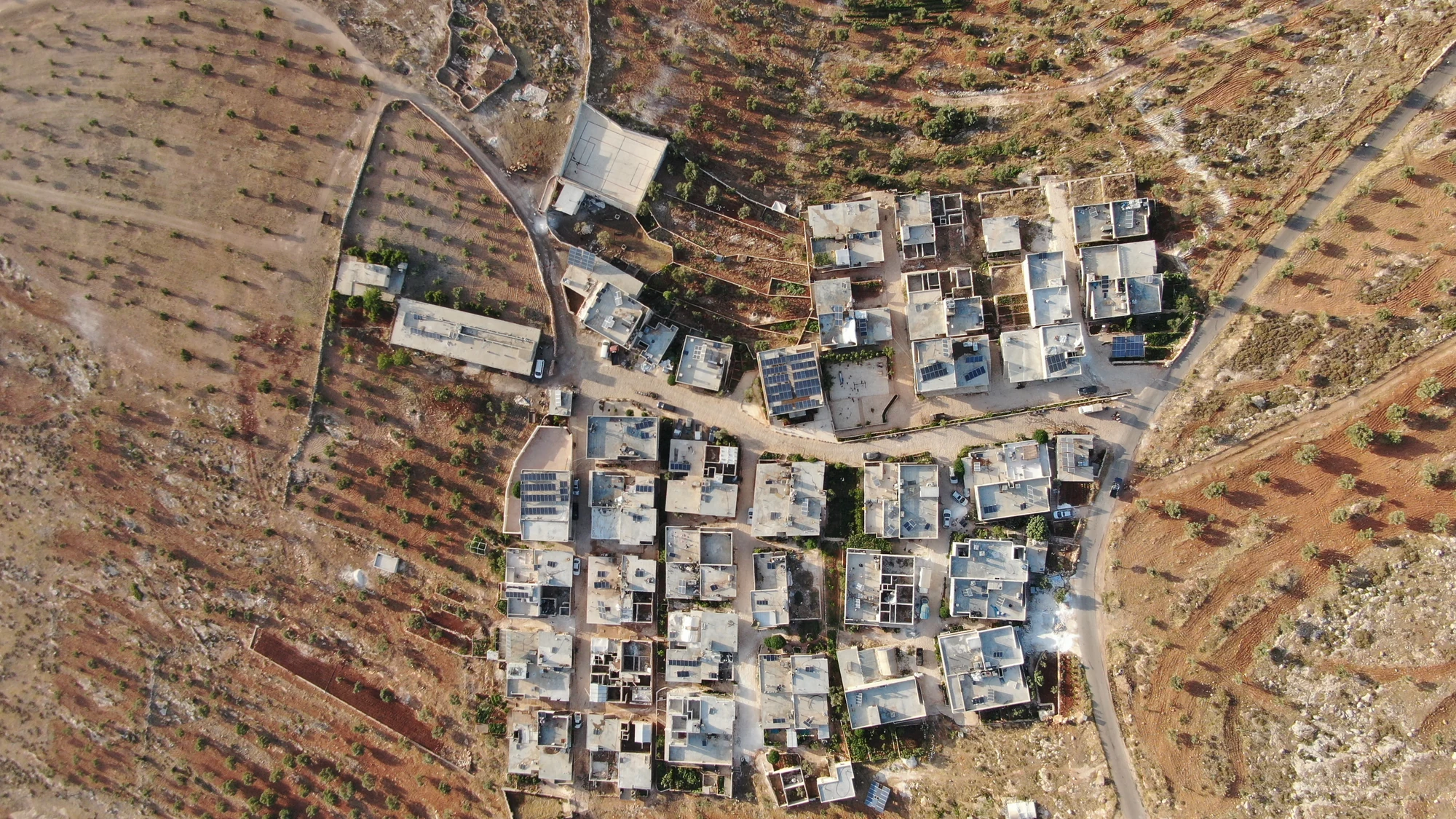
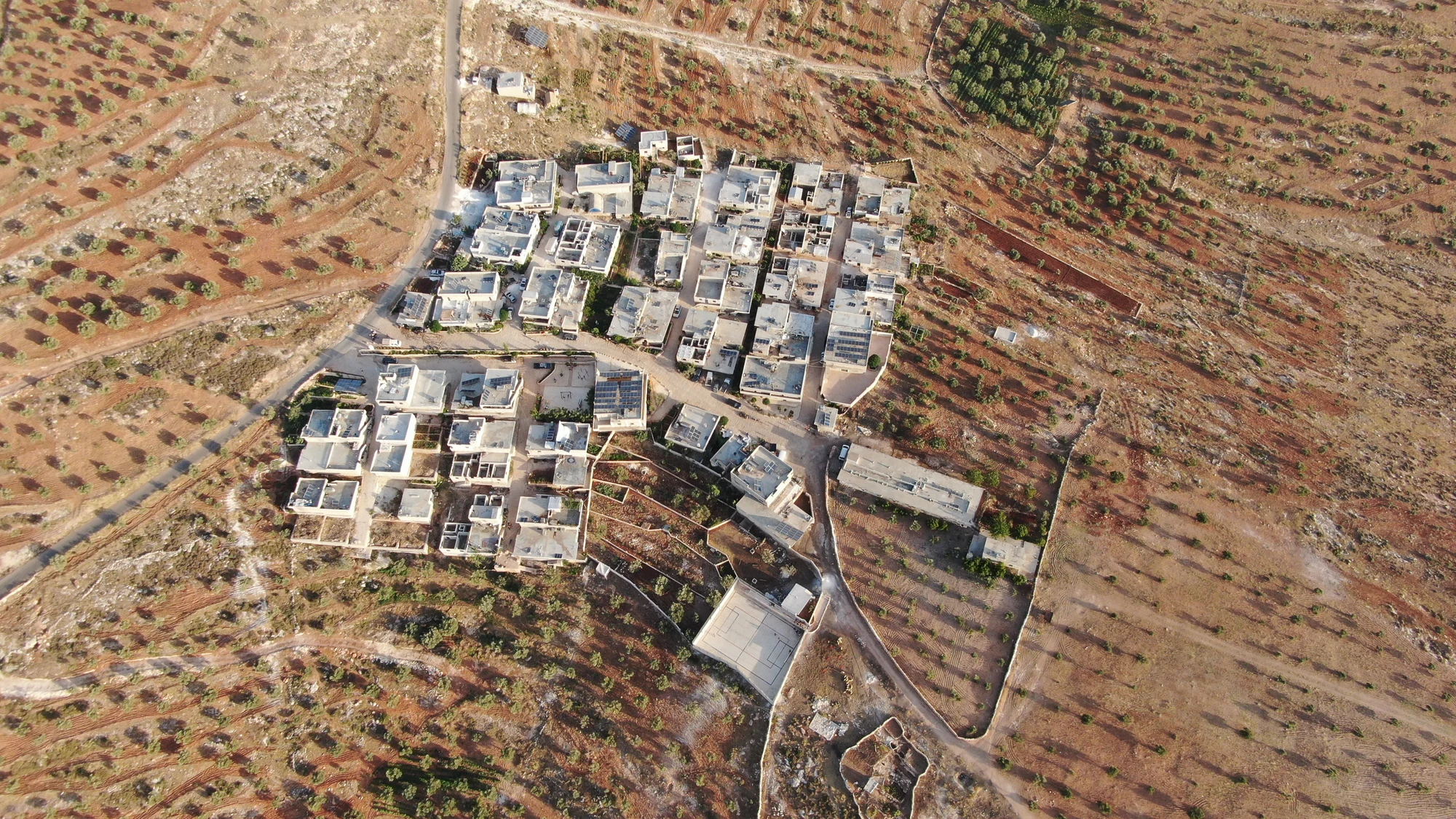
SketchHand-drawn on graph paper — before constructionRealityAerial view of the completed settlement — 125 families
How Toubat came to be
Forty-two photographs, from the first sheet of graph paper to the planting beds in front of the houses. Adnan Wahhoud drew the plans himself; the dates below them are taken from the drawings and from the cameras. Where no date survives, none is given.
The plans
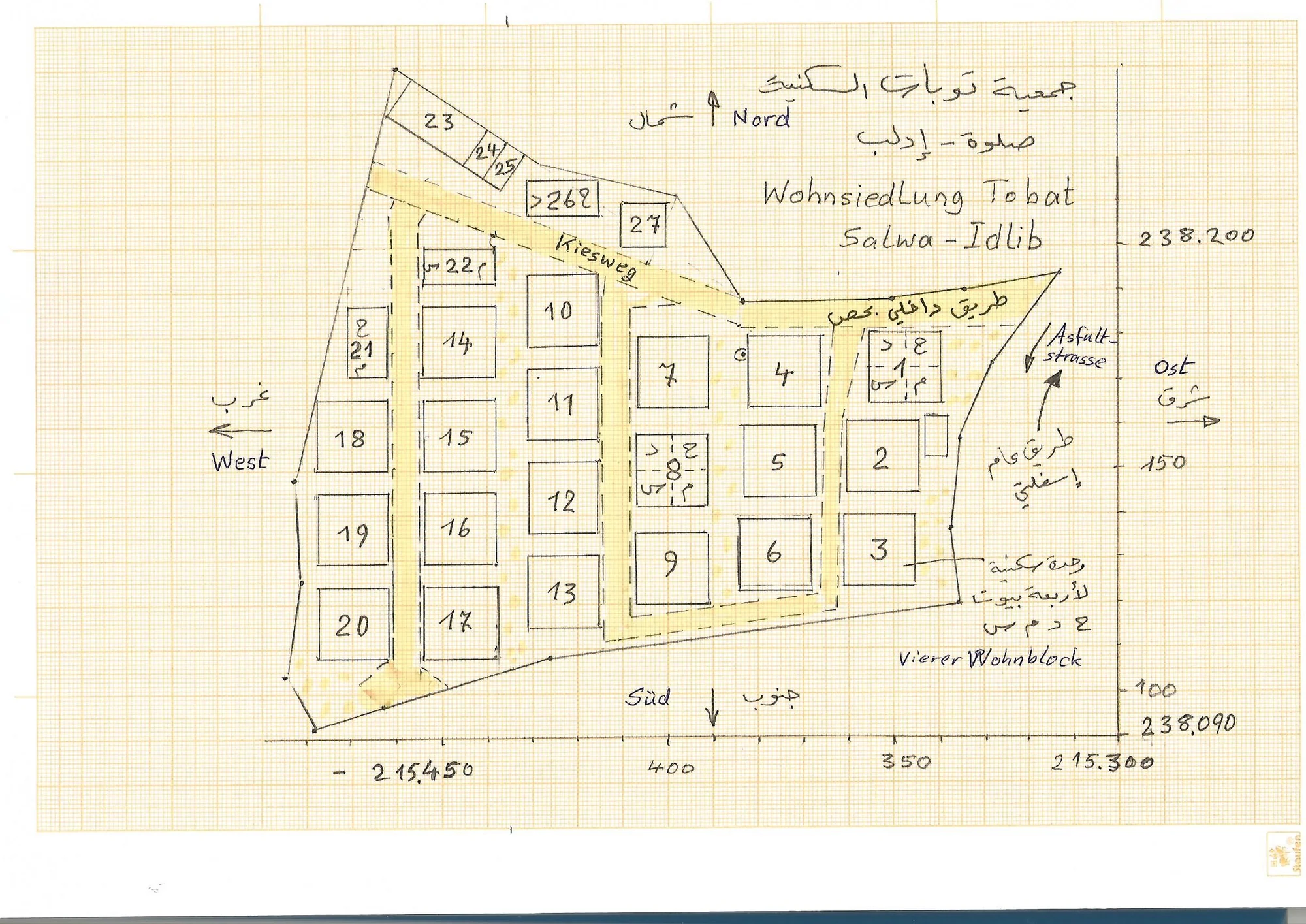
19 December 2019The first settlement plan: 27 numbered plots, with dimensions and compass directions, labelled in German and Arabic.
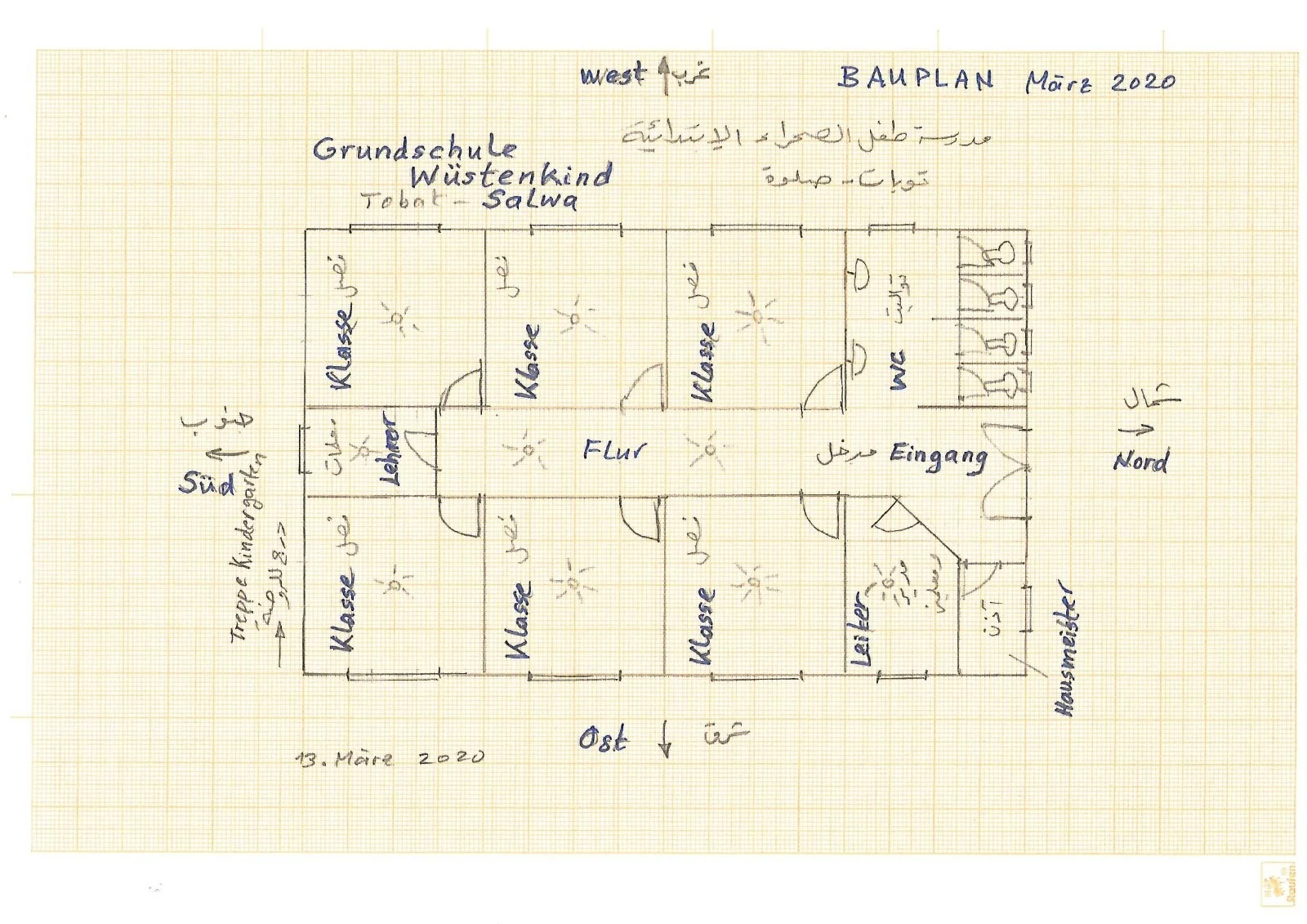
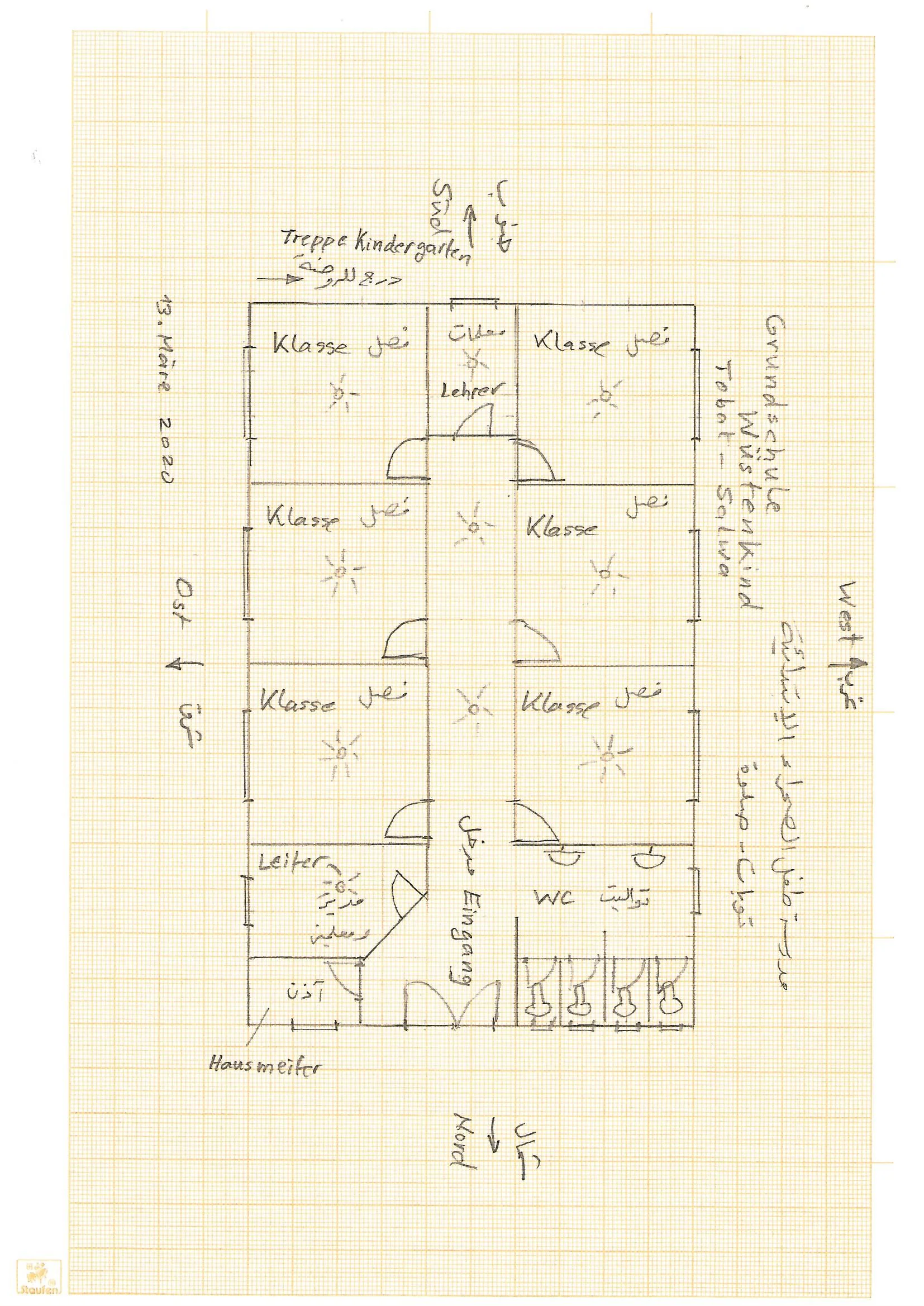
March 2020Building plan for the “Desert Child” primary school: six classrooms, corridor, staff room.
13 March 2020The upper floor of the same school, with the stairs to the kindergarten.
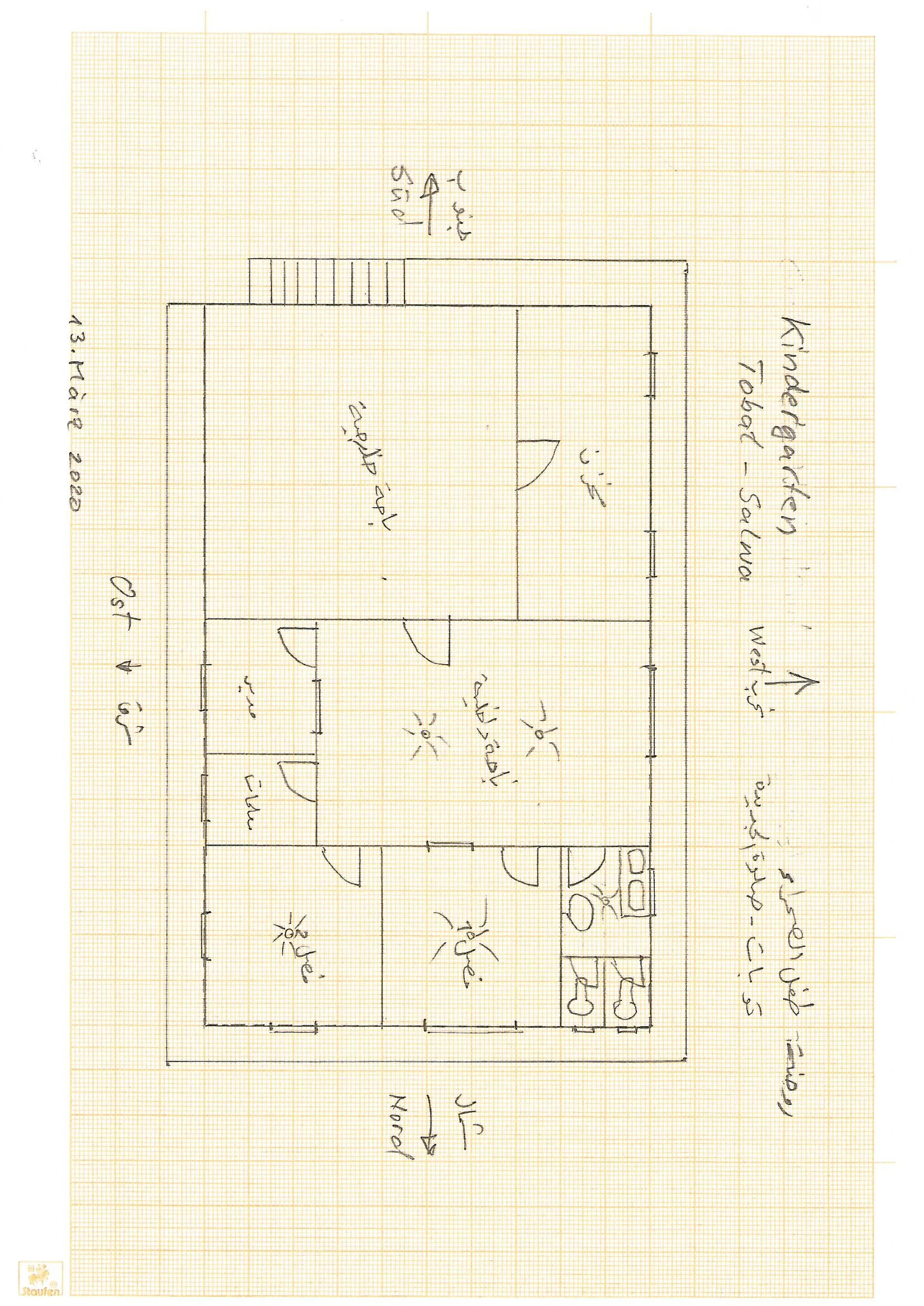
13 March 2020Floor plan of the kindergarten.
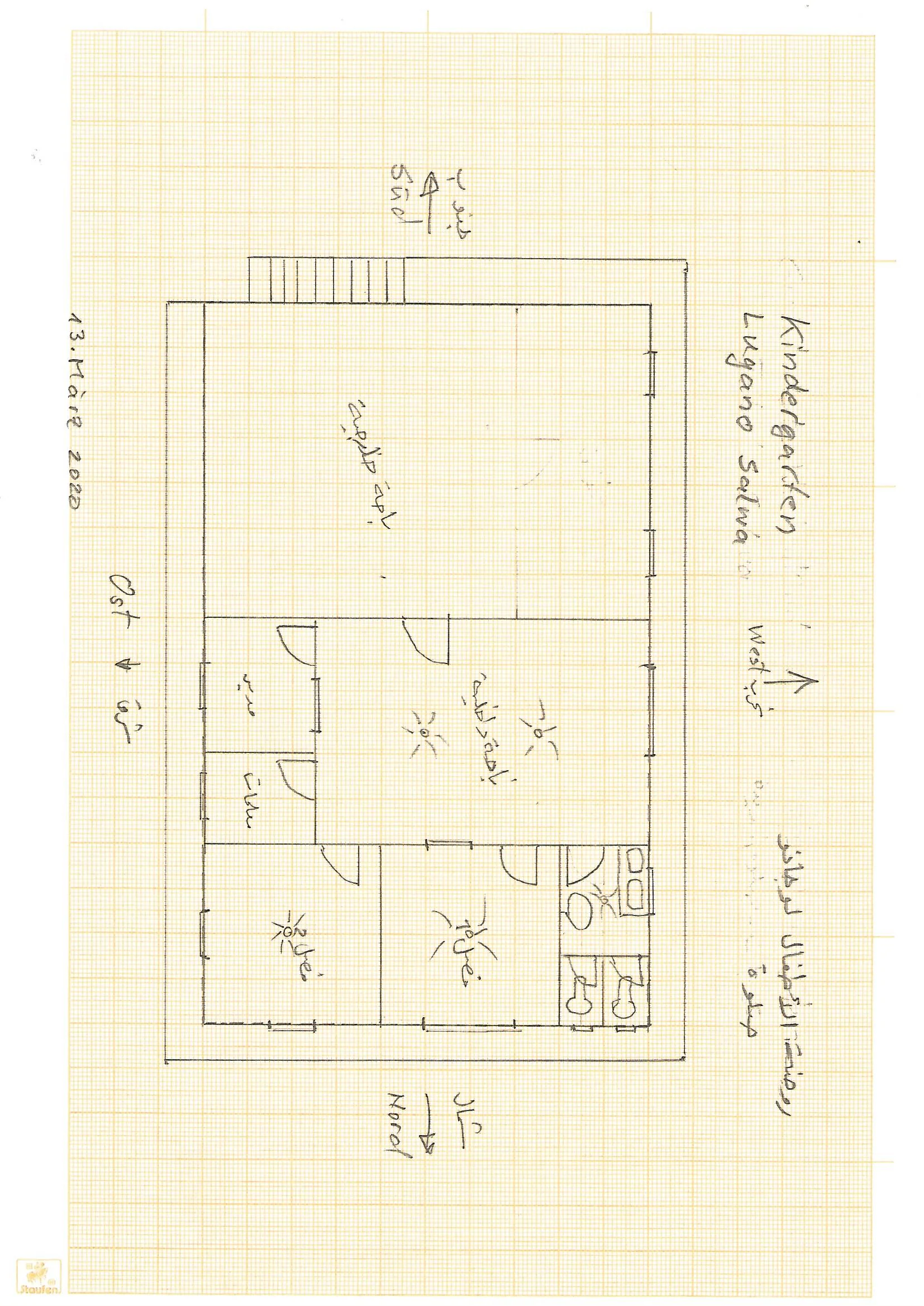
13 March 2020A second kindergarten floor plan from the same day.
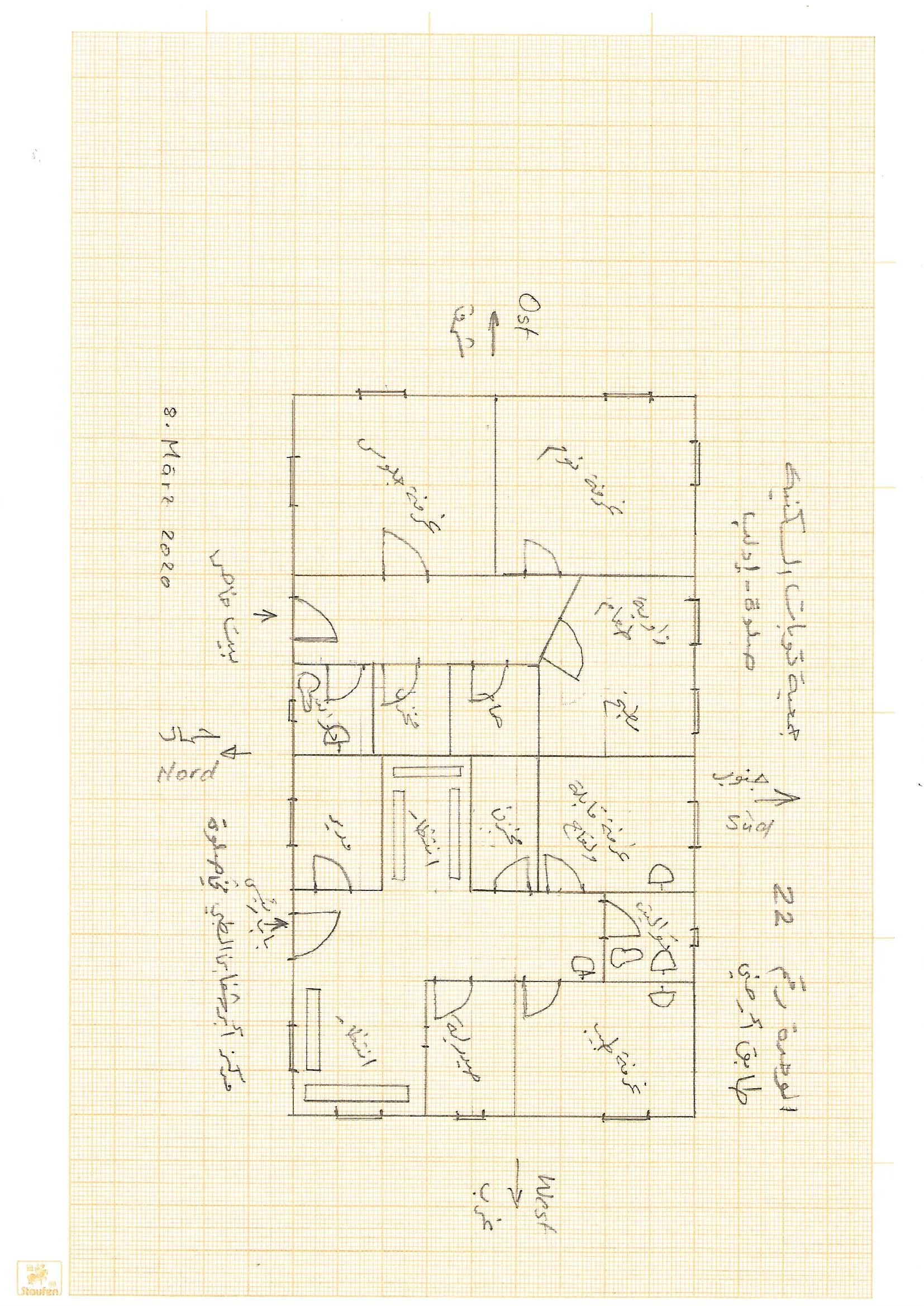
14 March 2020Floor plan of the medical point.
The same settlement plan with a legend: grocery shop, snack bar, cemetery.
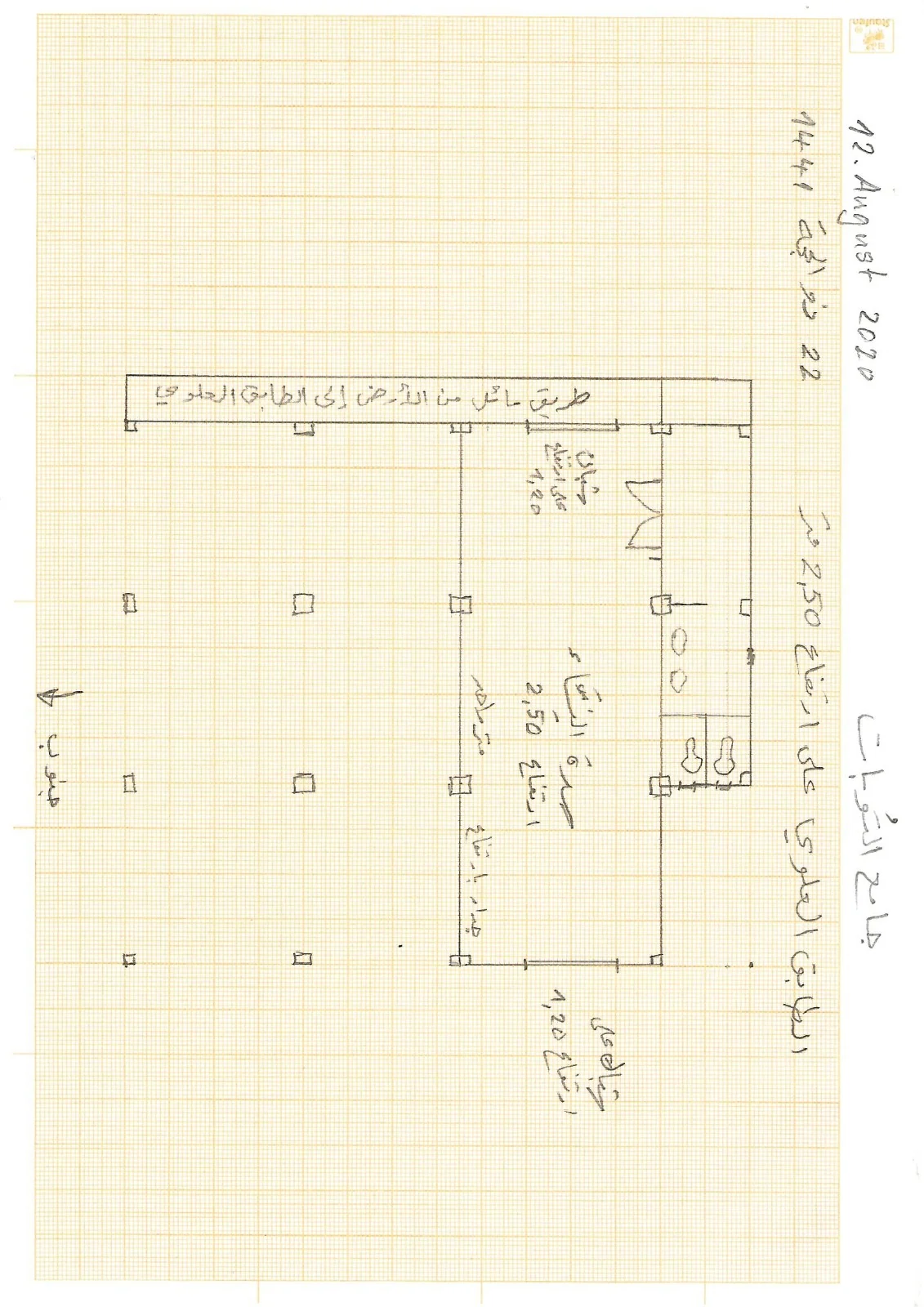
12 August 2020The floor plan of the mosque.
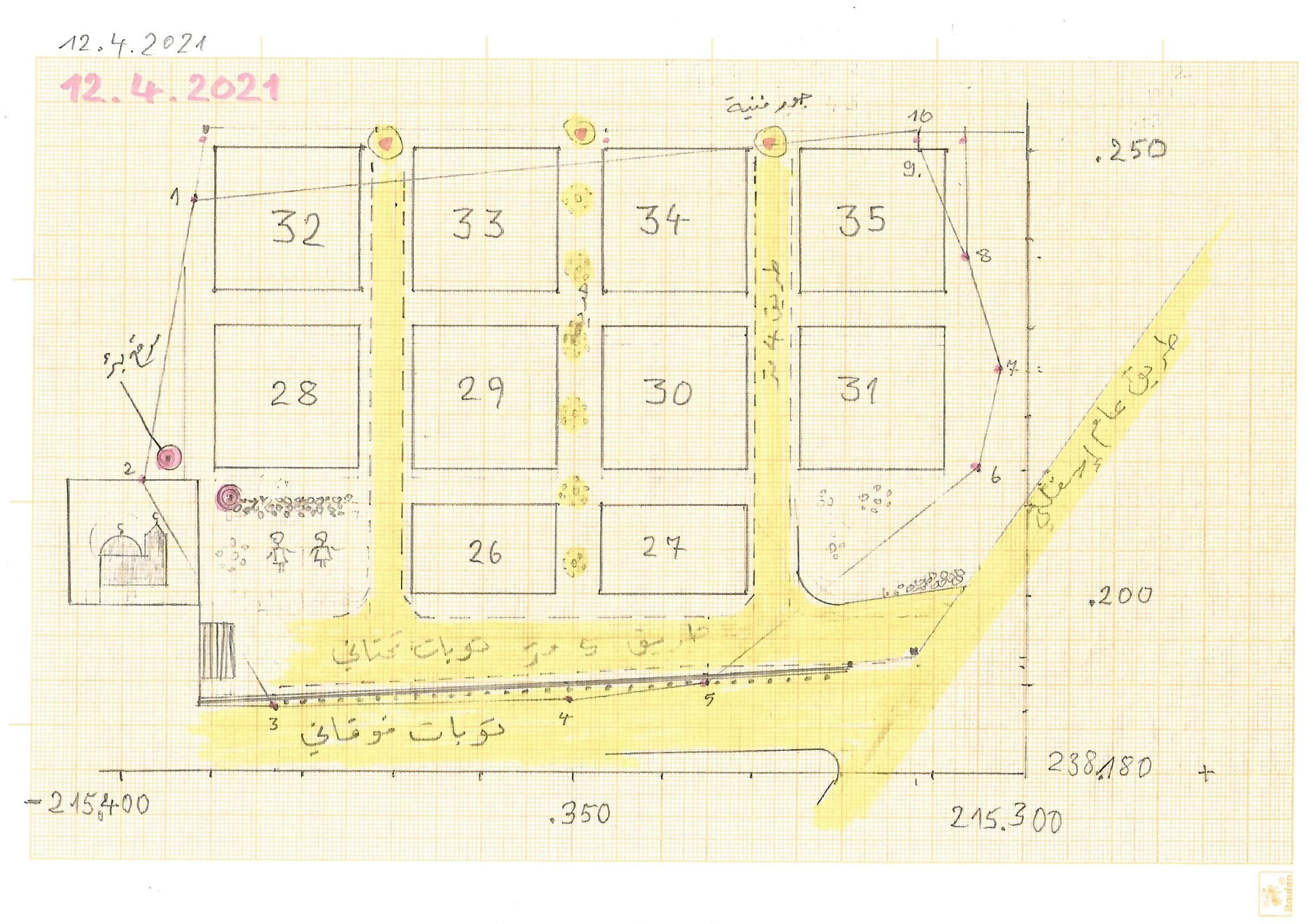
12 April 2021Extension plan: four more blocks of houses, the lanes marked in yellow.
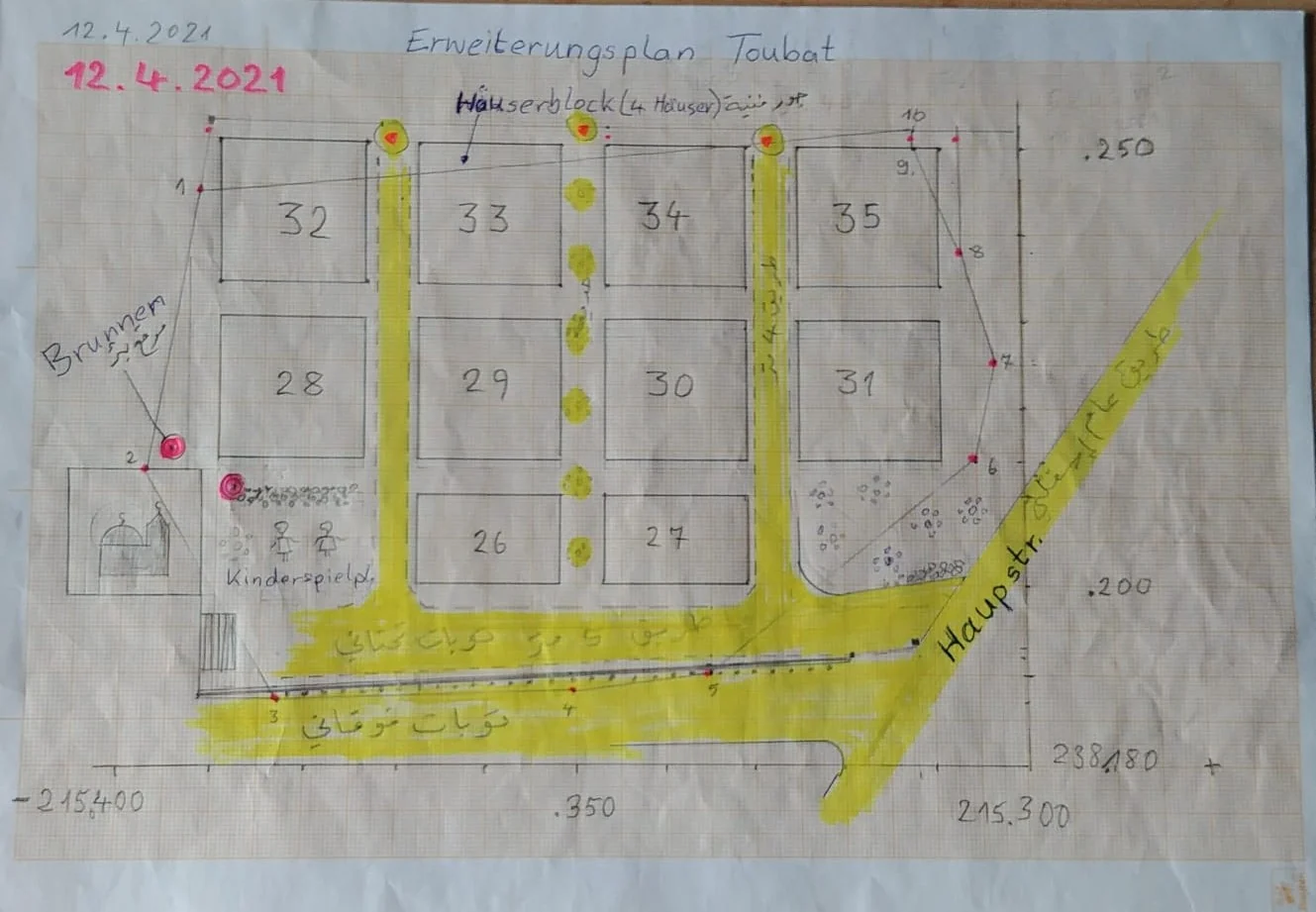
12 April 2021The same extension plan, with the well, the playground and the main road added.
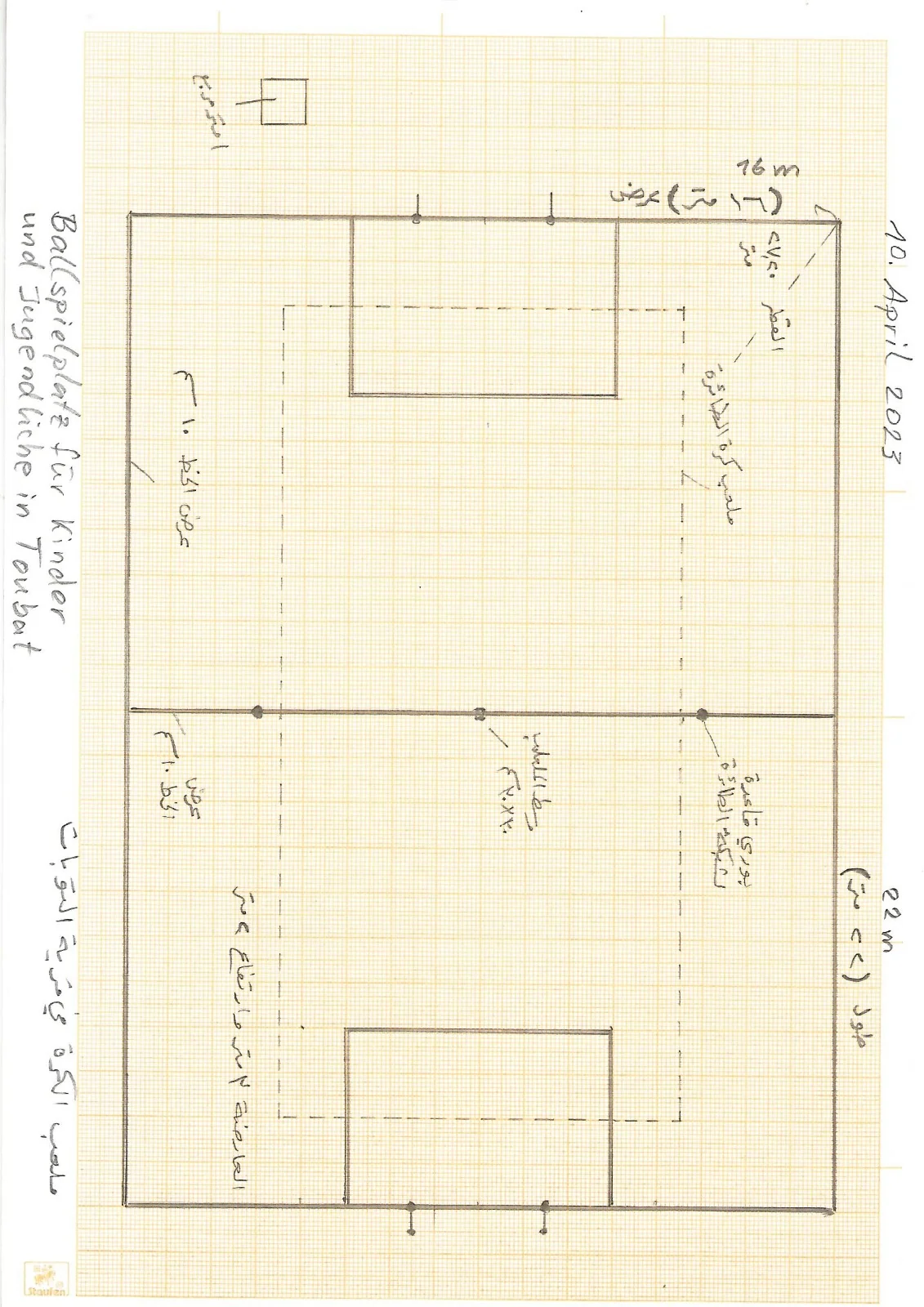
10 April 2023A ball court for children and young people, 16 metres long.The building
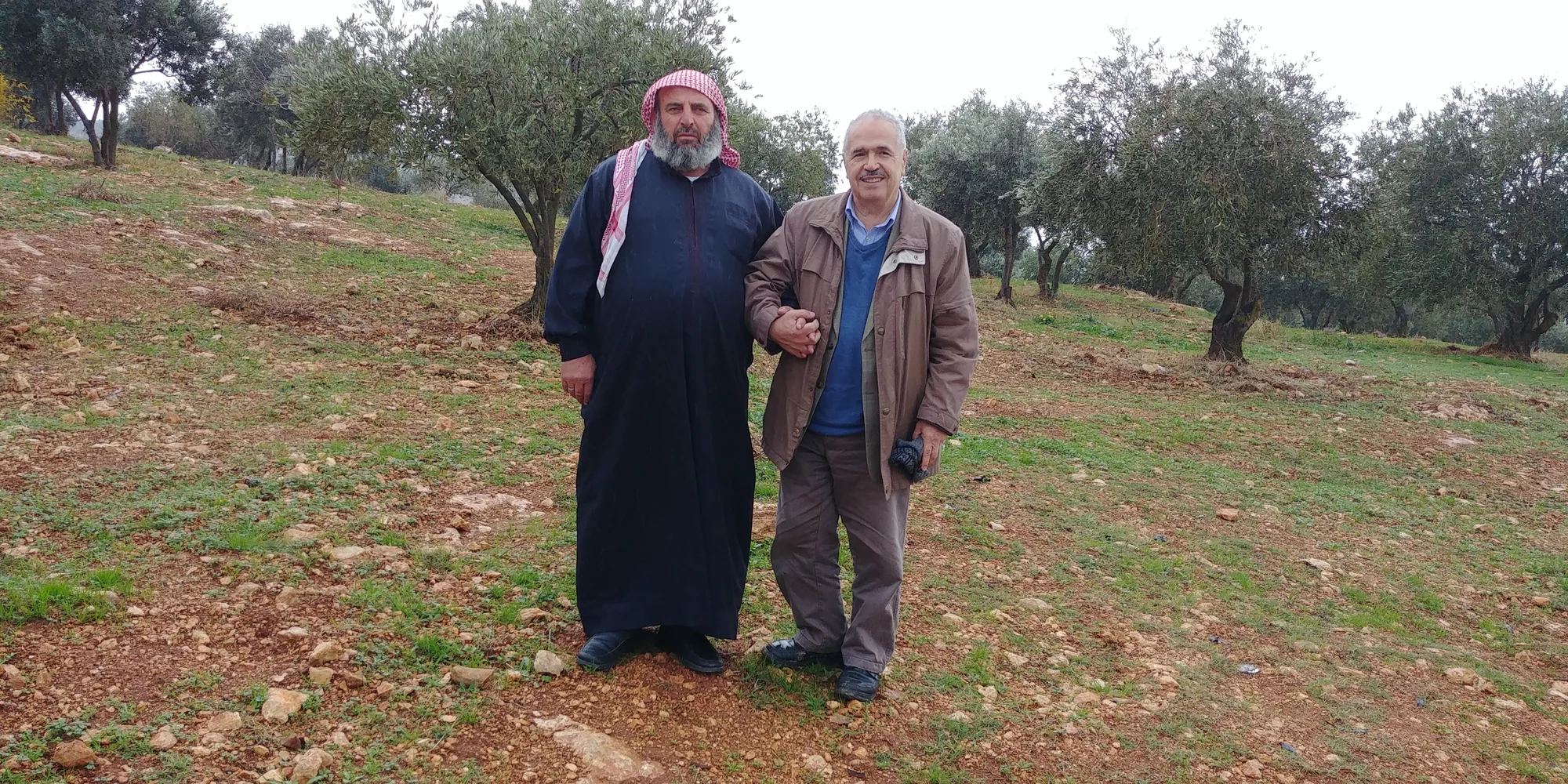
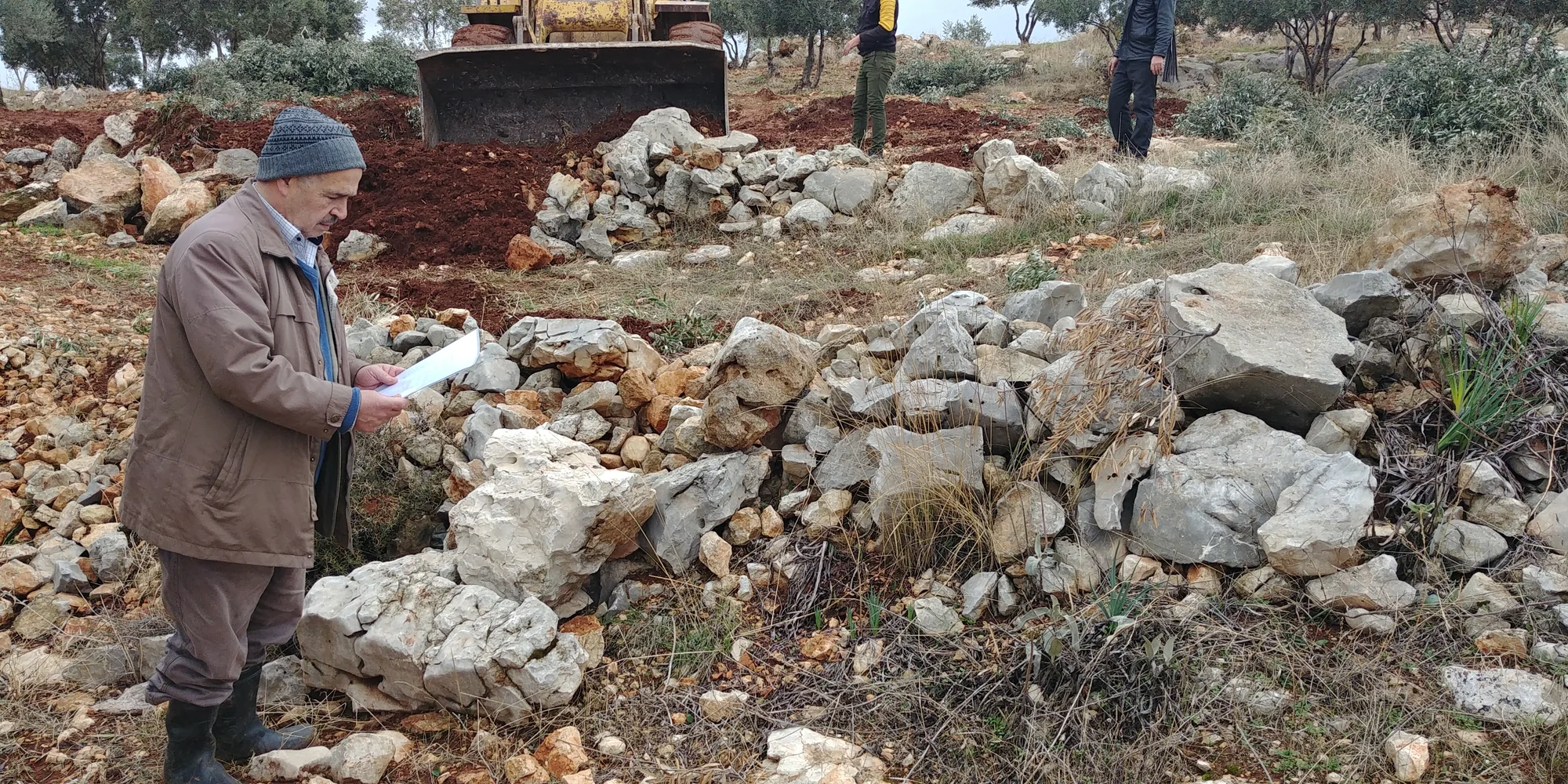
6 December 2019The slope before building began: olive trees, stones, two men.
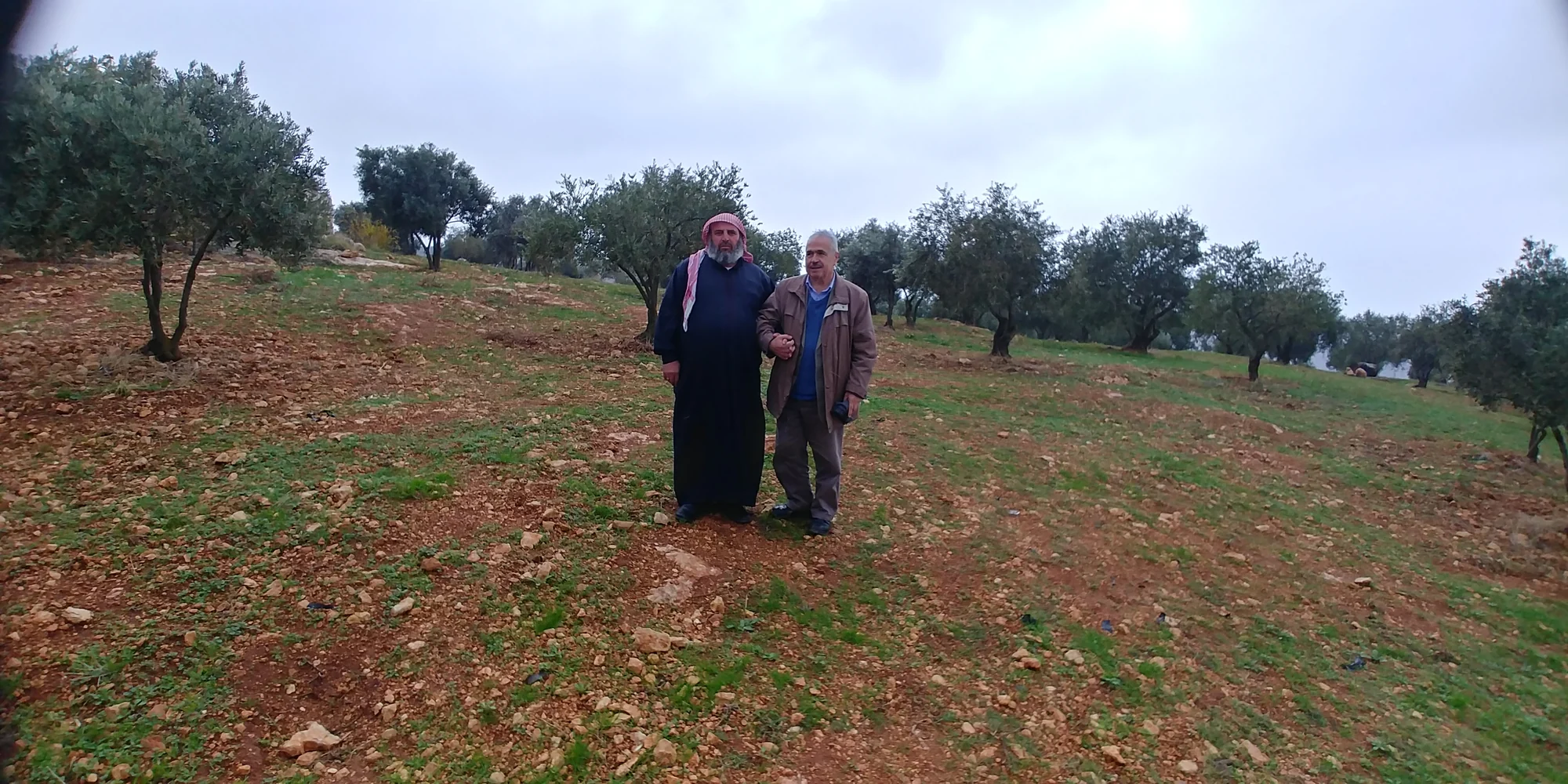
6 December 2019The same plot of land, seen from higher up.
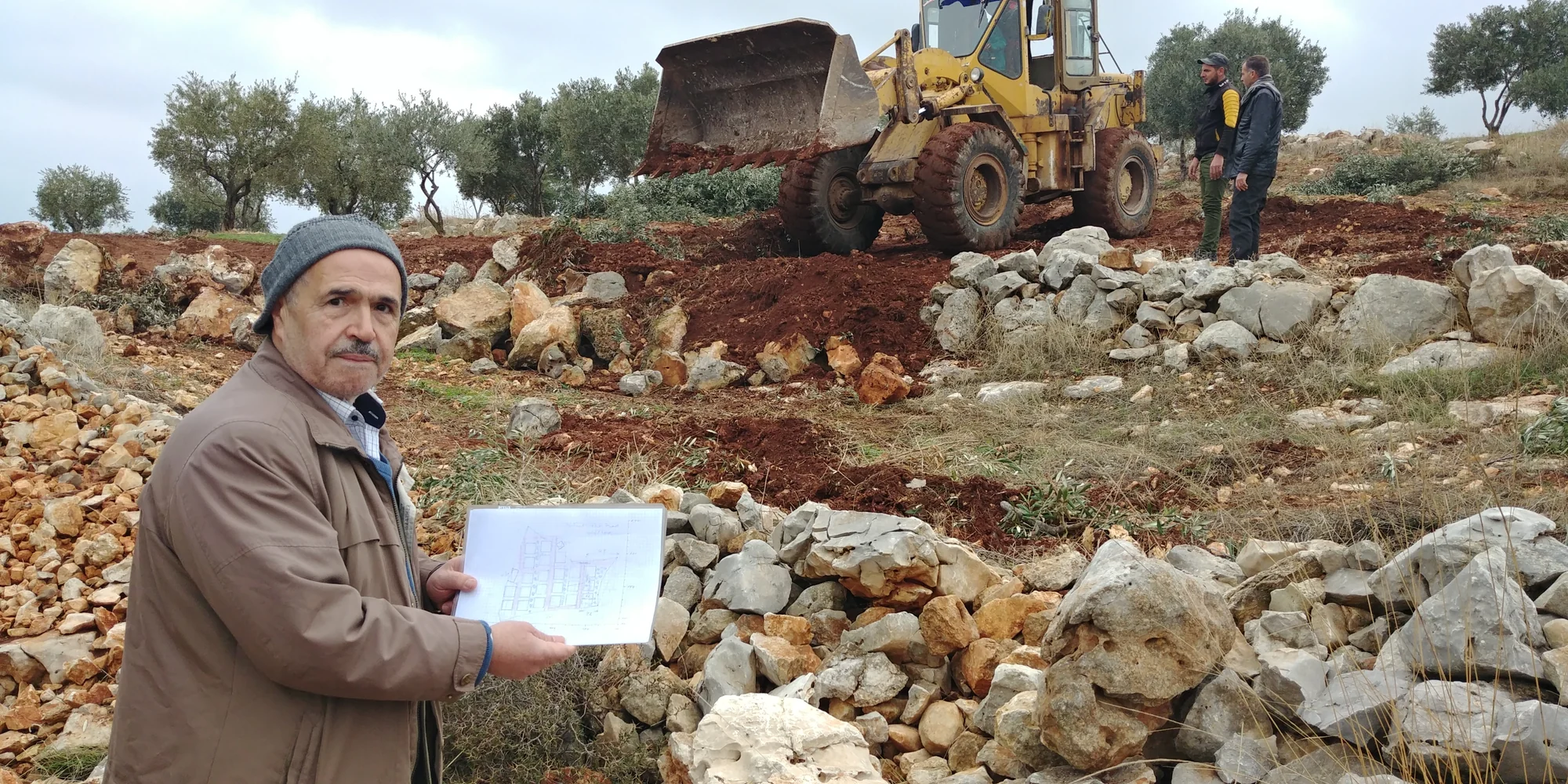
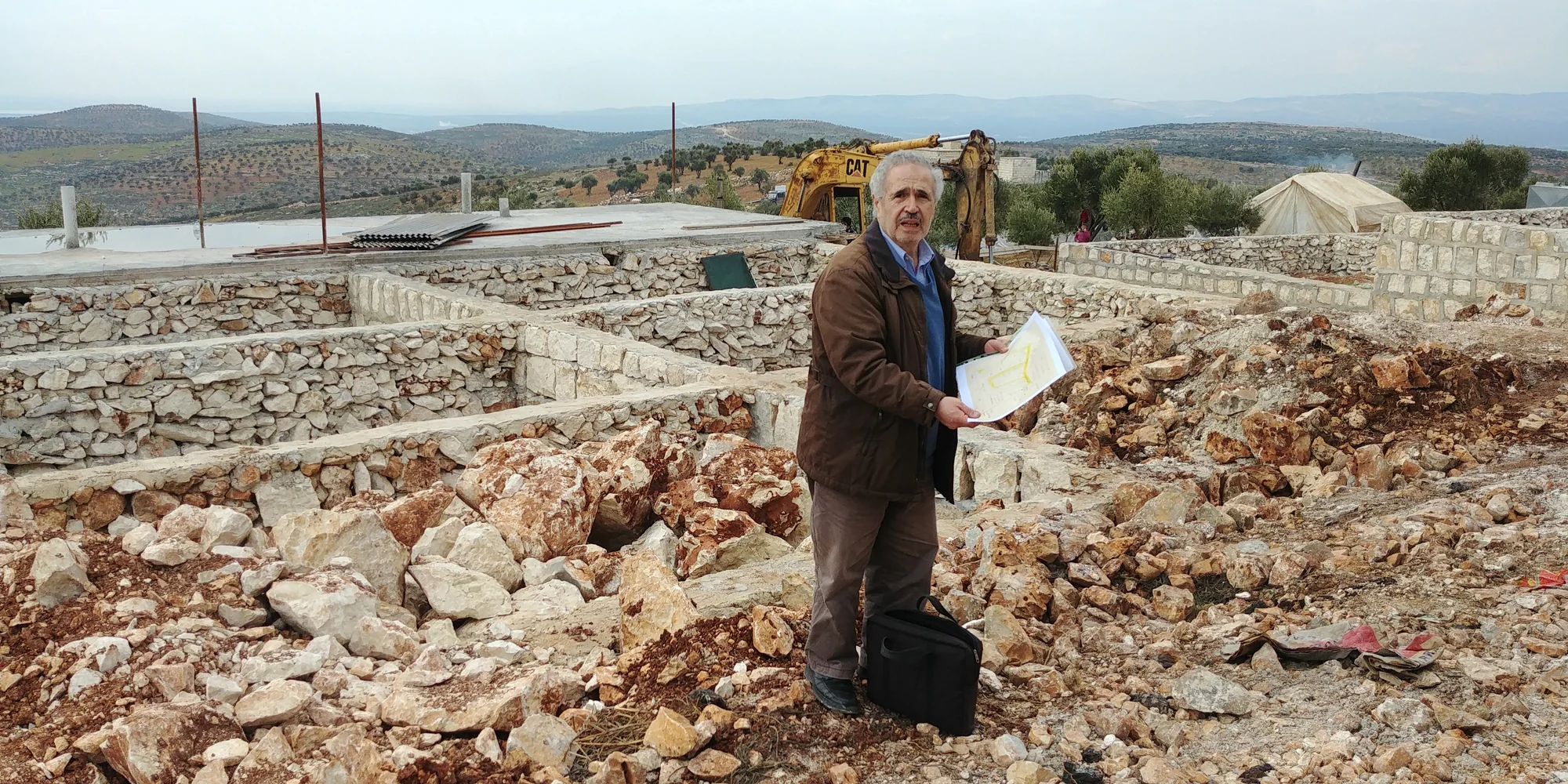
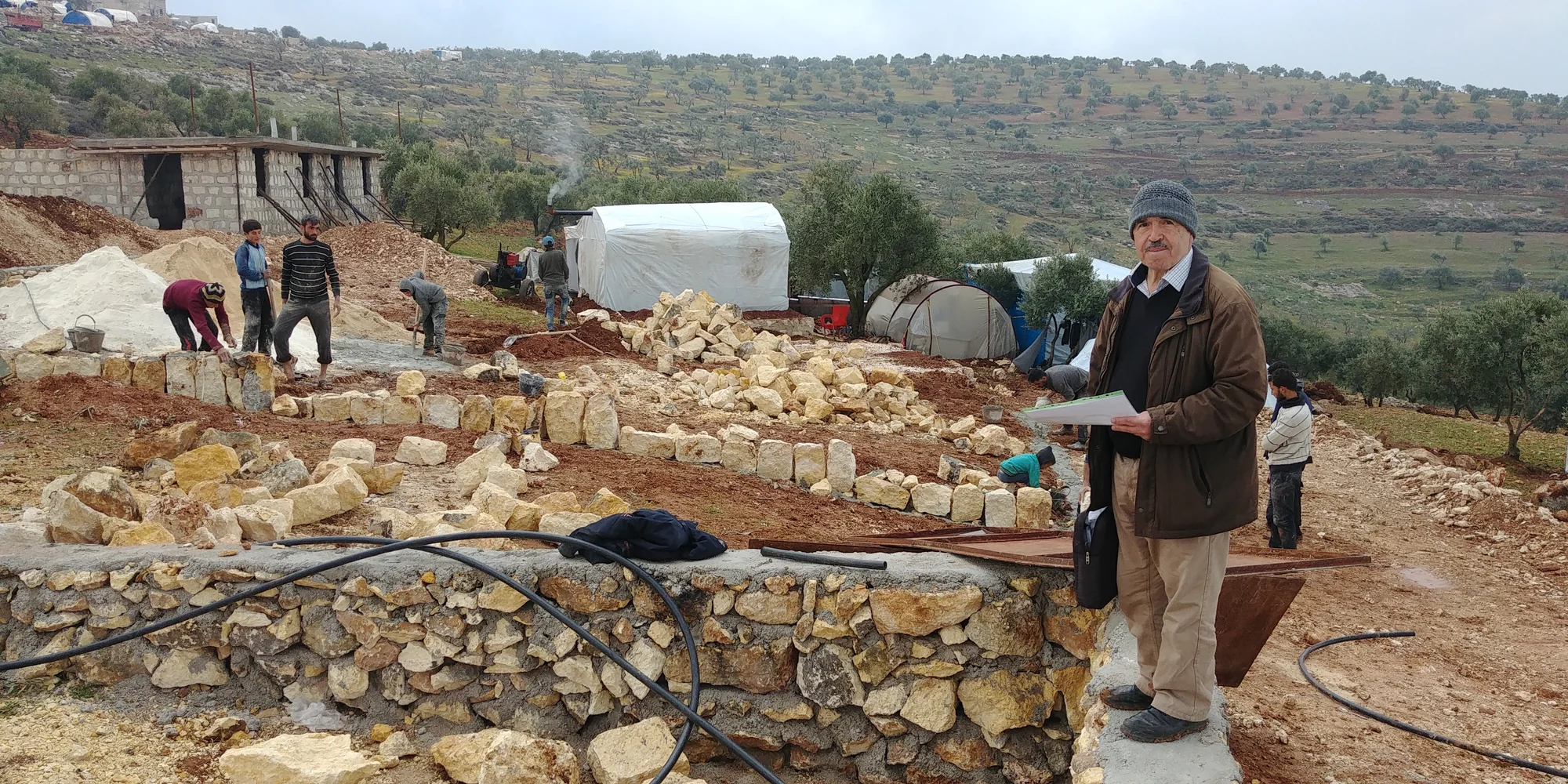
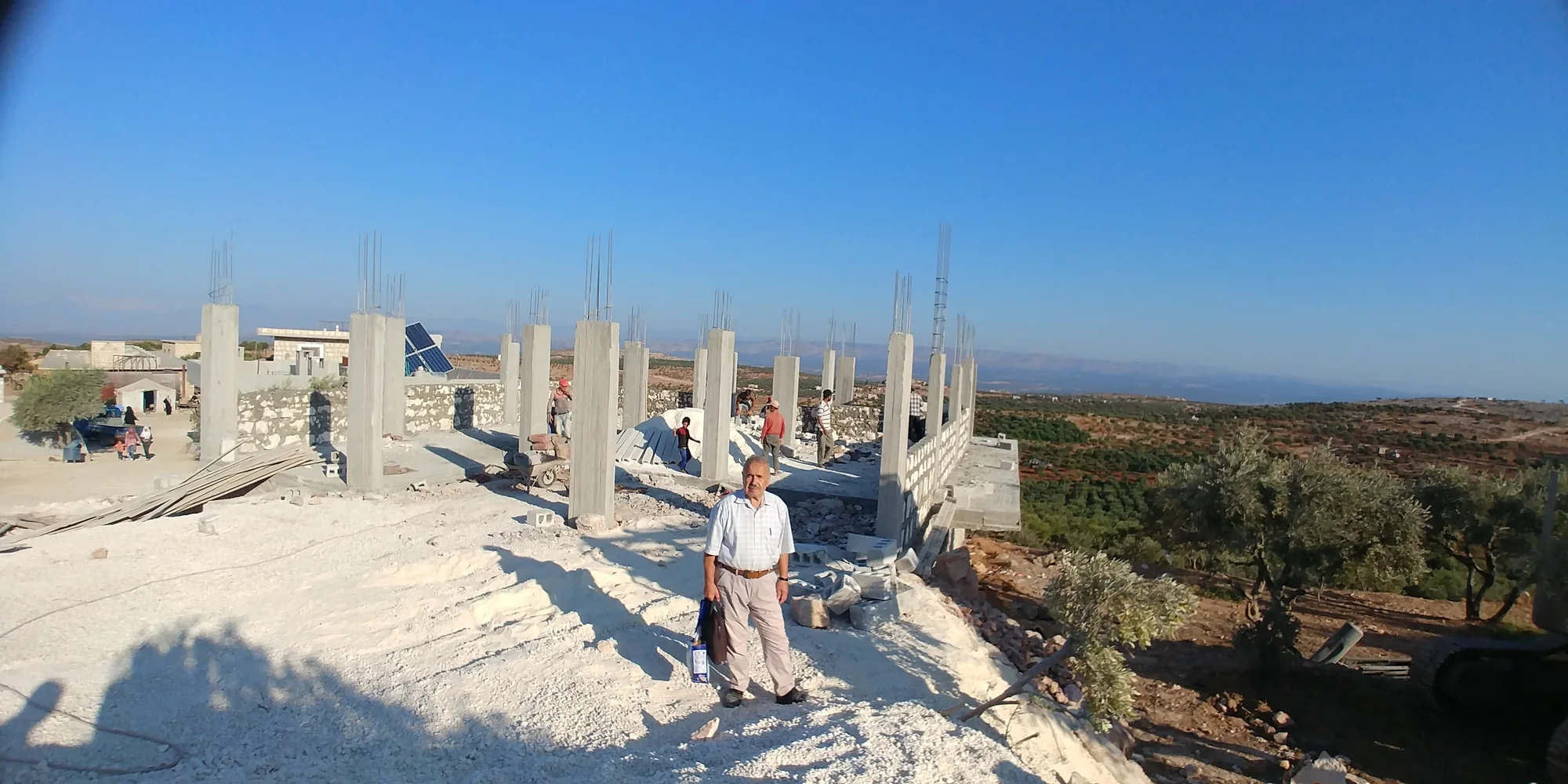
11 December 2019Five days later the excavator is there. Adnan Wahhoud is holding the plan.
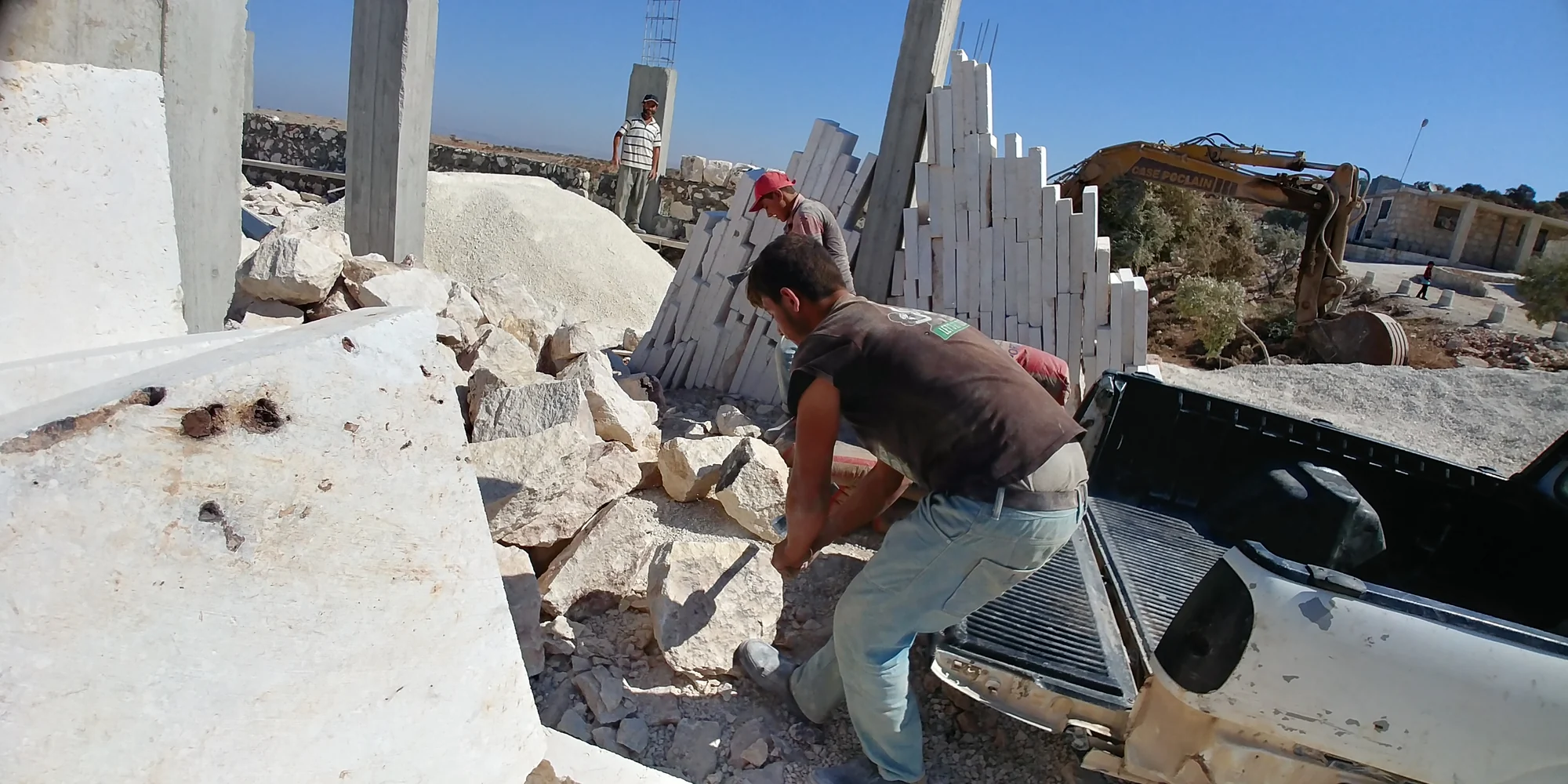
11 December 2019The first stones have been cut from the slope.
24 February 2020Two and a half months on: the foundations are in.
26 February 2020Walls of natural stone, the excavator still working in the background.
26 February 2020The same site, a few steps further along.
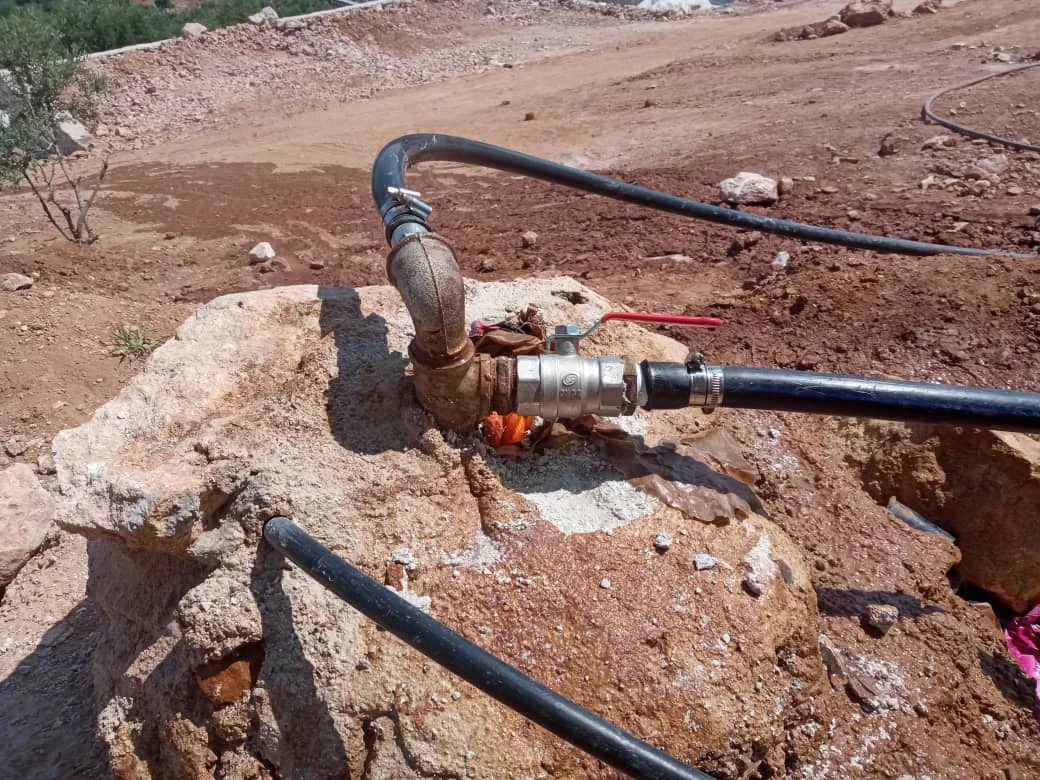
29 February 2020Water pipes are laid between the walls.
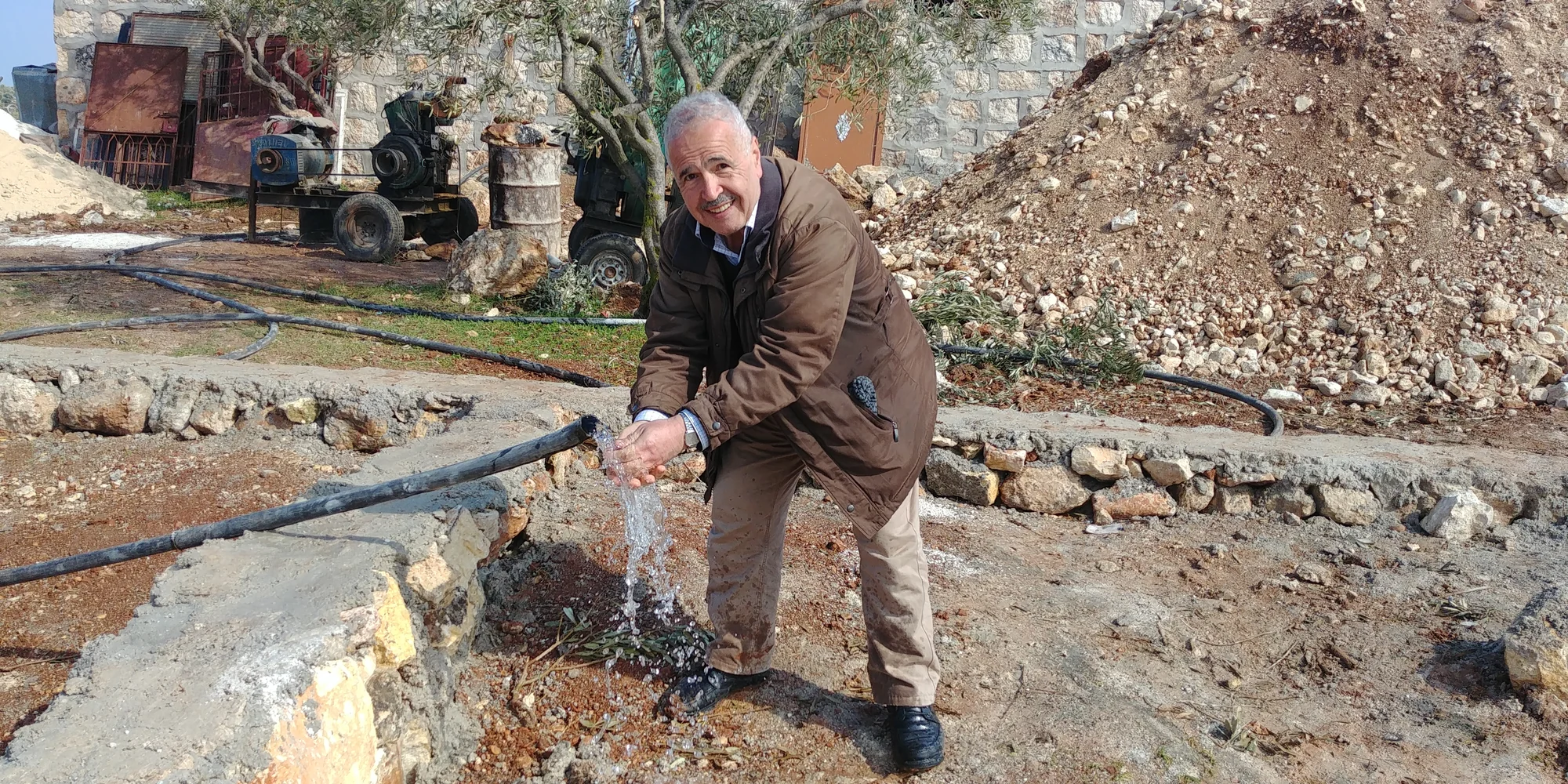
29 February 2020The water arrives.
3 March 2020Tents already stand between the foundations.
30 September 2020Six months on: the concrete columns of the next block are up.
4 October 2020Stones are cut to size.
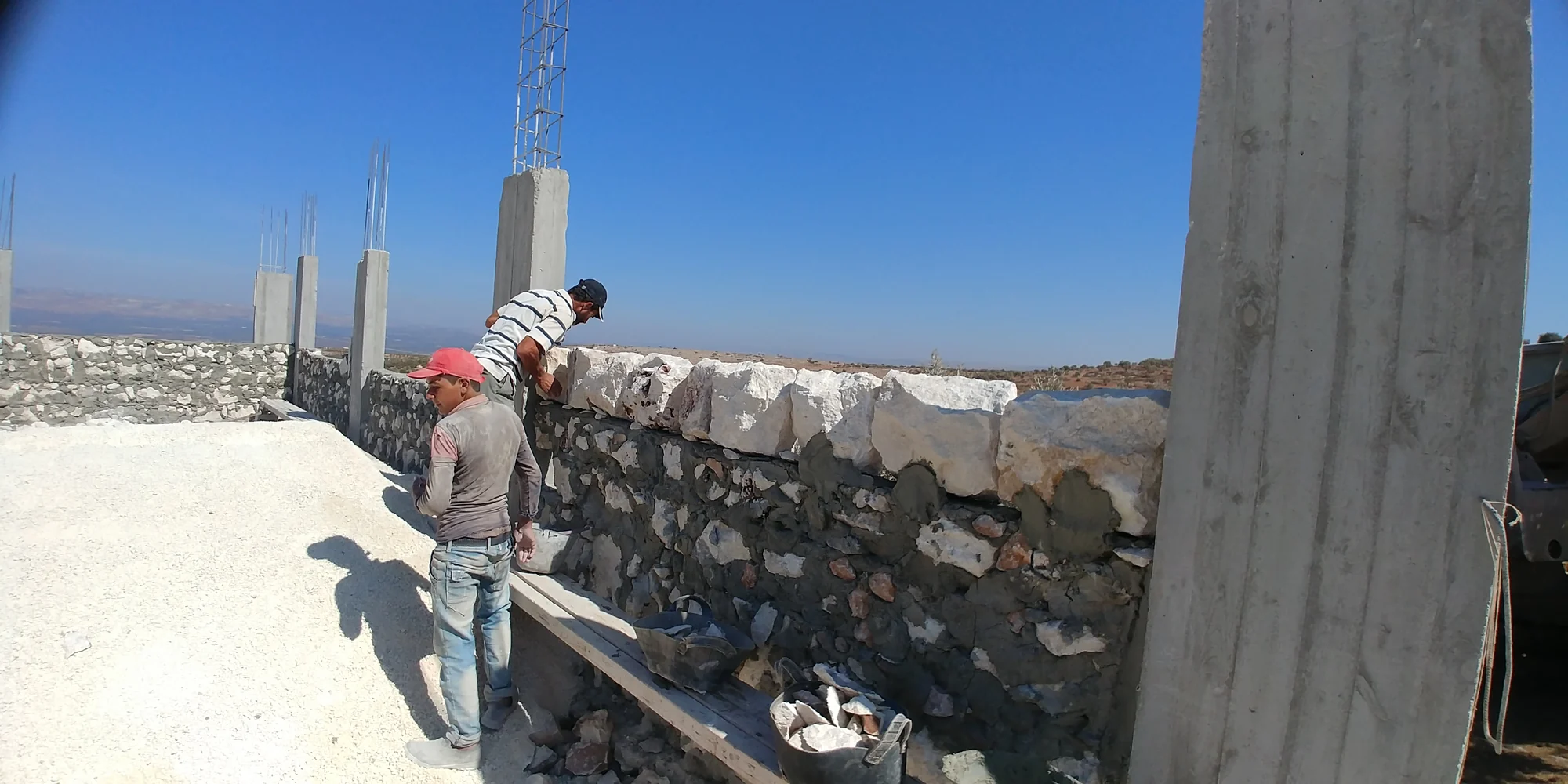
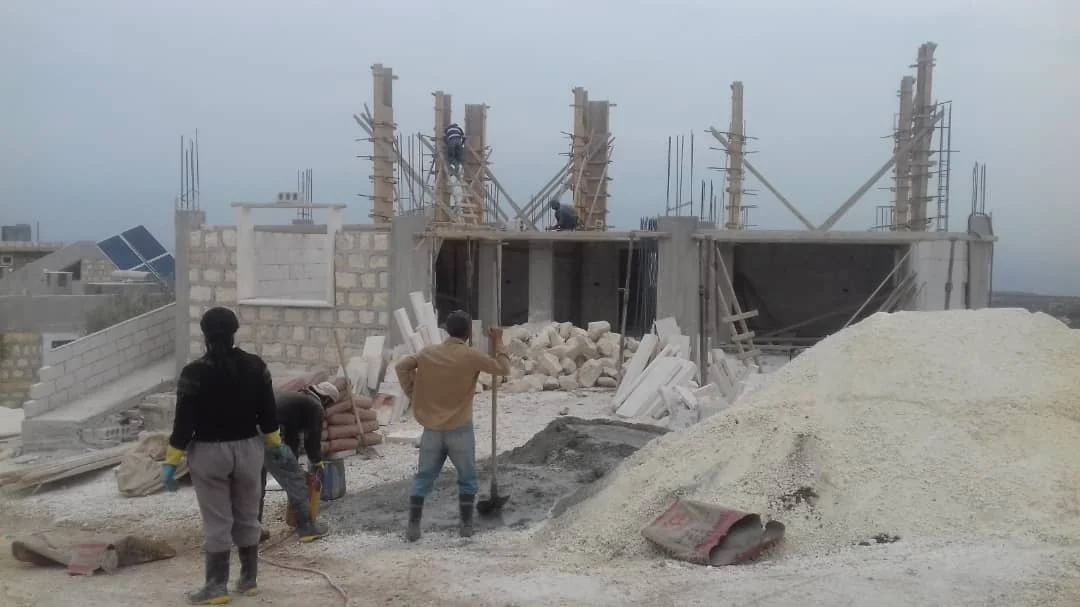
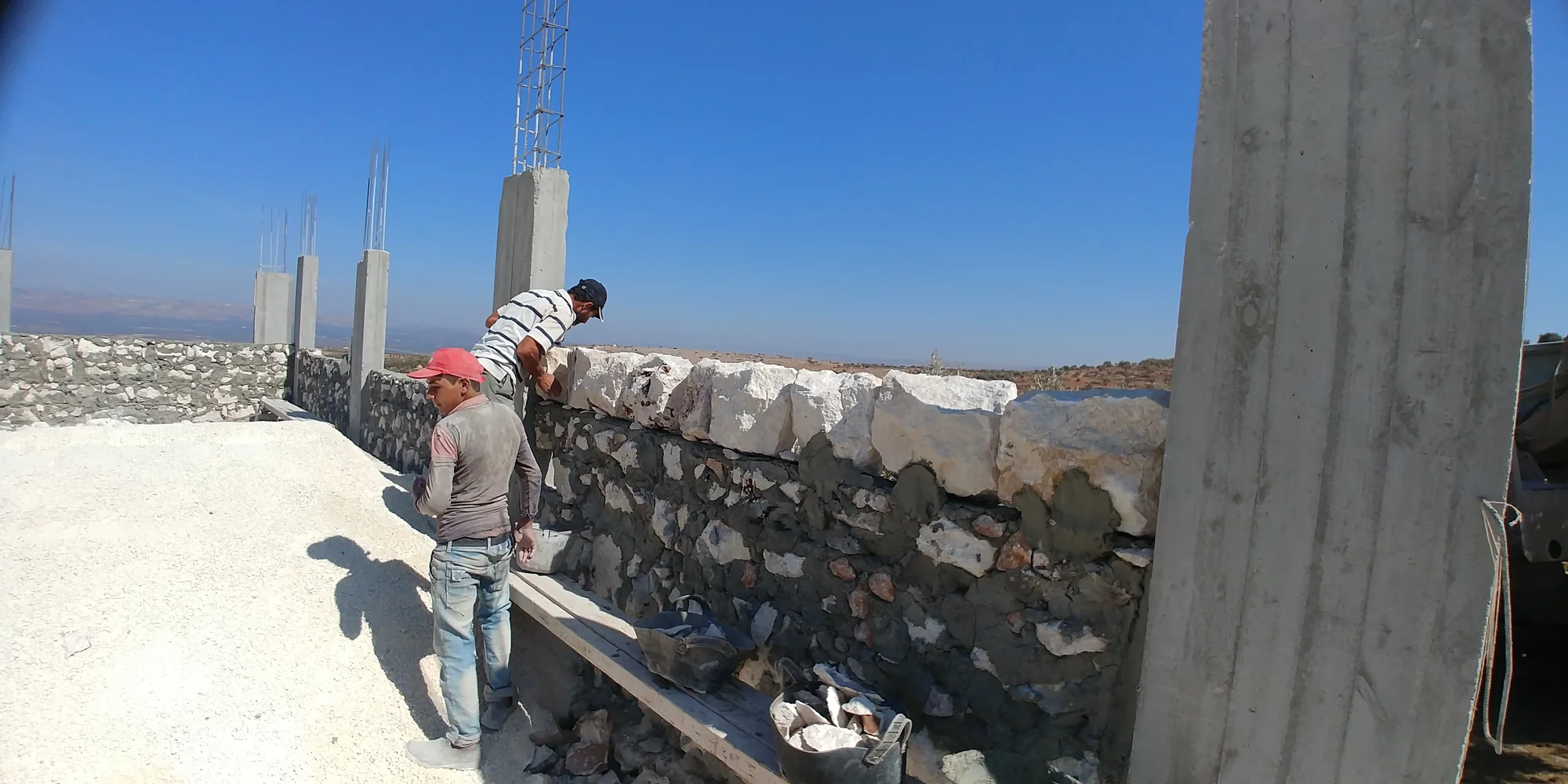
4 October 2020The walls go up.
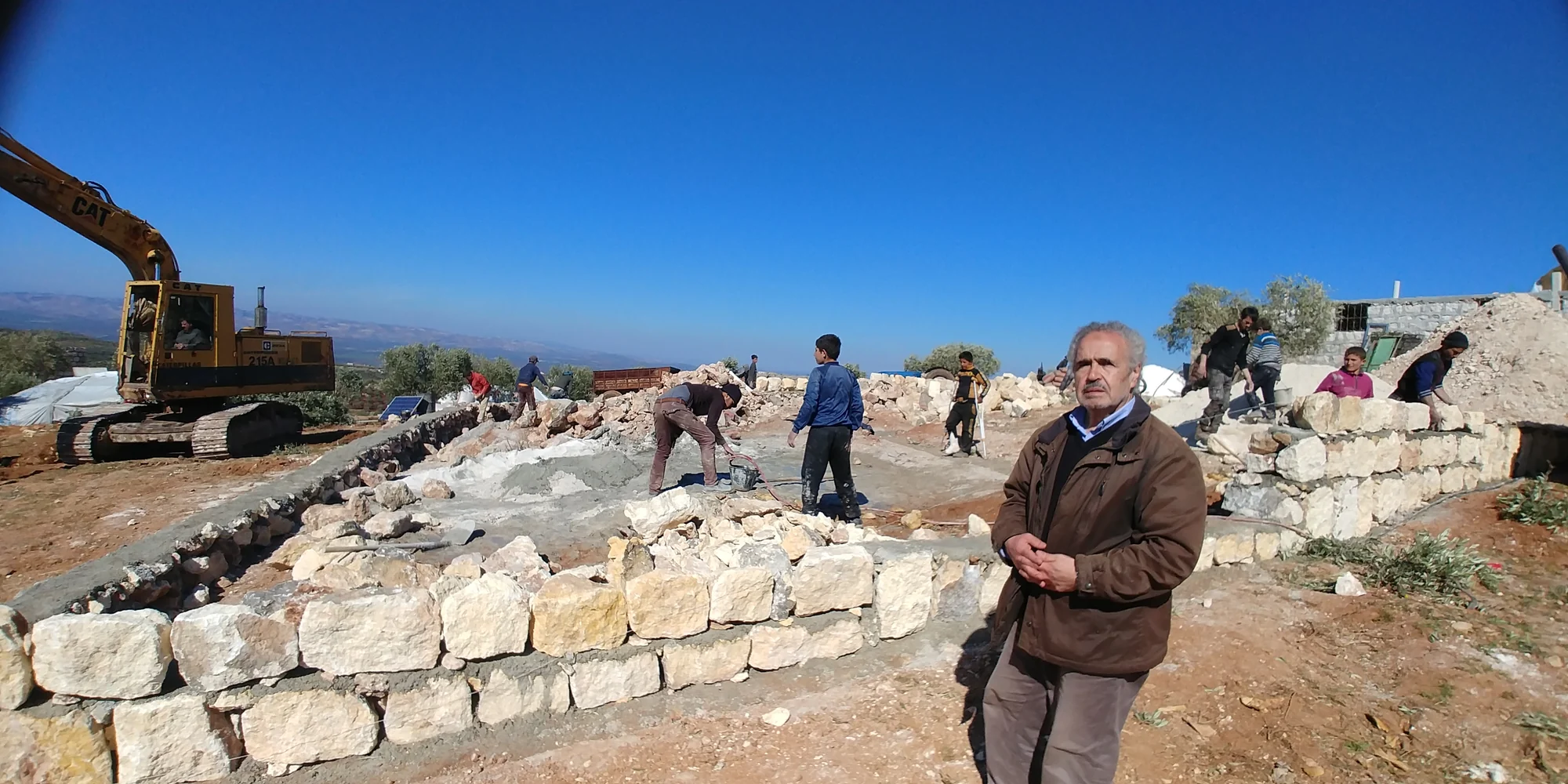
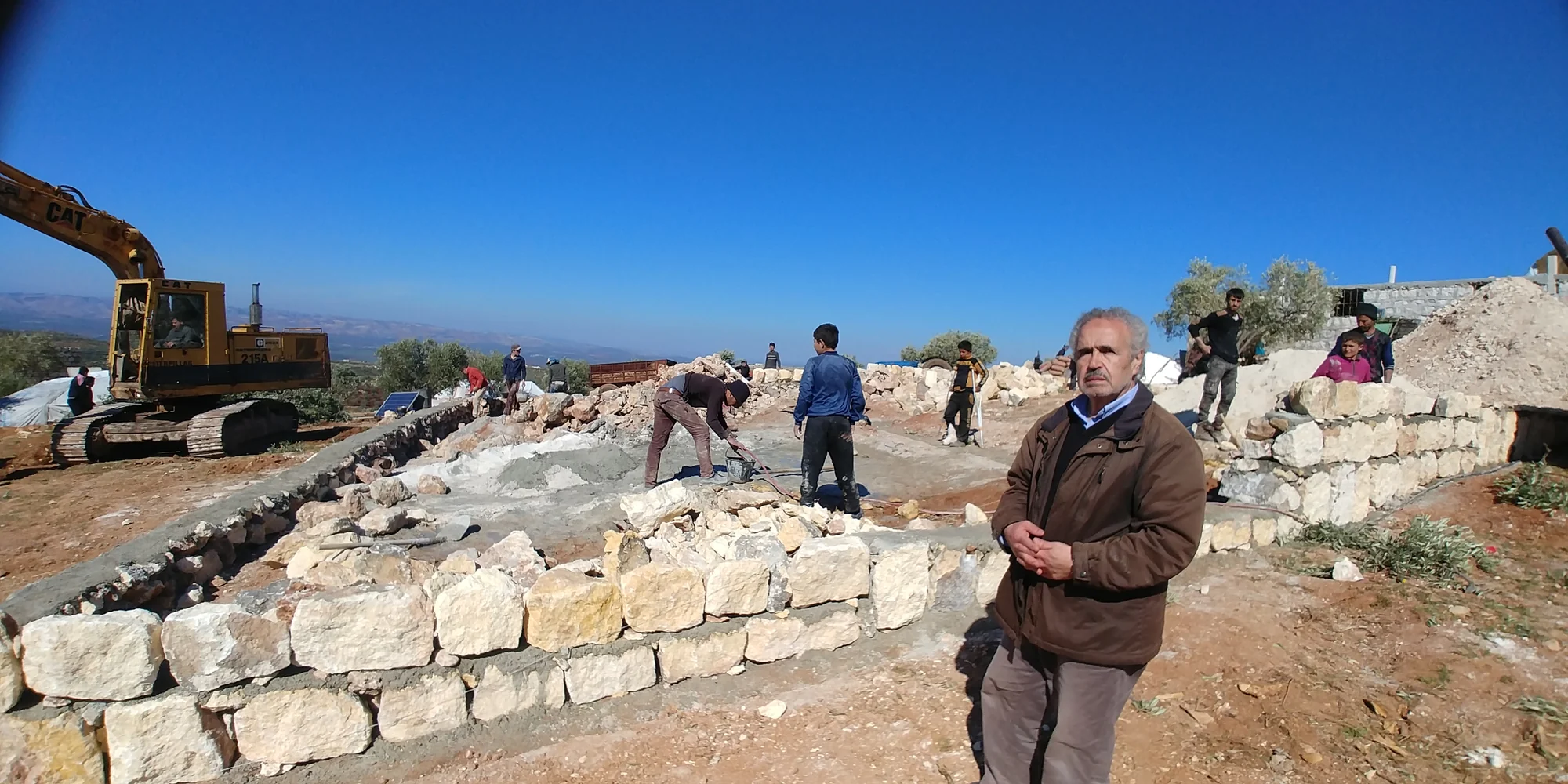
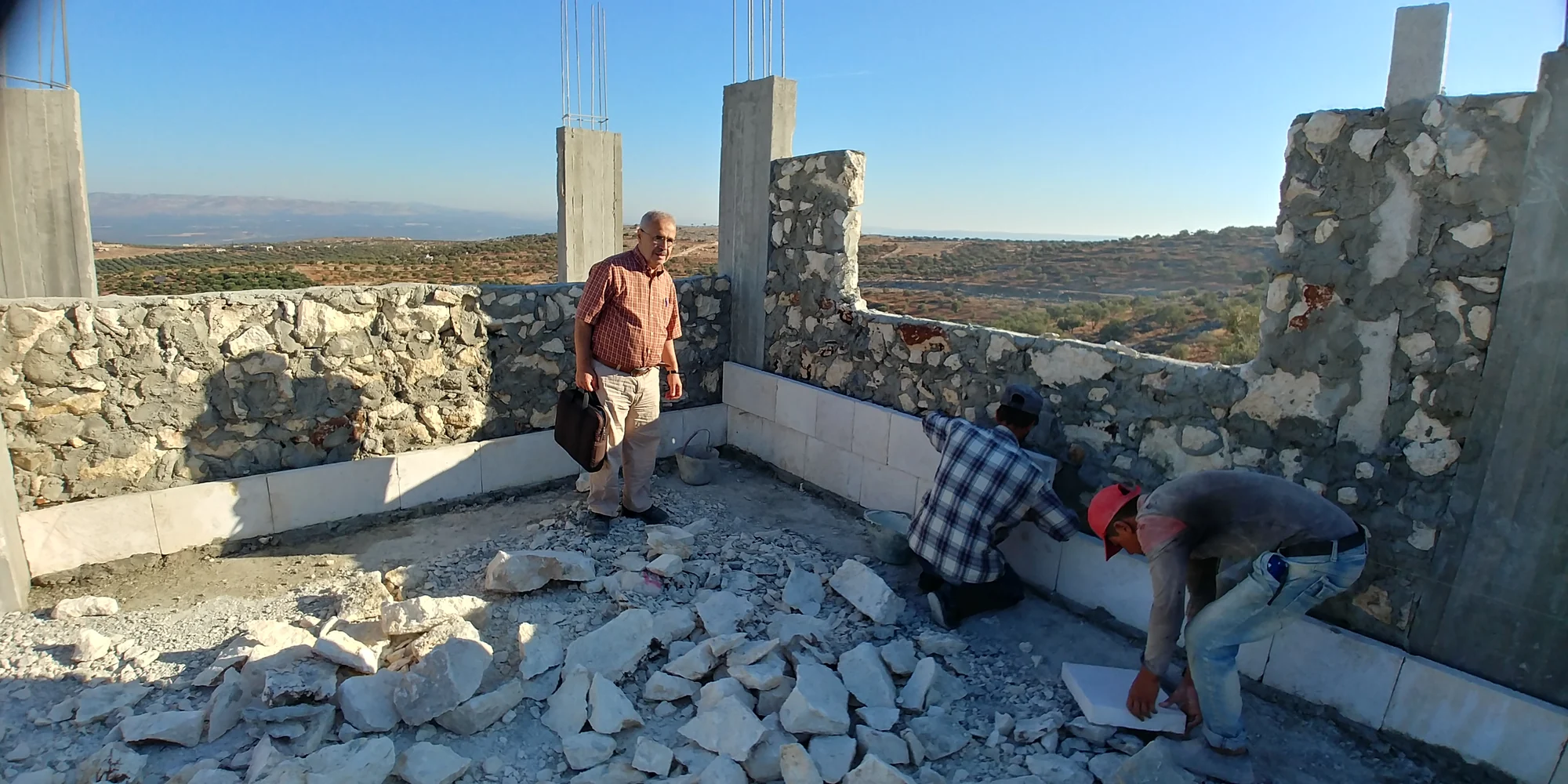
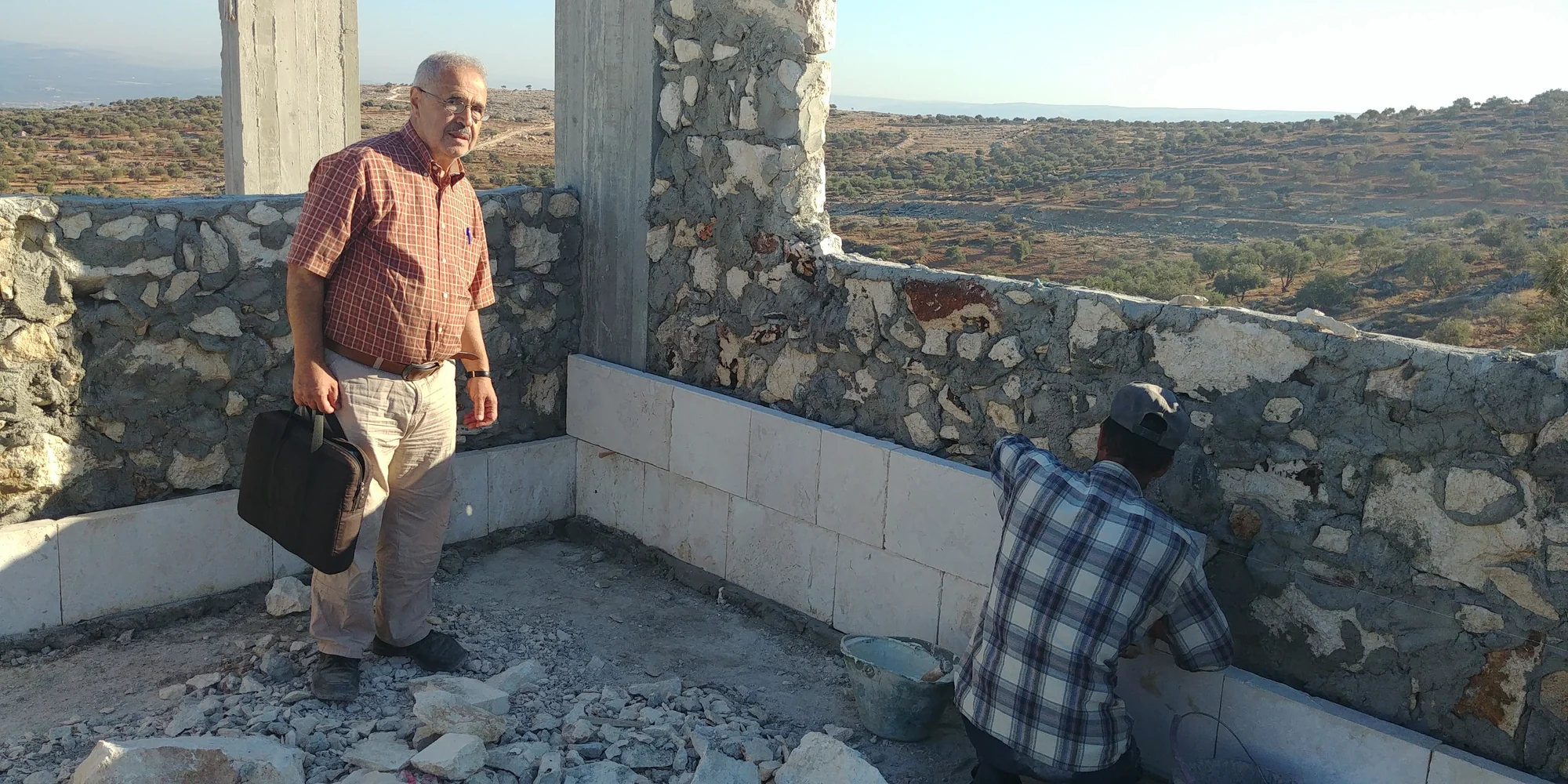
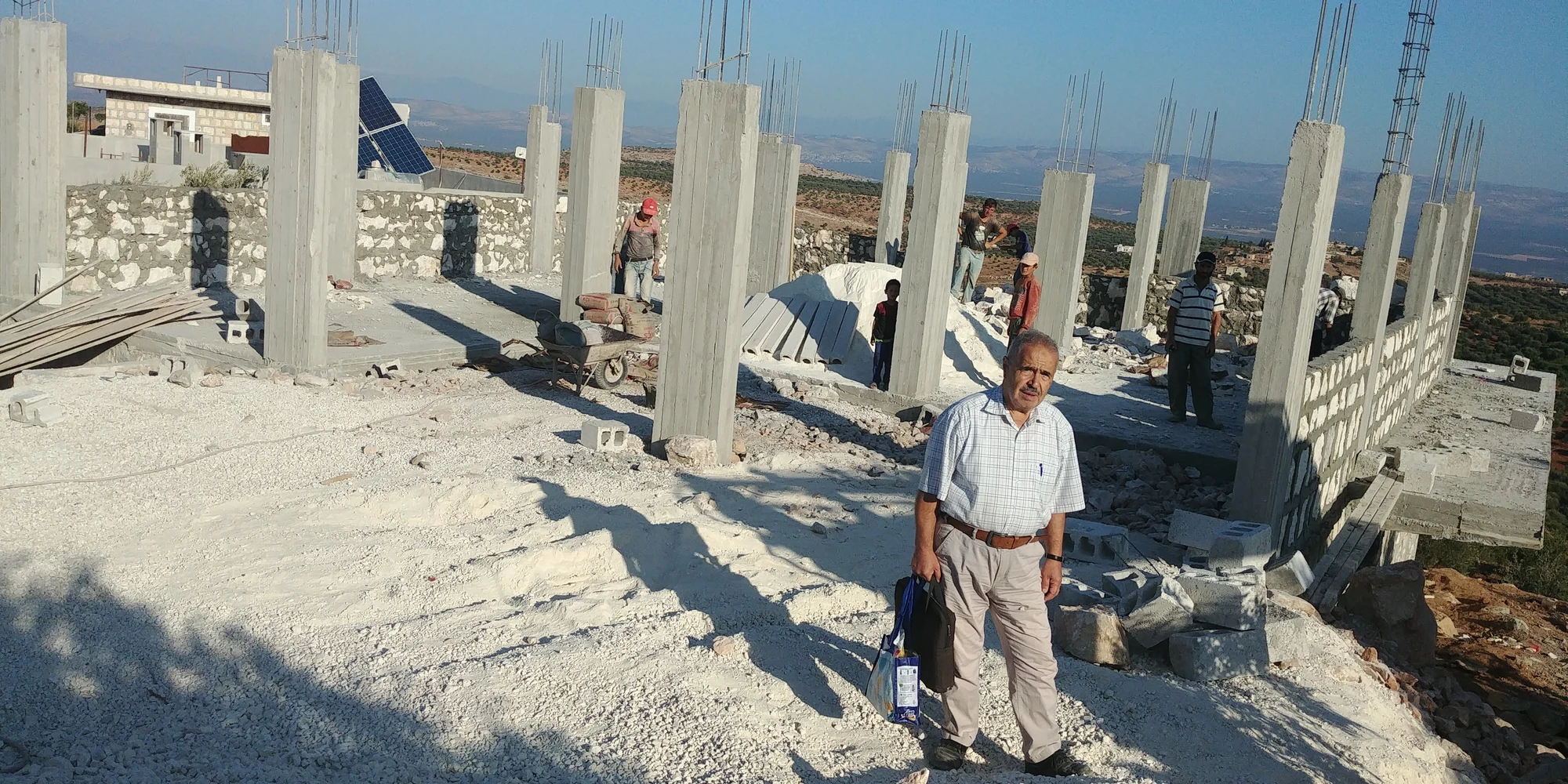
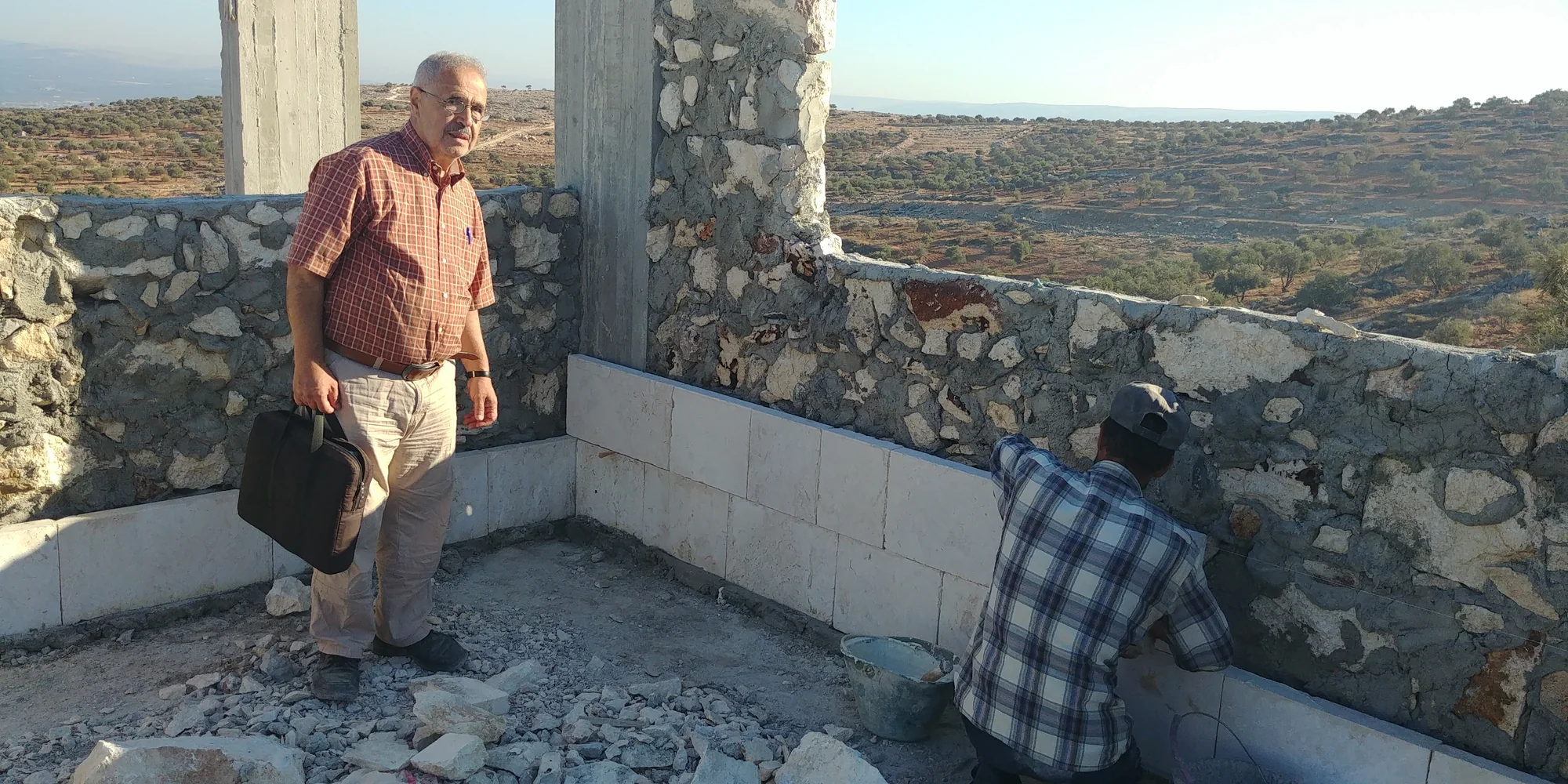
5 October 2020Adnan Wahhoud on the building site, briefcase in hand.
5 October 2020The same corner, a mason setting the next stone.
6 October 2020The road between the blocks, shells of houses to left and right.
A shell with scaffolding, two workers carrying stones.
The water main being connected.
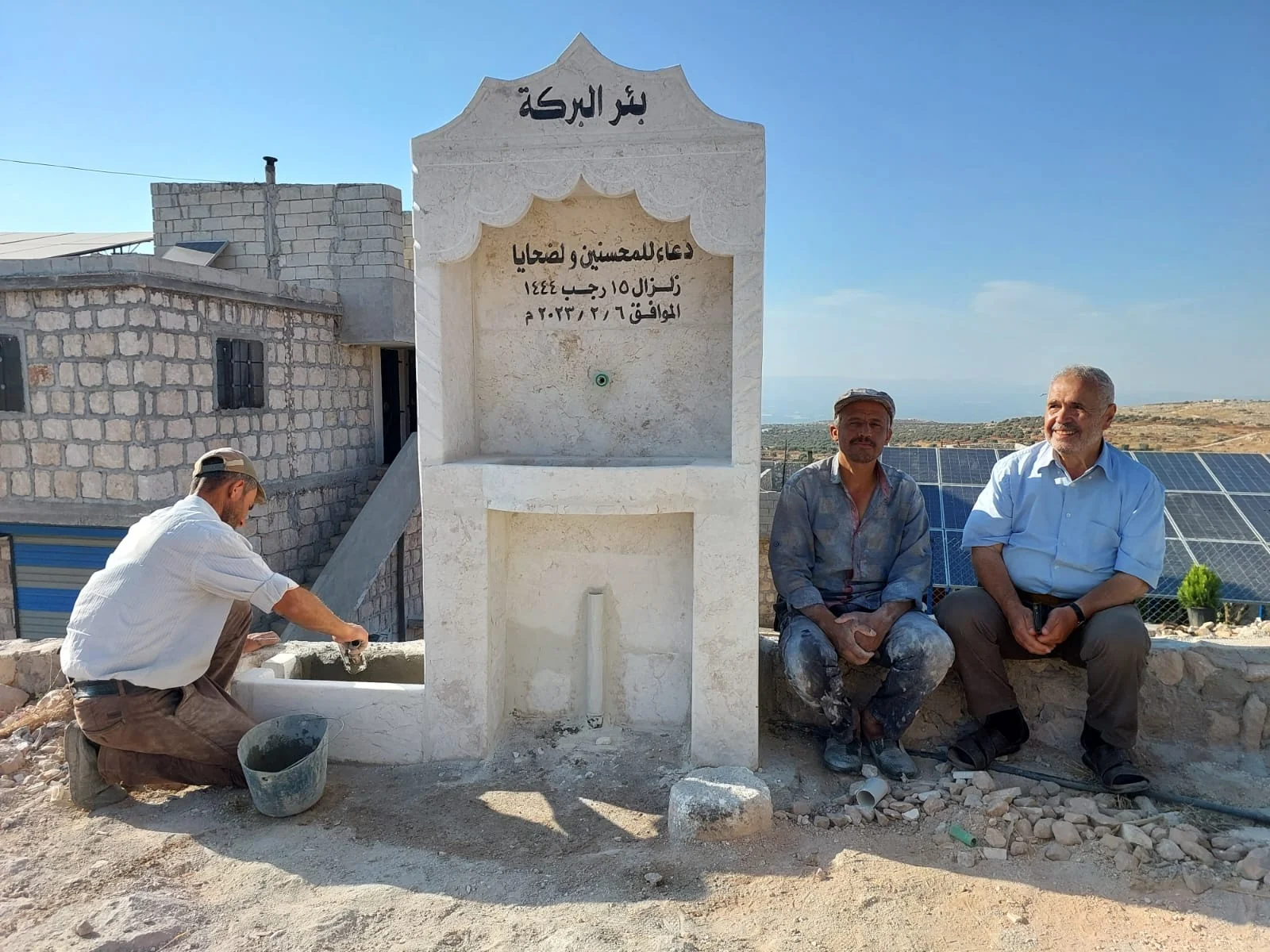
18 July 2023The well with its inscription, behind it the solar panels that power it.The village today
The village sign “Toubat” in the evening.
The village street, the shop on the left.
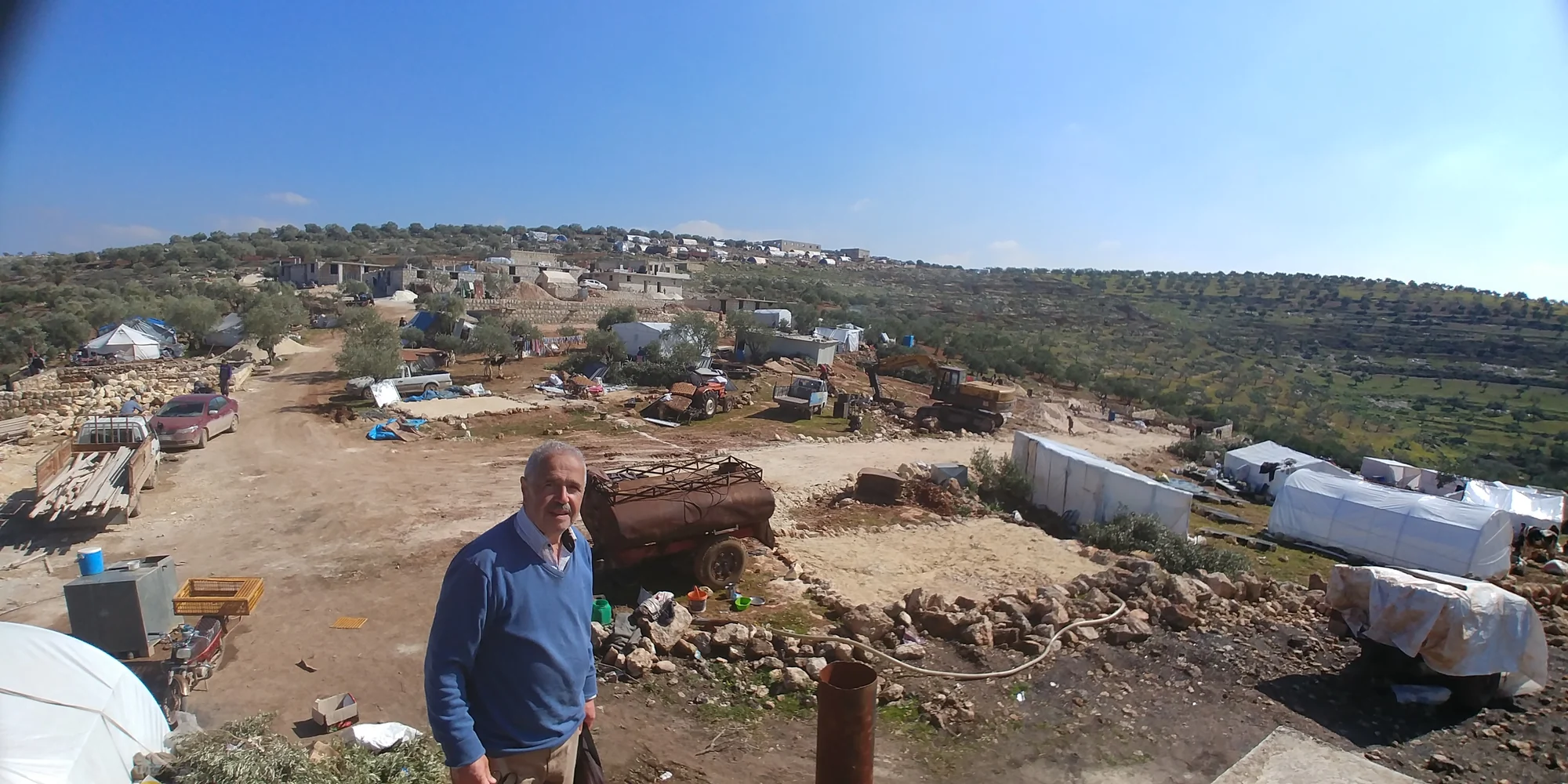
Across the rooftops into the valley.
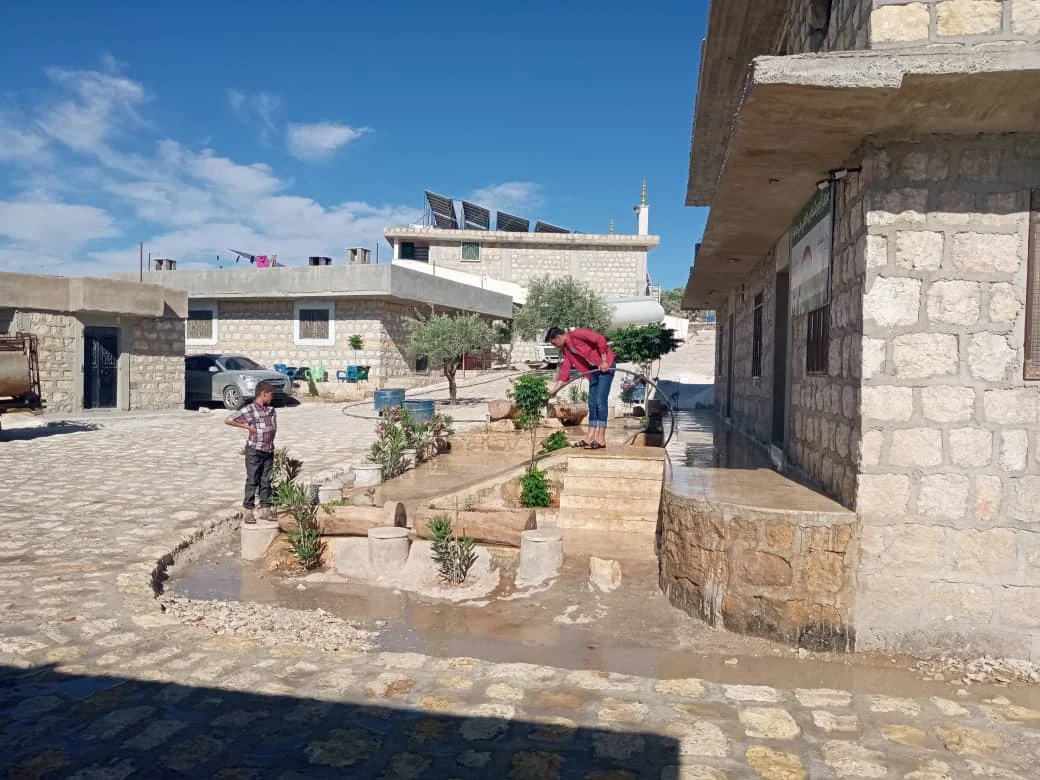
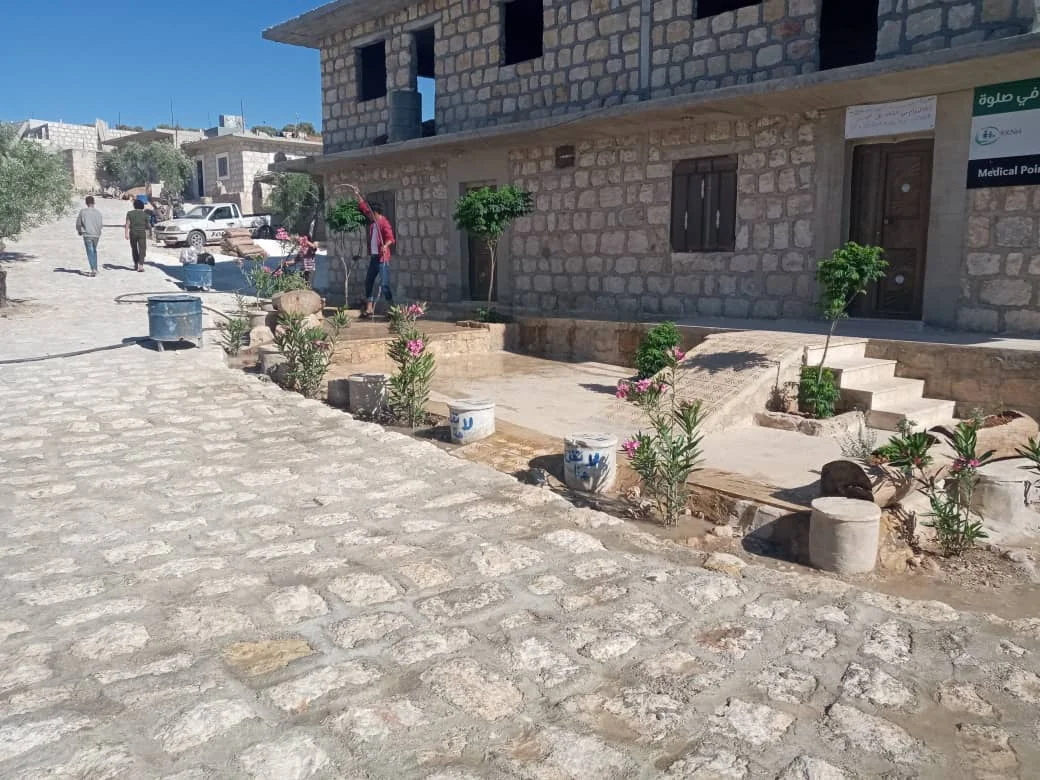
A child in front of a finished house, planting beds laid out before it.
Paved lanes between the houses; the medical point’s sign hangs on the house to the right.
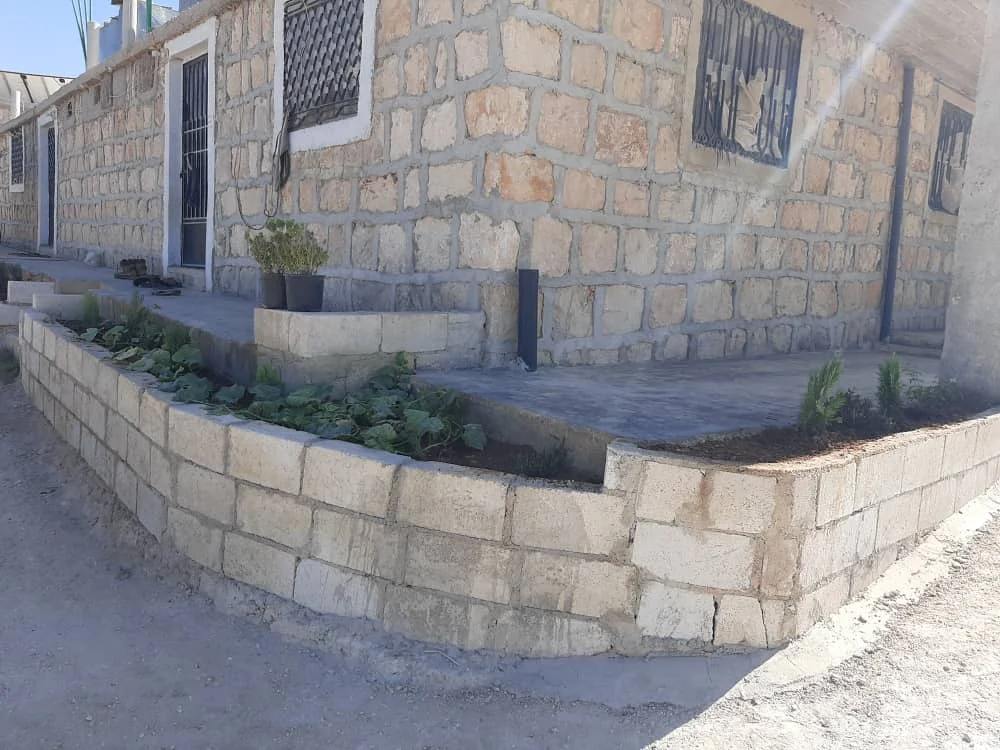
A natural stone wall with a freshly planted bed.
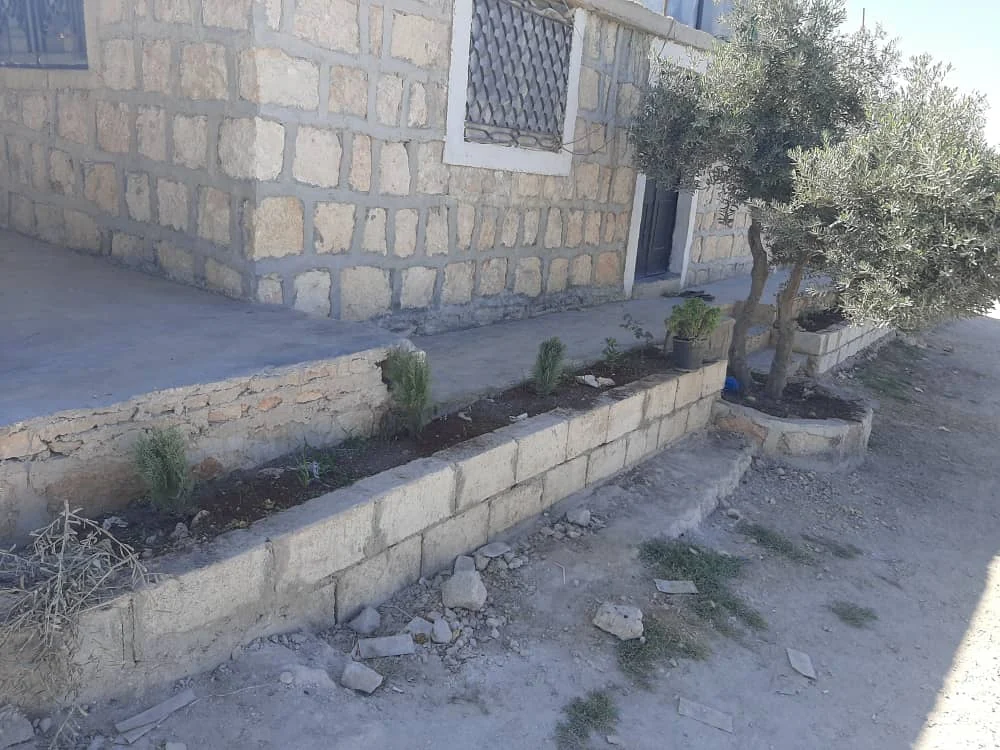
An olive tree, planted in front of the house.
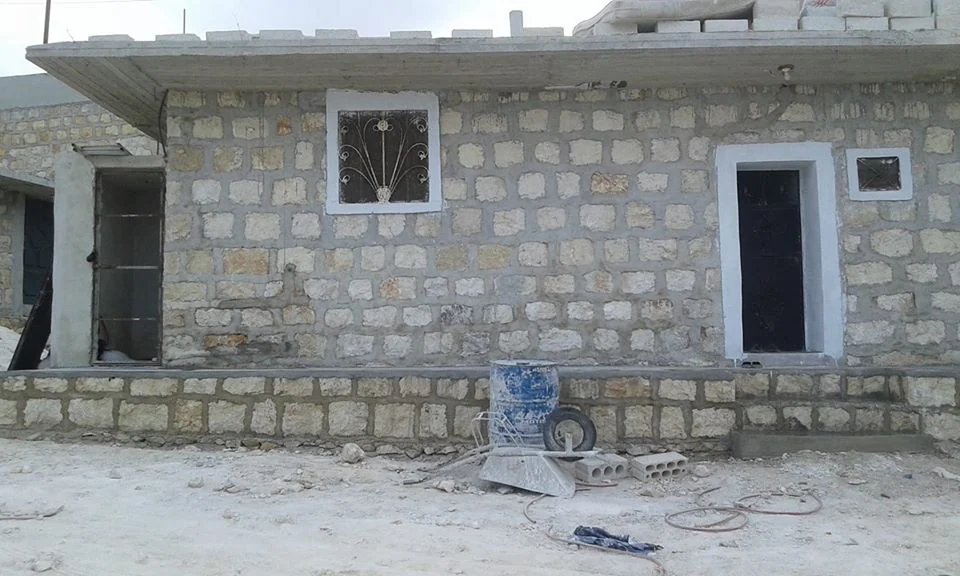
A finished house, with windows and a door.
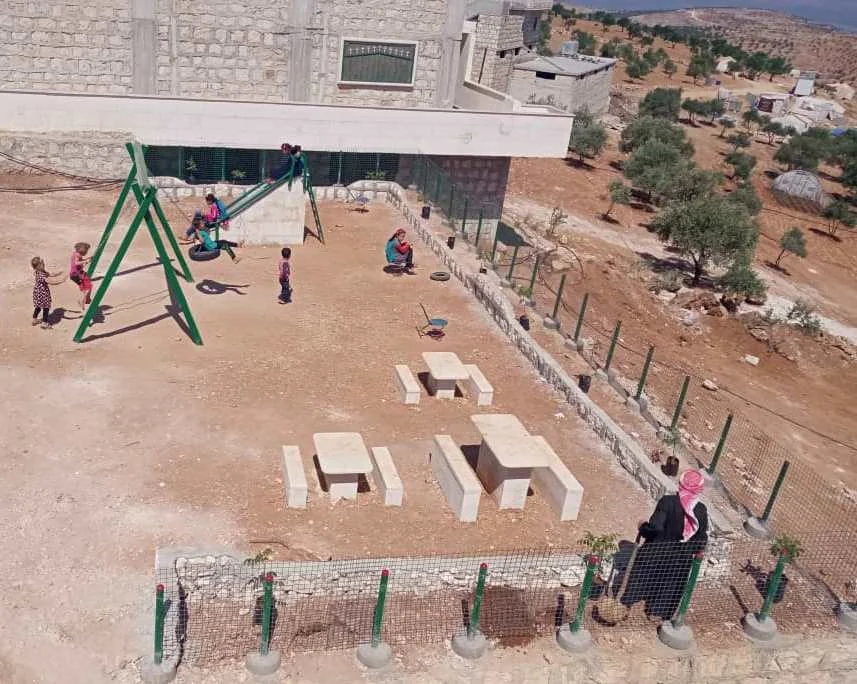
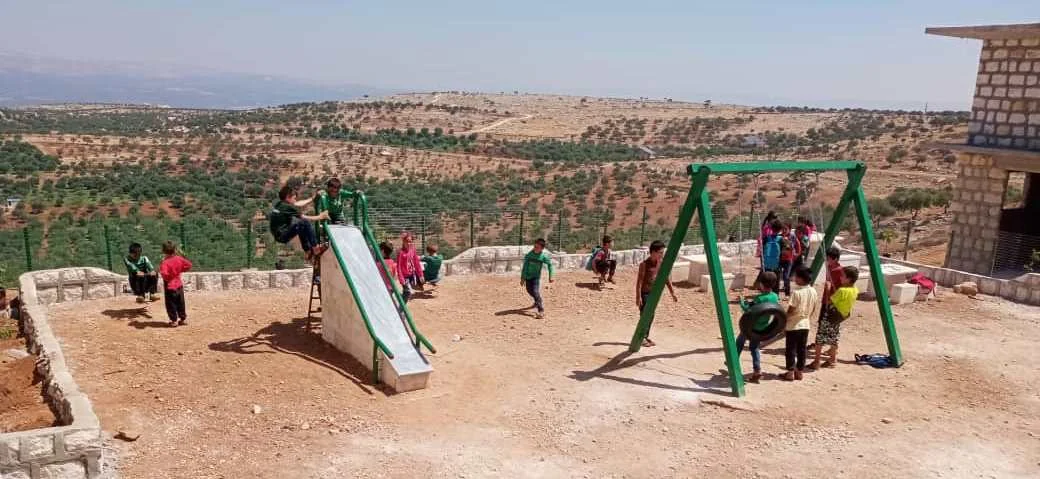
The playground with swings, slide, see-saw and benches.
Children on the playground, the olive groves behind them.
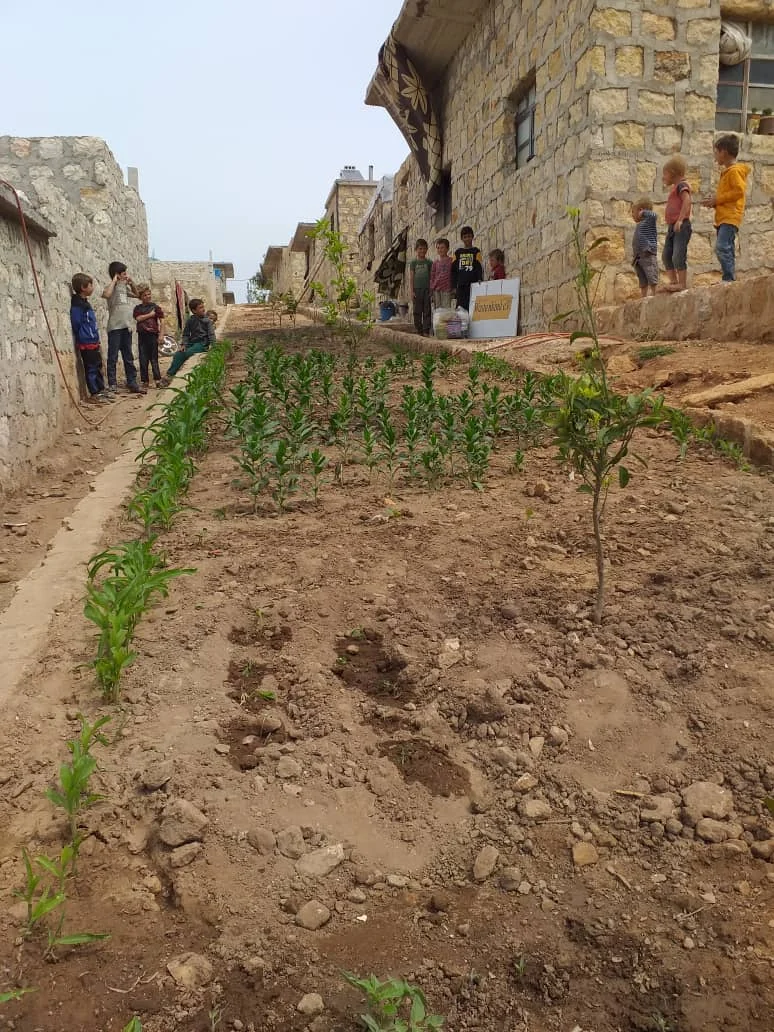
A maize bed between the houses, children looking on.
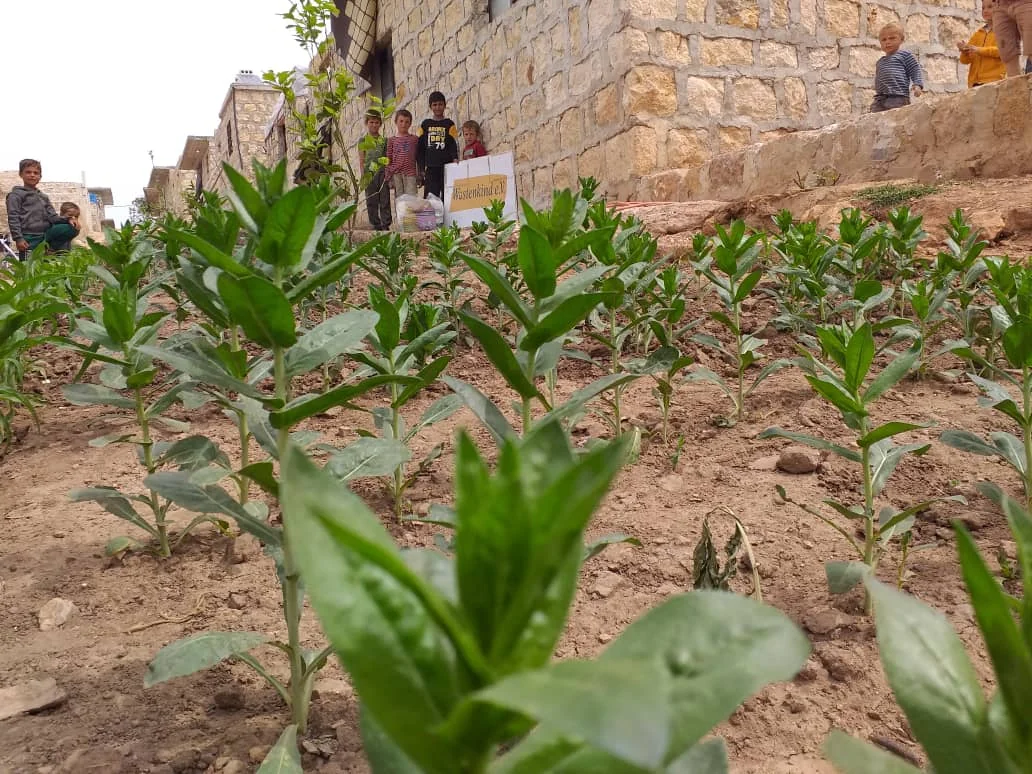
Young plants in the bed.
The mosque, sheet by sheet
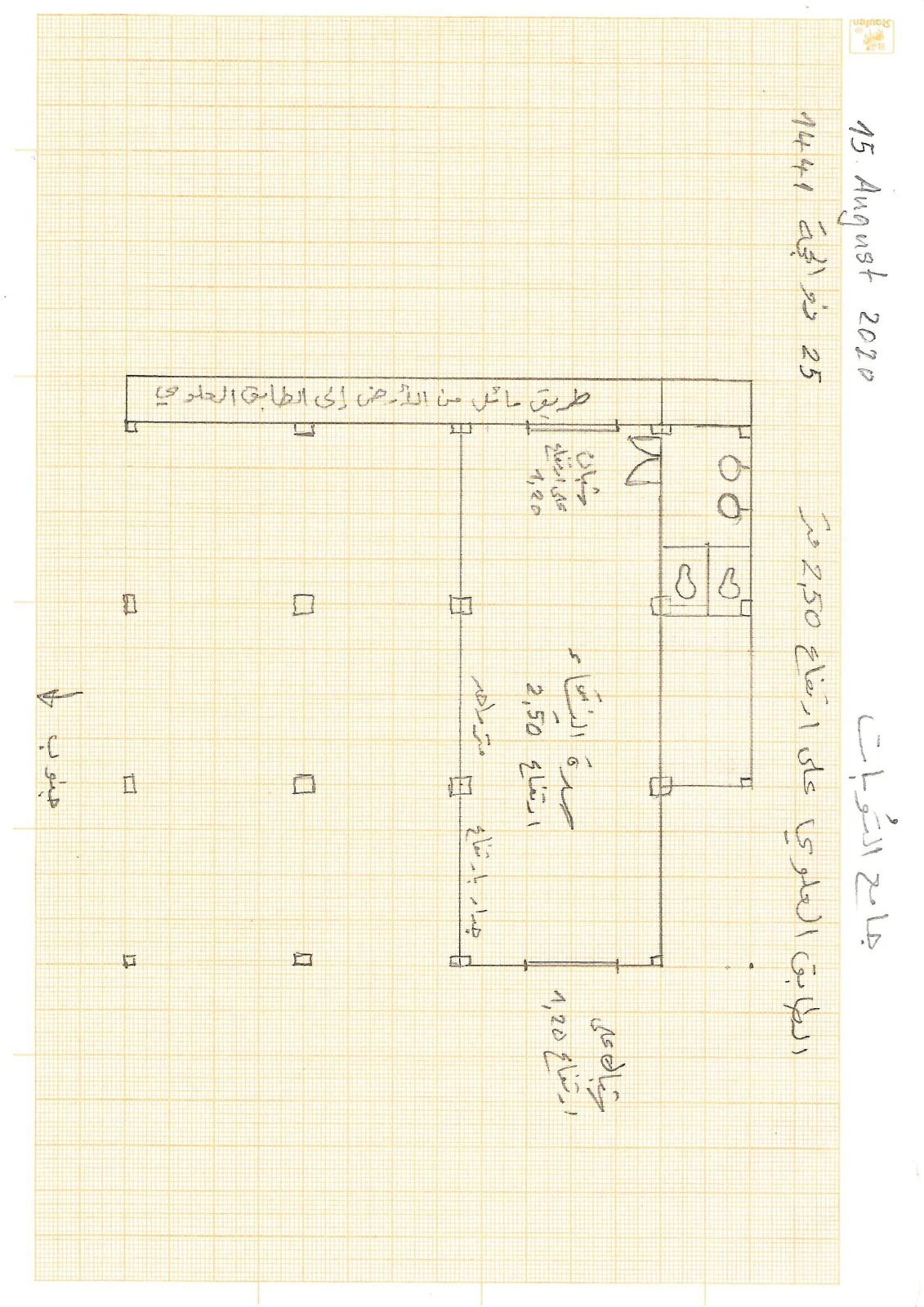
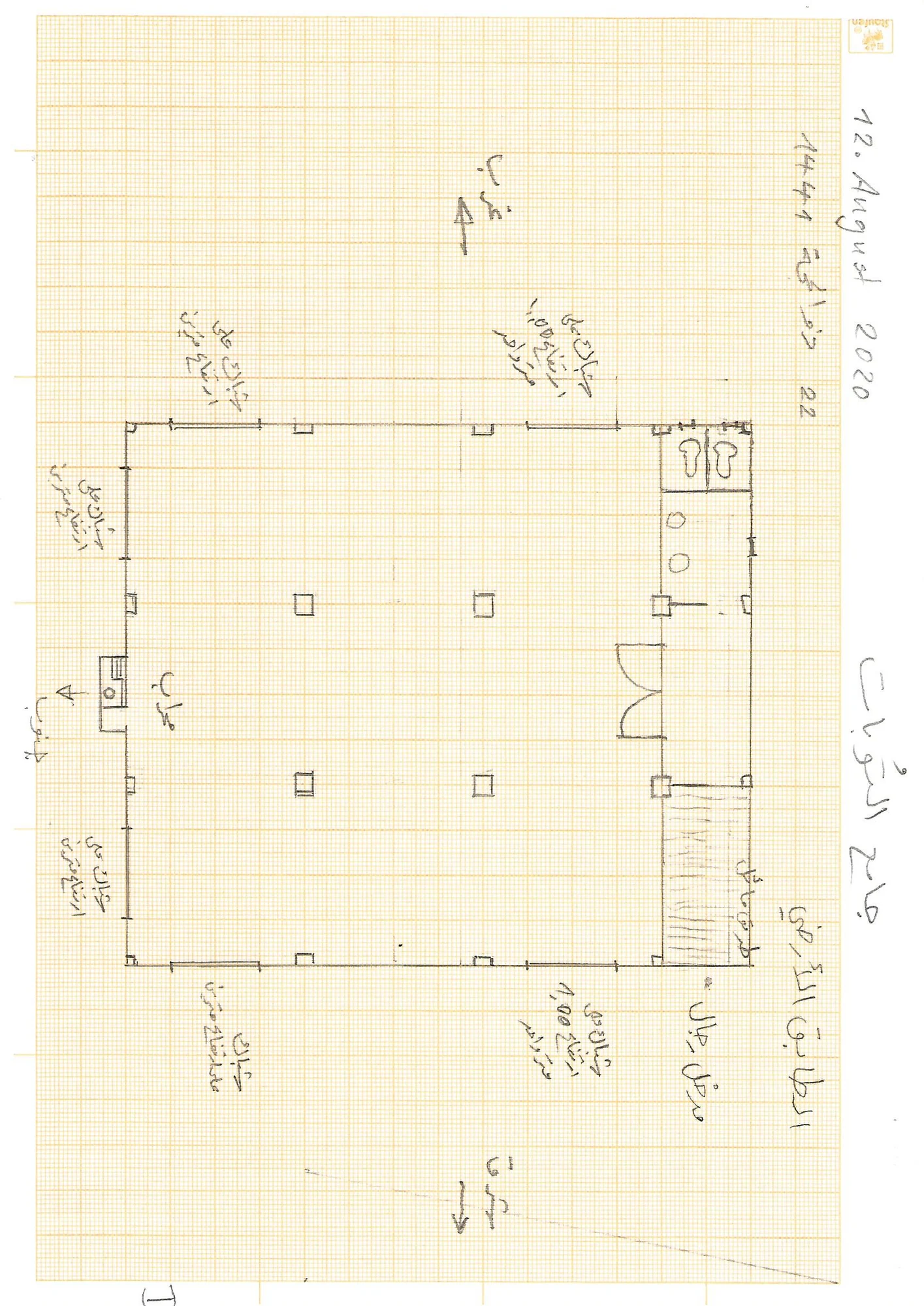
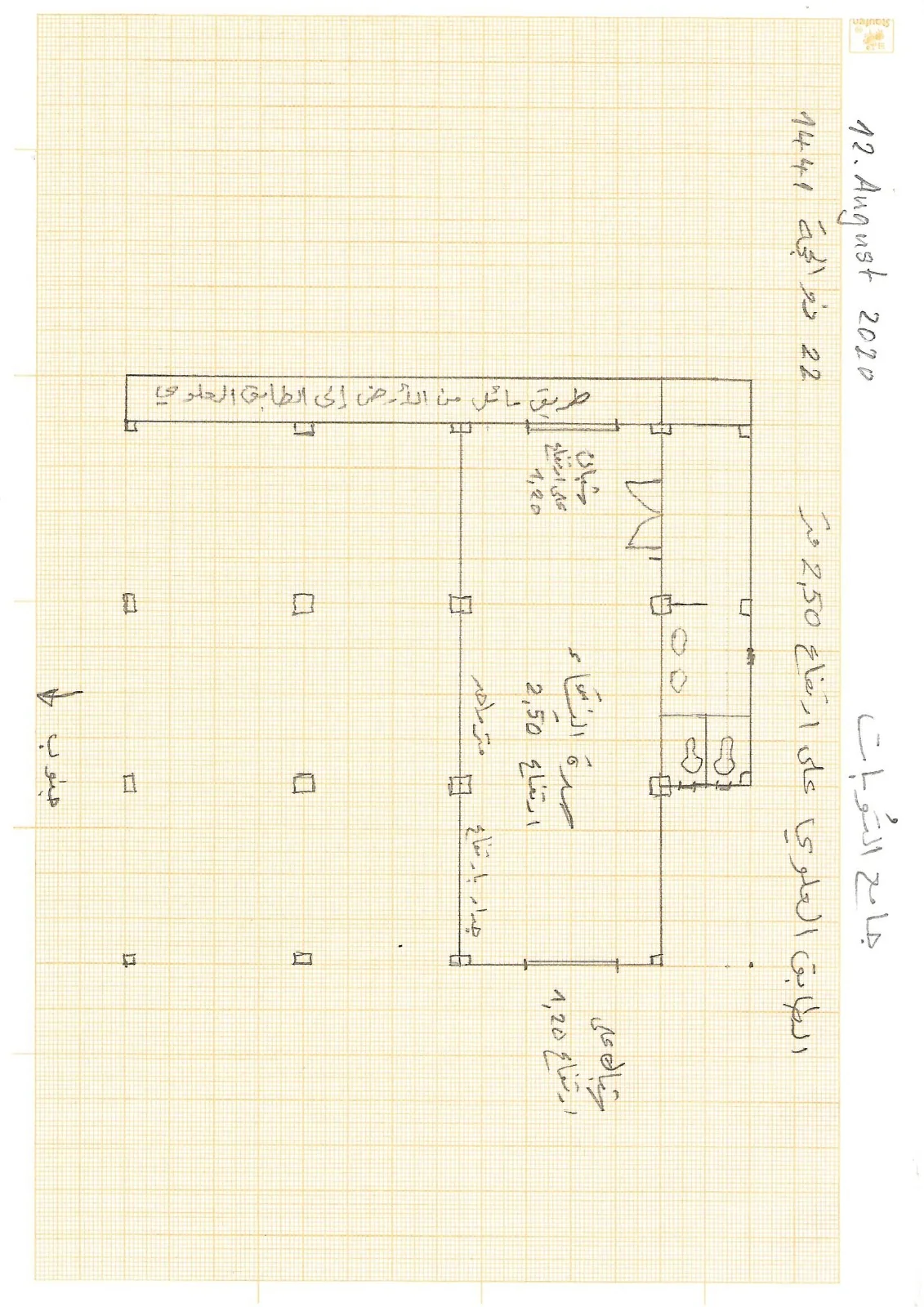
The community and prayer room, too, begins as a hand drawing on squared paper.
The hand drawing, 12 August 2020.
The second sheet, 15 August 2020.
The third sheet of the same series.
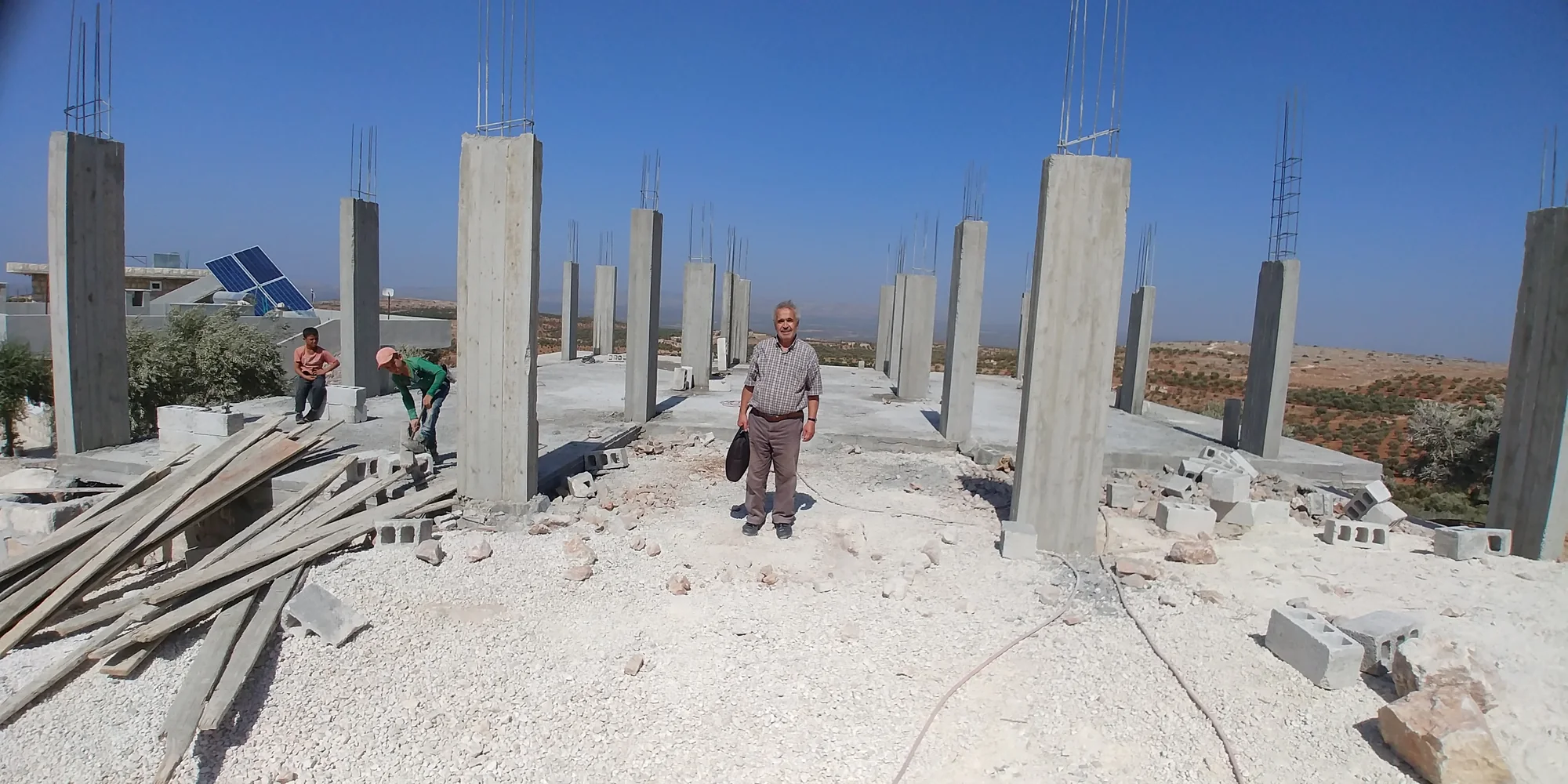
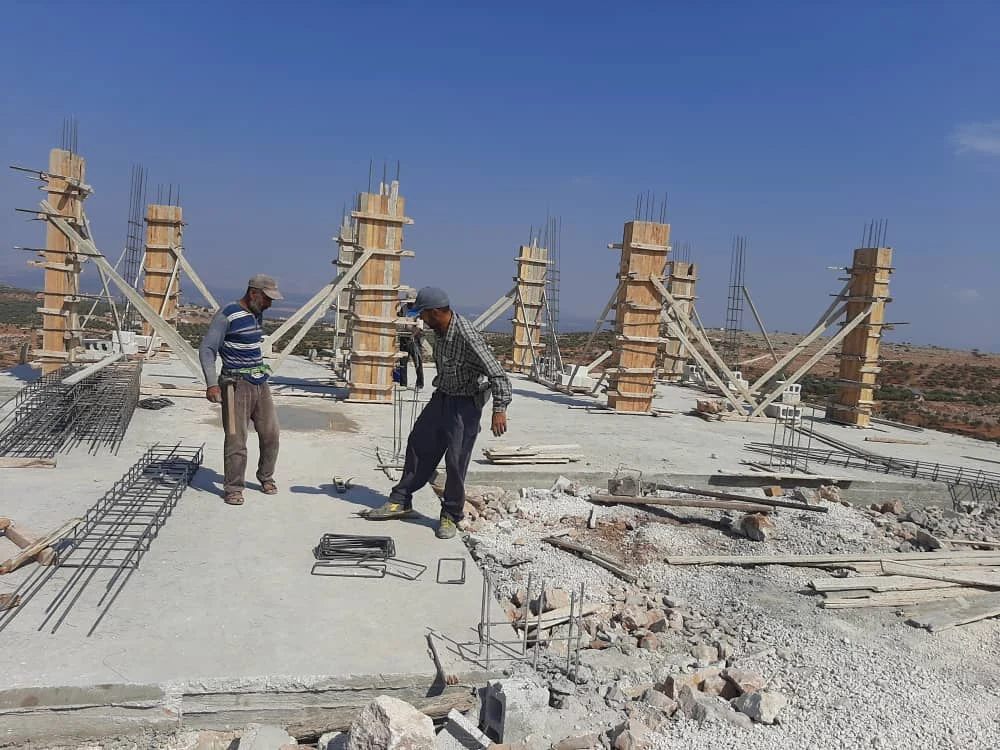
The columns are up, the ground cleared.
A view across the site towards the olive groves.
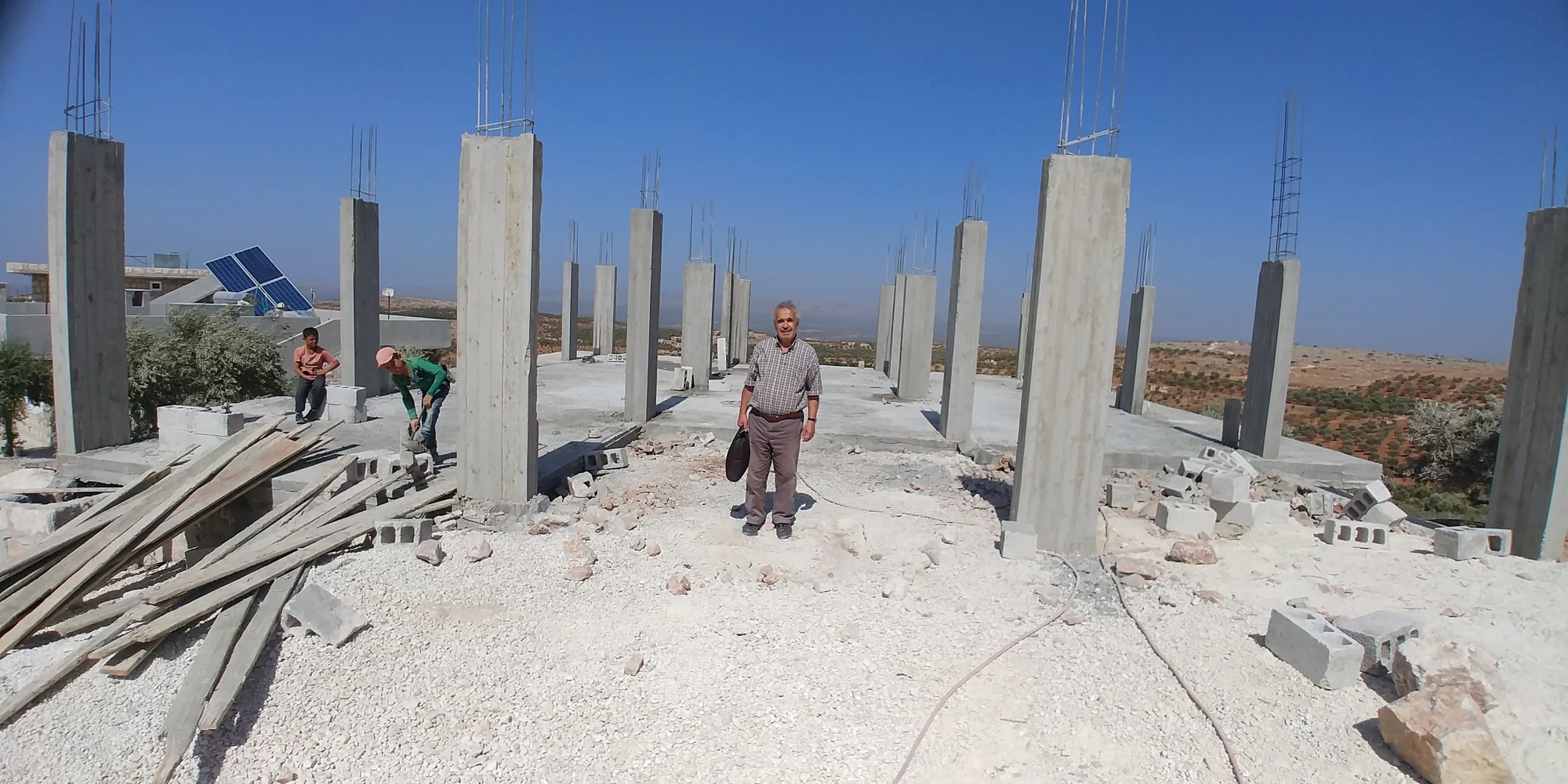
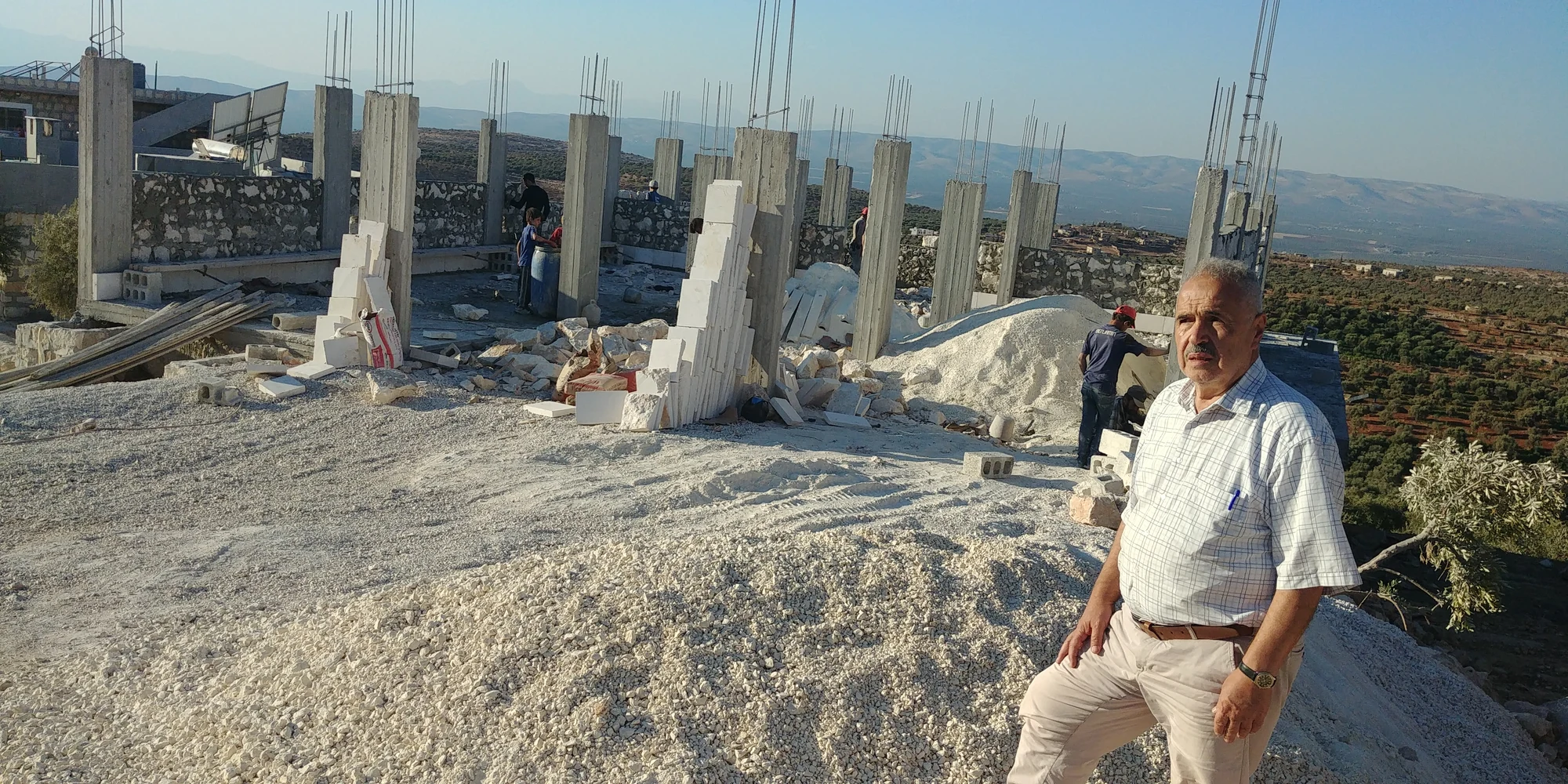
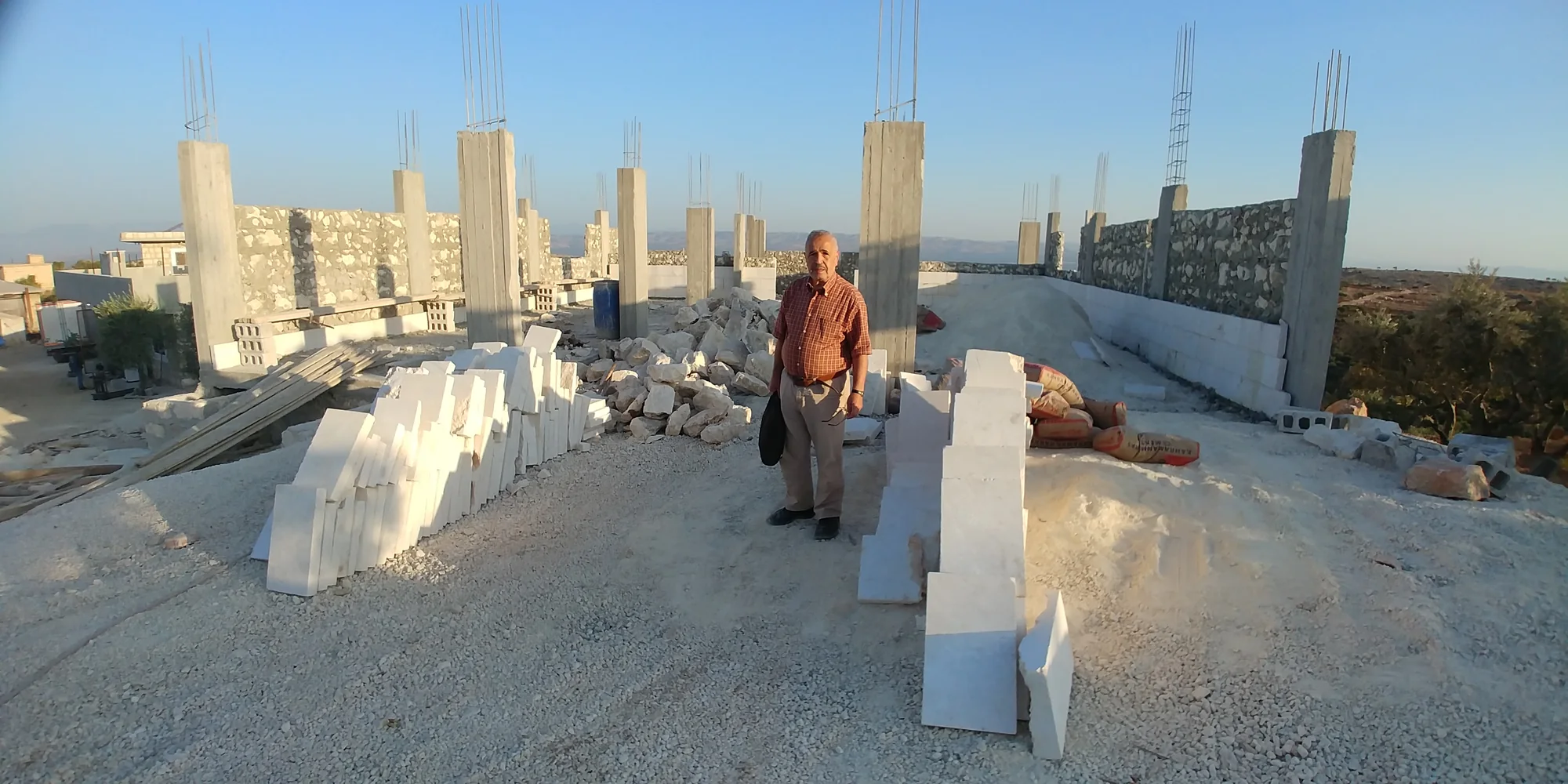
Adnan Wahhoud among the columns.
A mason lays the natural-stone facing.
Adnan Wahhoud on the building site.
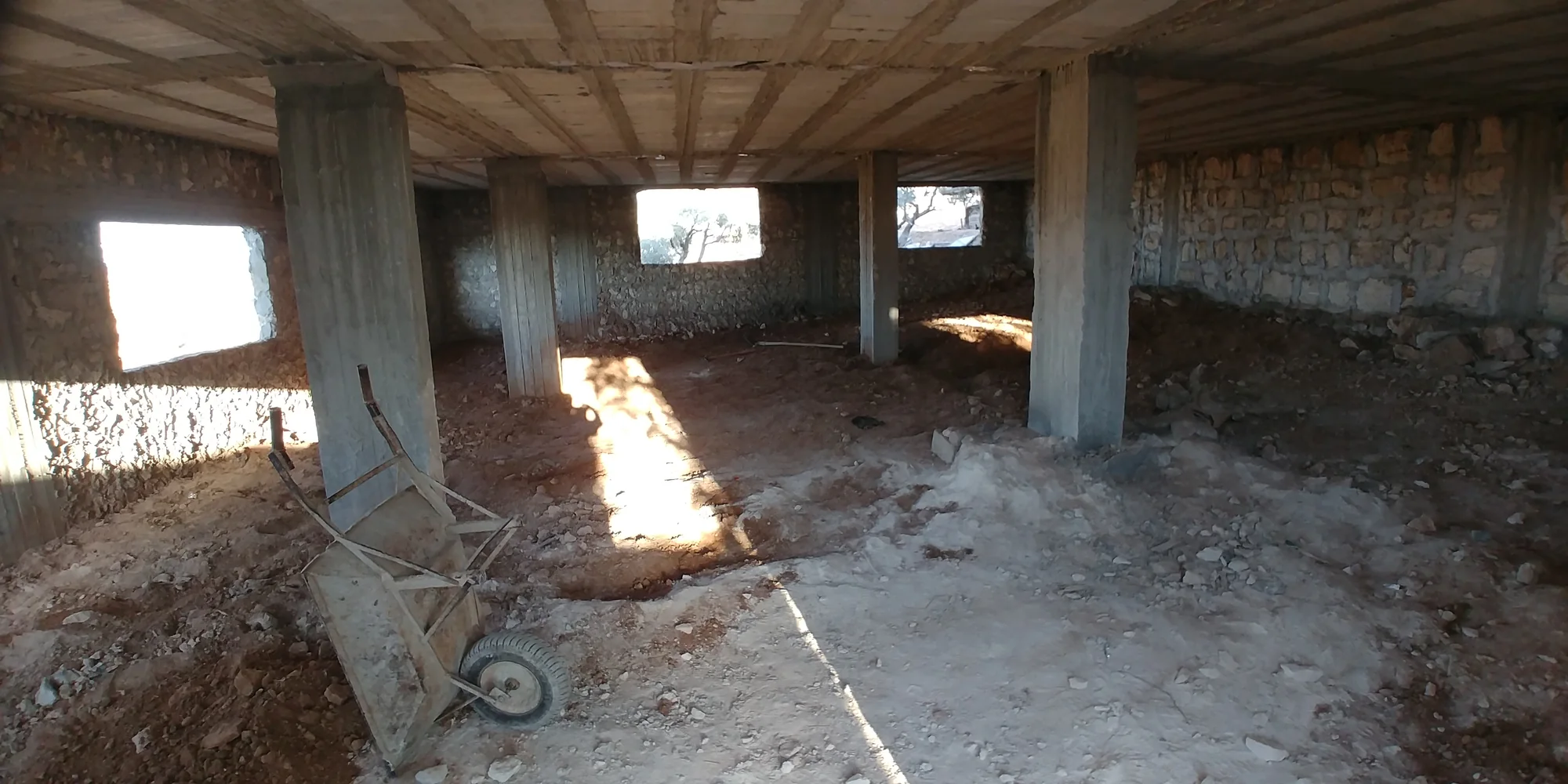
The future interior, still a shell.
Adnan Wahhoud at the finished stone wall.
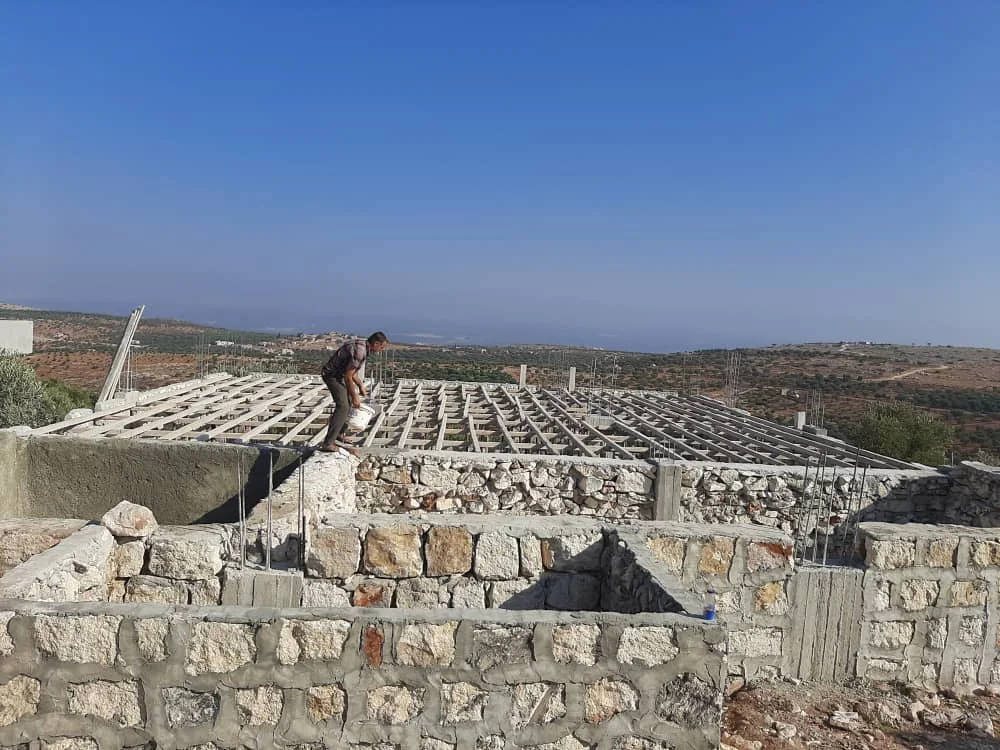
Cut stones waiting in front of the building.
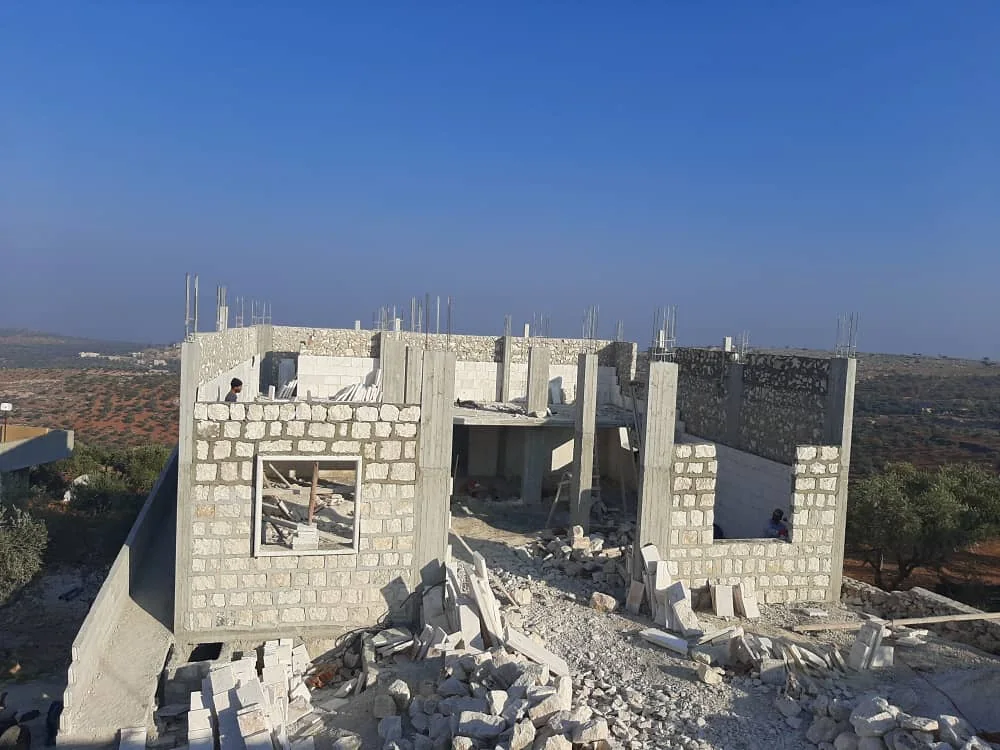
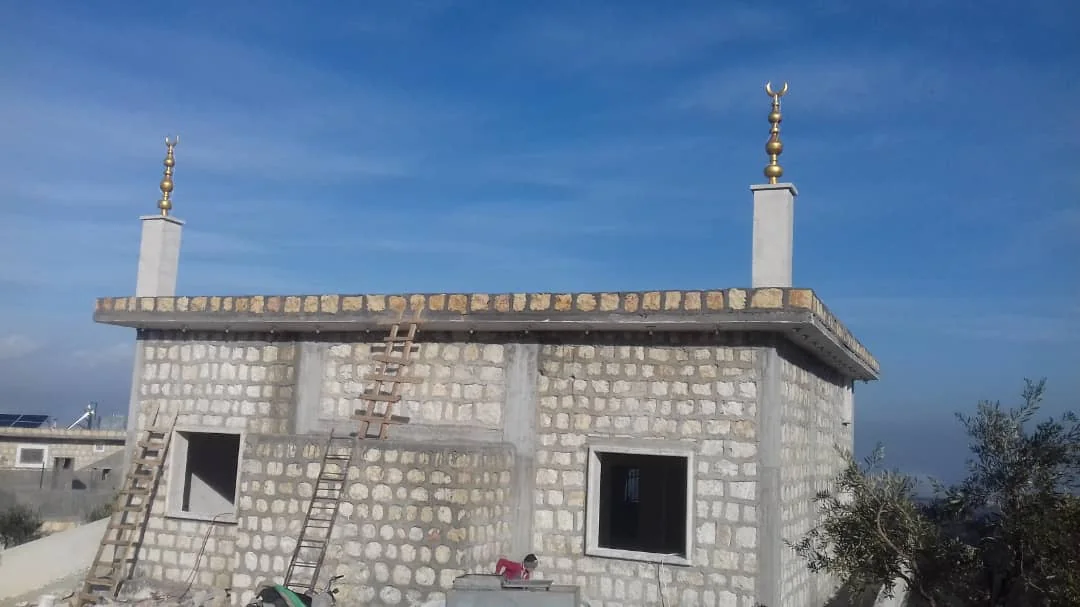
Walls and window openings.
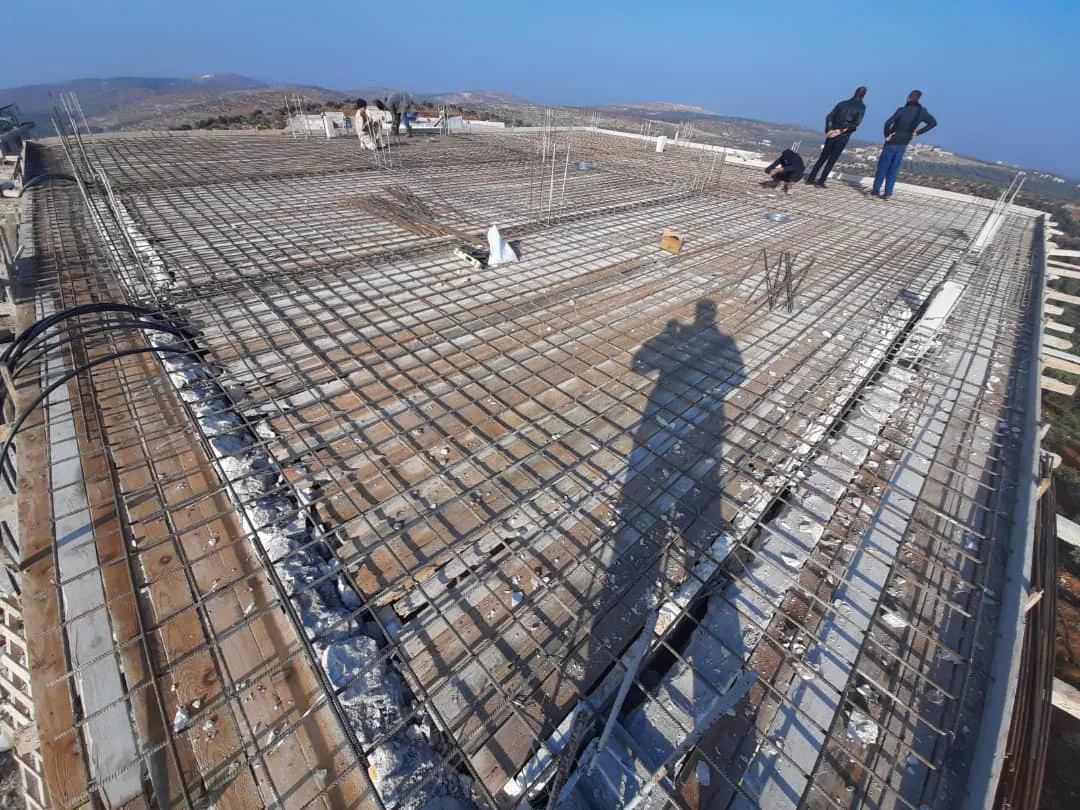
The reinforcement for the ceiling is laid.
The ceiling blocks go in.
The shell is up.
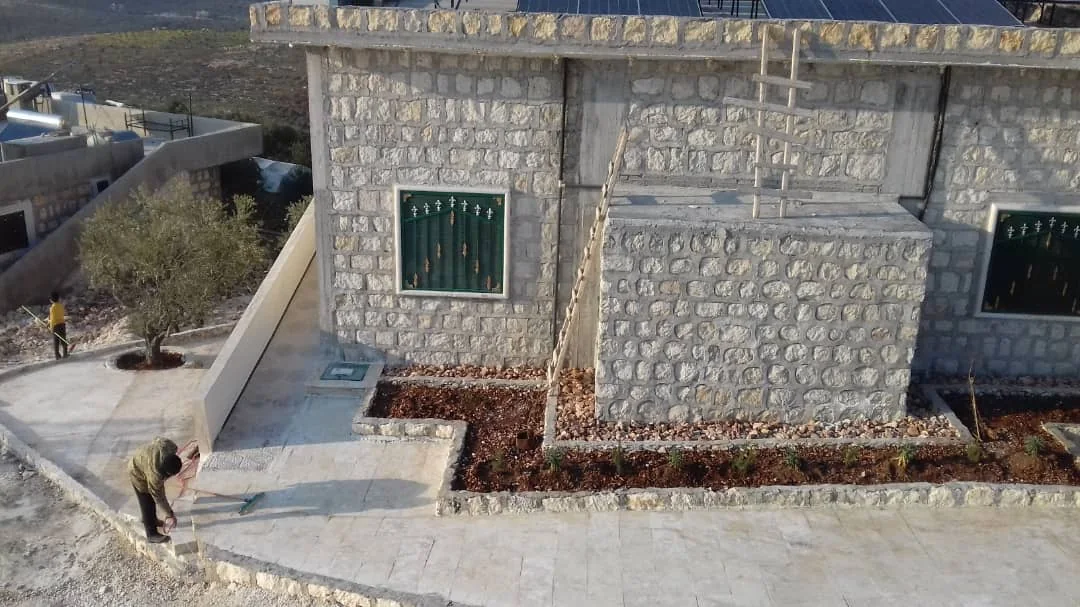
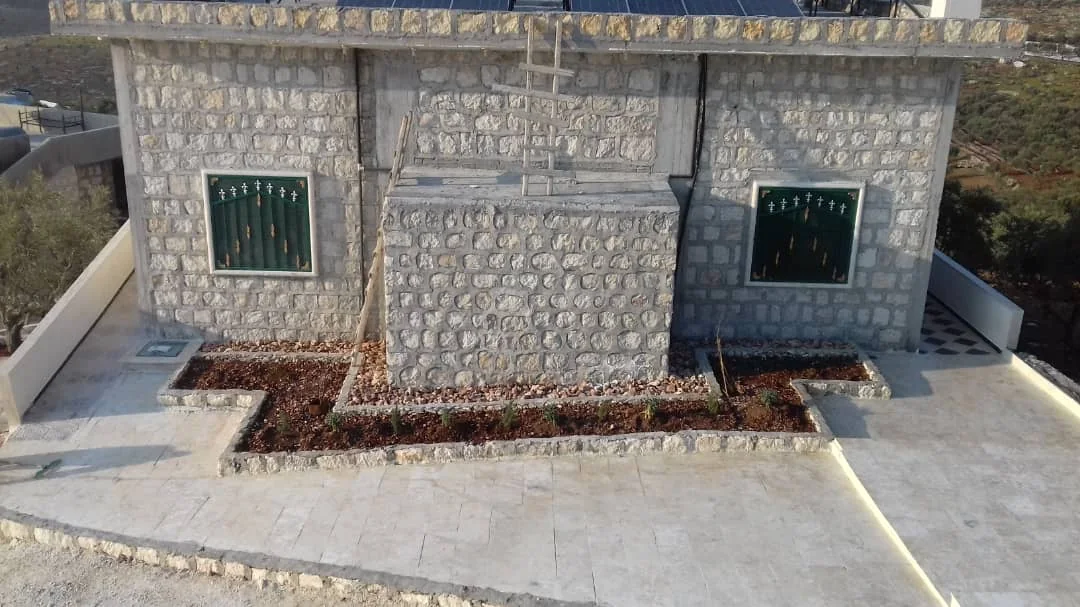
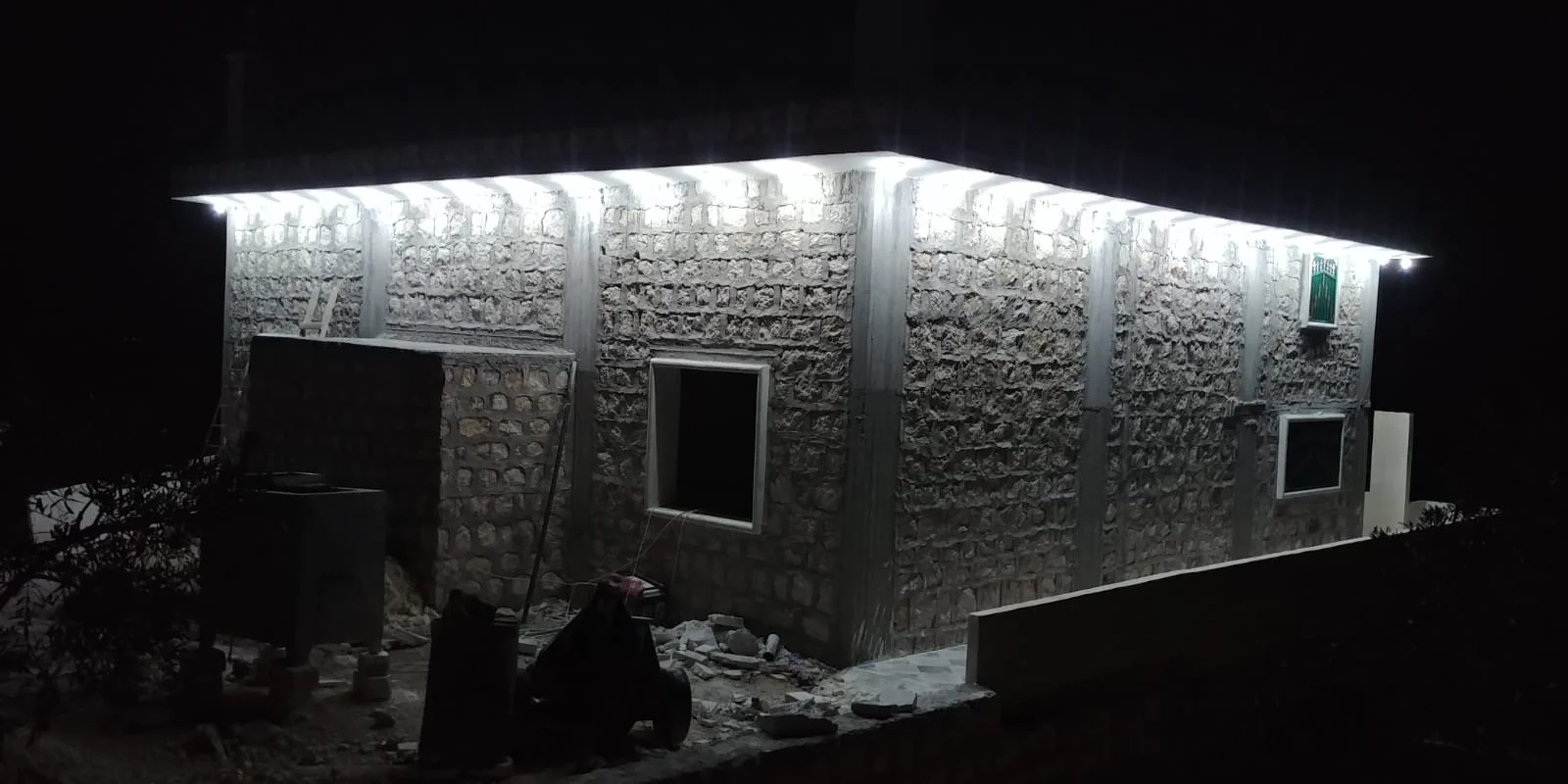
The natural-stone façade with its green window grilles.
The same side, the beds now planted.
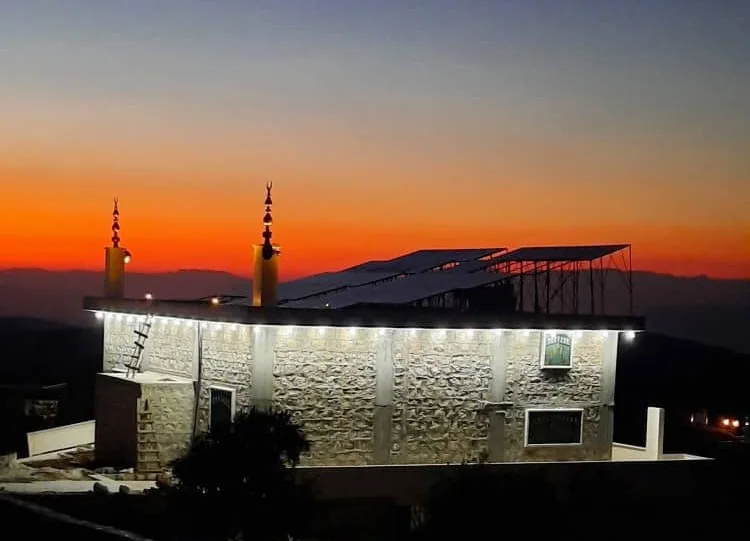
Both minarets, seen from the road.
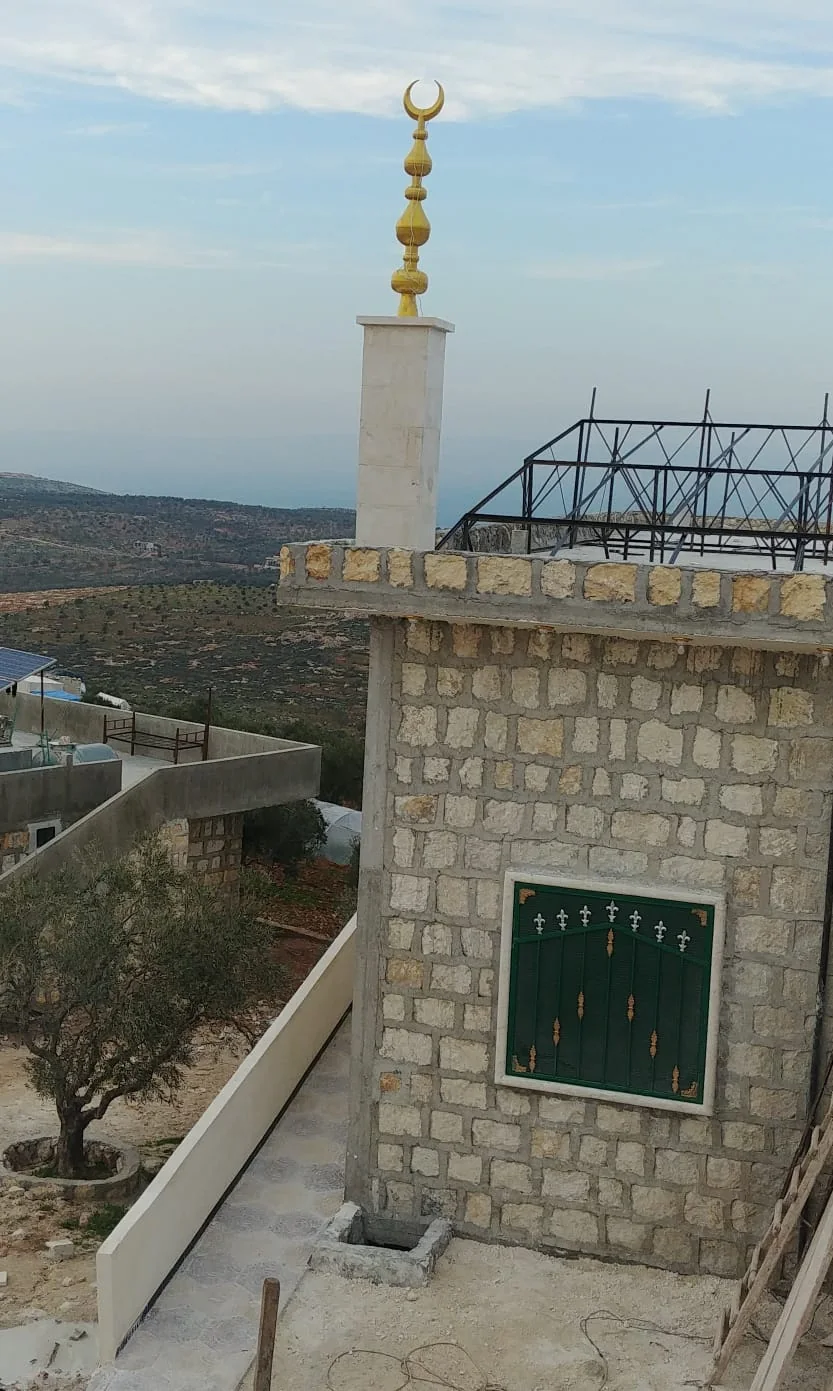
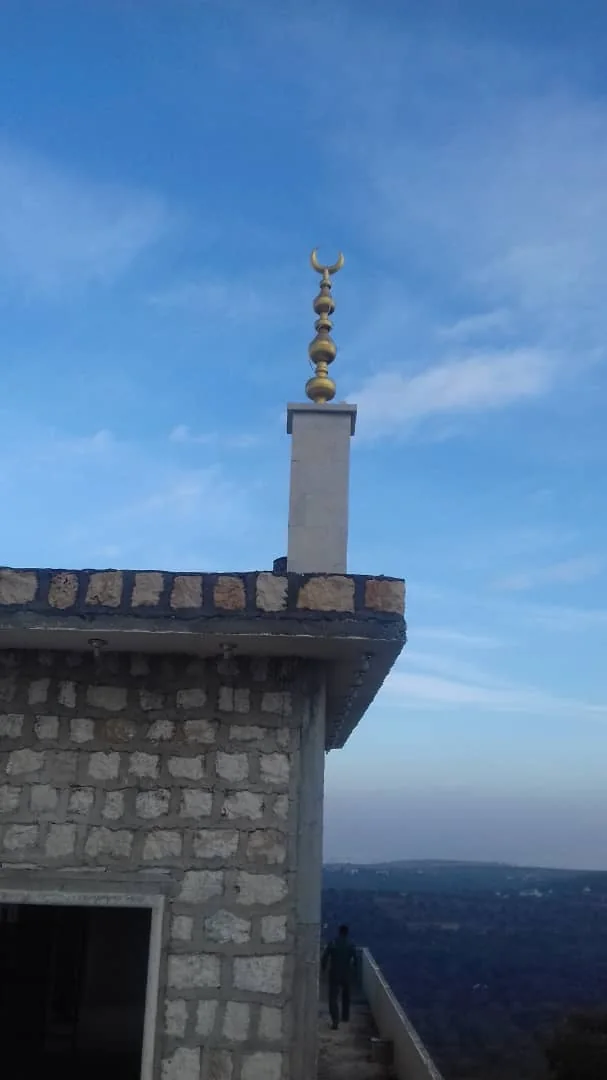
One minaret at full height.
The tip with its crescent.
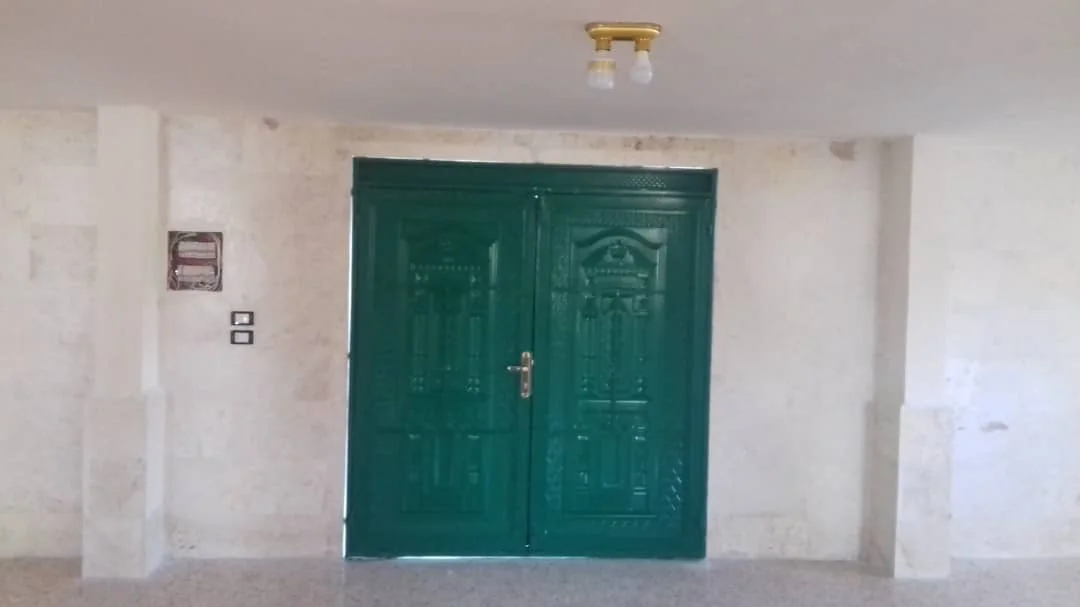
The green entrance door.
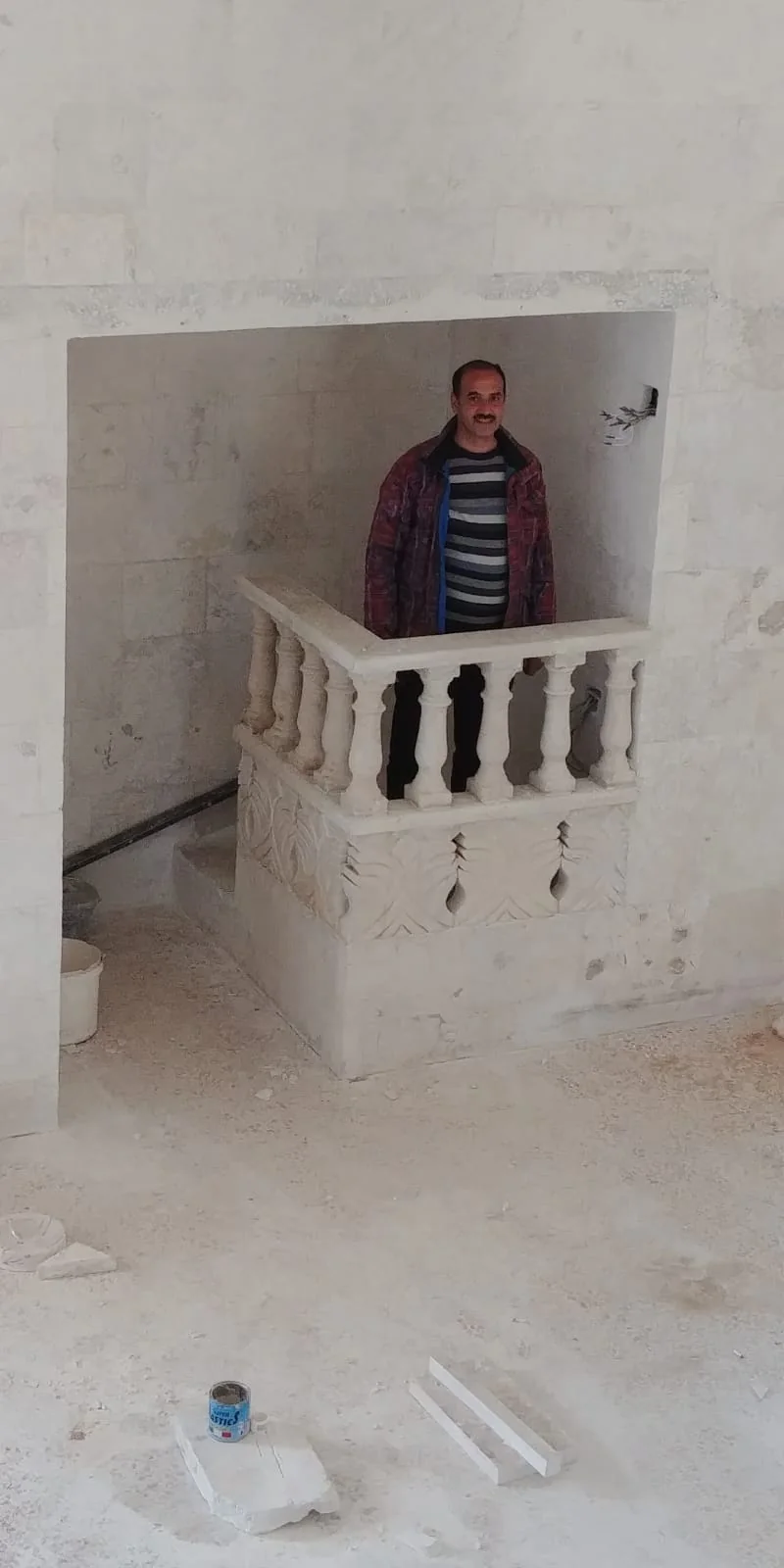
Adnan Wahhoud at the pulpit.
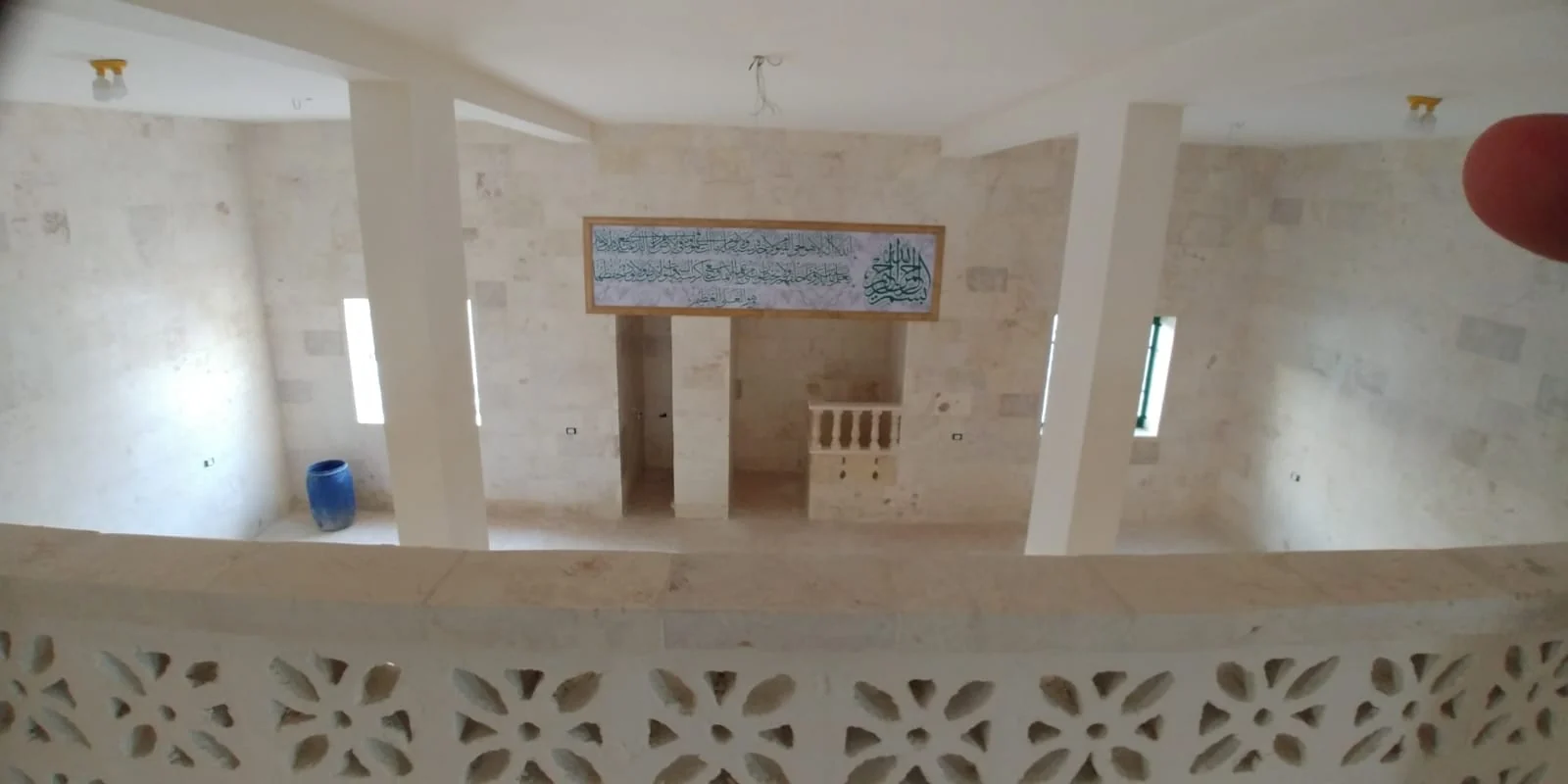
Inside: the prayer niche and the calligraphy panel above it.
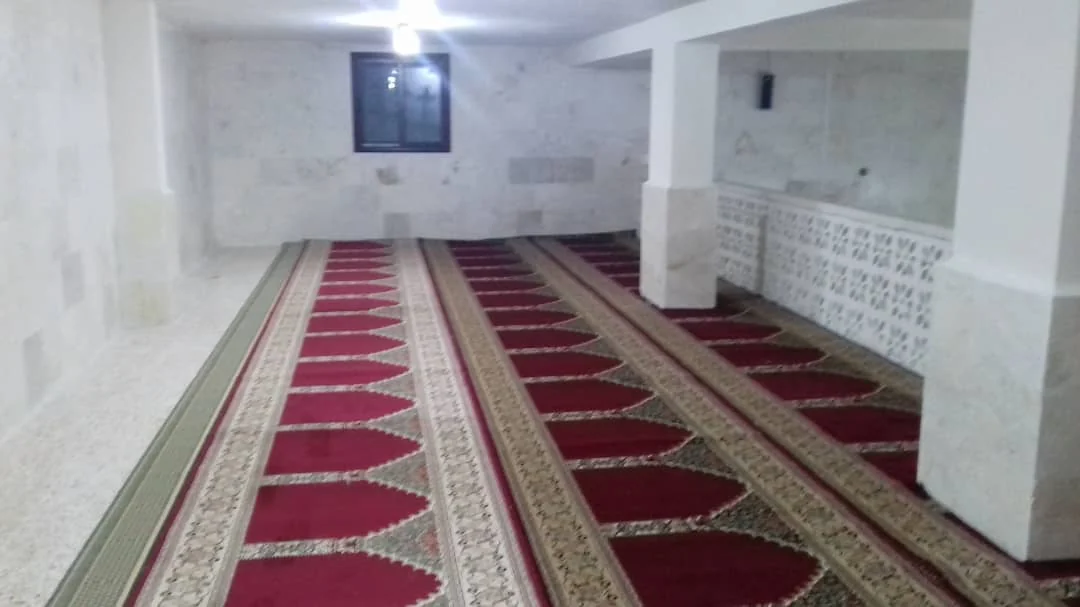
The prayer hall with the carpets laid out.
Evening, the lighting is on.
Dusk over both minarets.
The settlement from the air
The settlement on the slope, olive groves behind.
Straight from above: flat roofs and solar panels.
The lanes, paved with natural stone.
The approach road into the village.
The upper part of the settlement, seen at an angle.
The whole village, from high above.
Toubat from the drone
At the Toubat village signAdnan Wahhoud at the village sign; the drone rises and opens the view over the settlement.The whole settlementToubat from high above, circled once: the white houses in their grid, olive groves and ploughed fields all around.From far to nearStraight above the village, slowly descending: the paved lanes, the solar panels on every roof, the square at the centre.Across the village, from the playground to high aboveThe longest flight: first low over the houses, then across the playground with its swing and slide, finally straight up above the whole settlement.Over the rooftopsLow over the individual houses: water tanks, solar panels, laundry on the roofs, people on the square below.Among the housesObliquely over the rows of houses: balconies, gardens between the walls, a shop by the road.The playgroundVery low over the children on the square, then the drone climbs and opens the view over the settlement.At the edge of the villageWhere the houses end: olive groves in rows, the track leading out, a herd upon it.The settlement from aboveStraight above Toubat: flat roofs, solar panels, the paved lanes.The village mosqueLow over the prayer and community room: bougainvillea in bloom, children in front.
Humanitarian projects
Other projects have grown from the medical work — soup kitchens, training workshops, reconstruction support. What the travel reports of recent years document is running in full strength.
Soup kitchens
Three charity kitchens
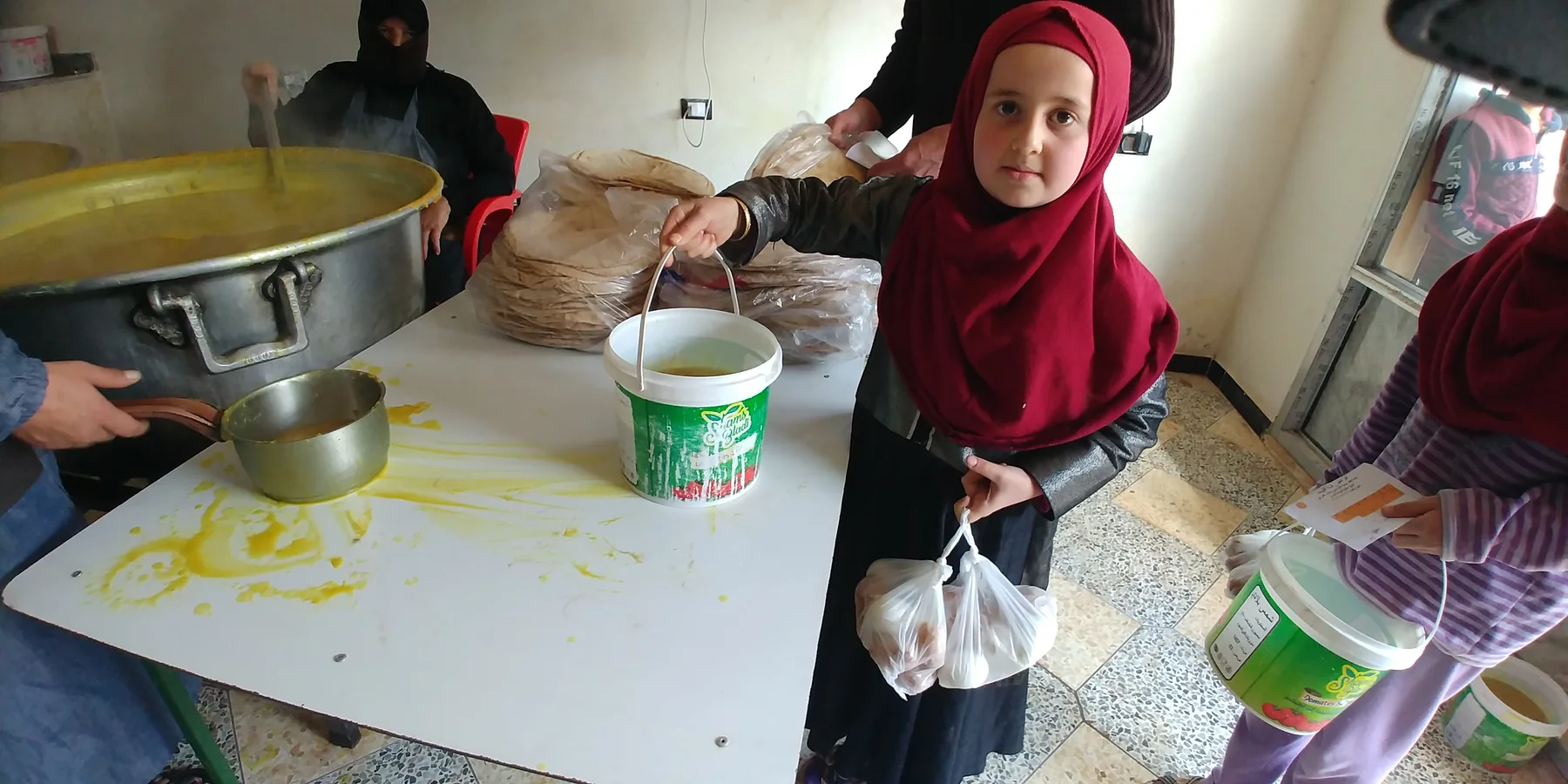
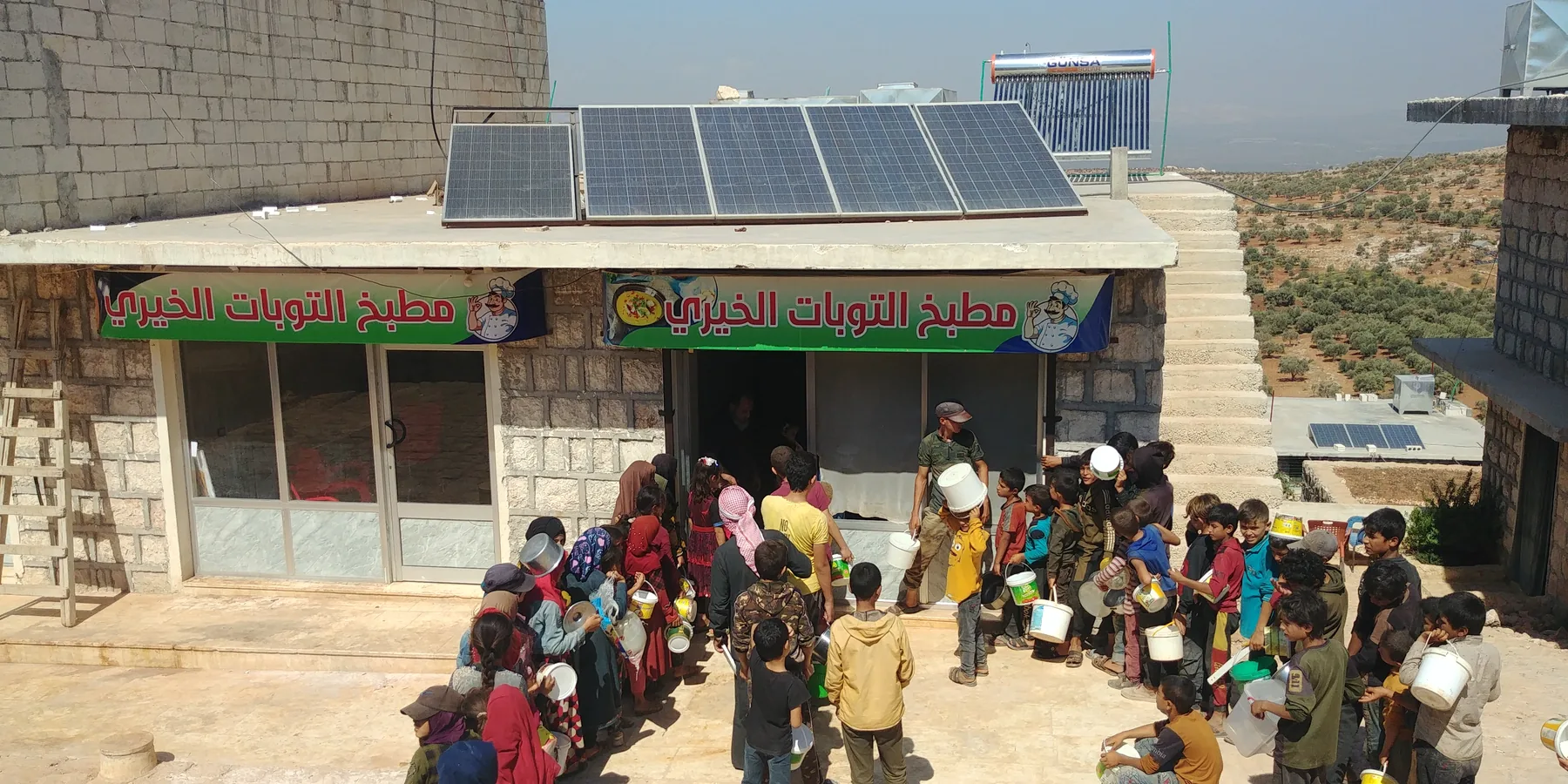
City kitchen in Idlib, village kitchen in Toubat and, since January 2025, a new kitchen in Ain Tarma near Damascus. Together they serve 2,500–3,000 meals daily to the poorest, six days a week — during Ramadan, seven. One portion (1.5 l vegetables, ½ kg potatoes, 3 boiled eggs, 3 flatbreads) costs about €1.50 in bulk purchase.
~3,000meals daily
Bakery
"Mahal Hani" in Toubat village
Solar-powered bakery, opened in 2021. Three brothers run it — their father and older brother were killed in the war in Aleppo. The wages of the boys feed the rest of the family. After the 2023 earthquake, "Mahal Hani" provided free bread to earthquake victims for weeks.
3brothers · solar & gas
Sewing workshop
Training & production
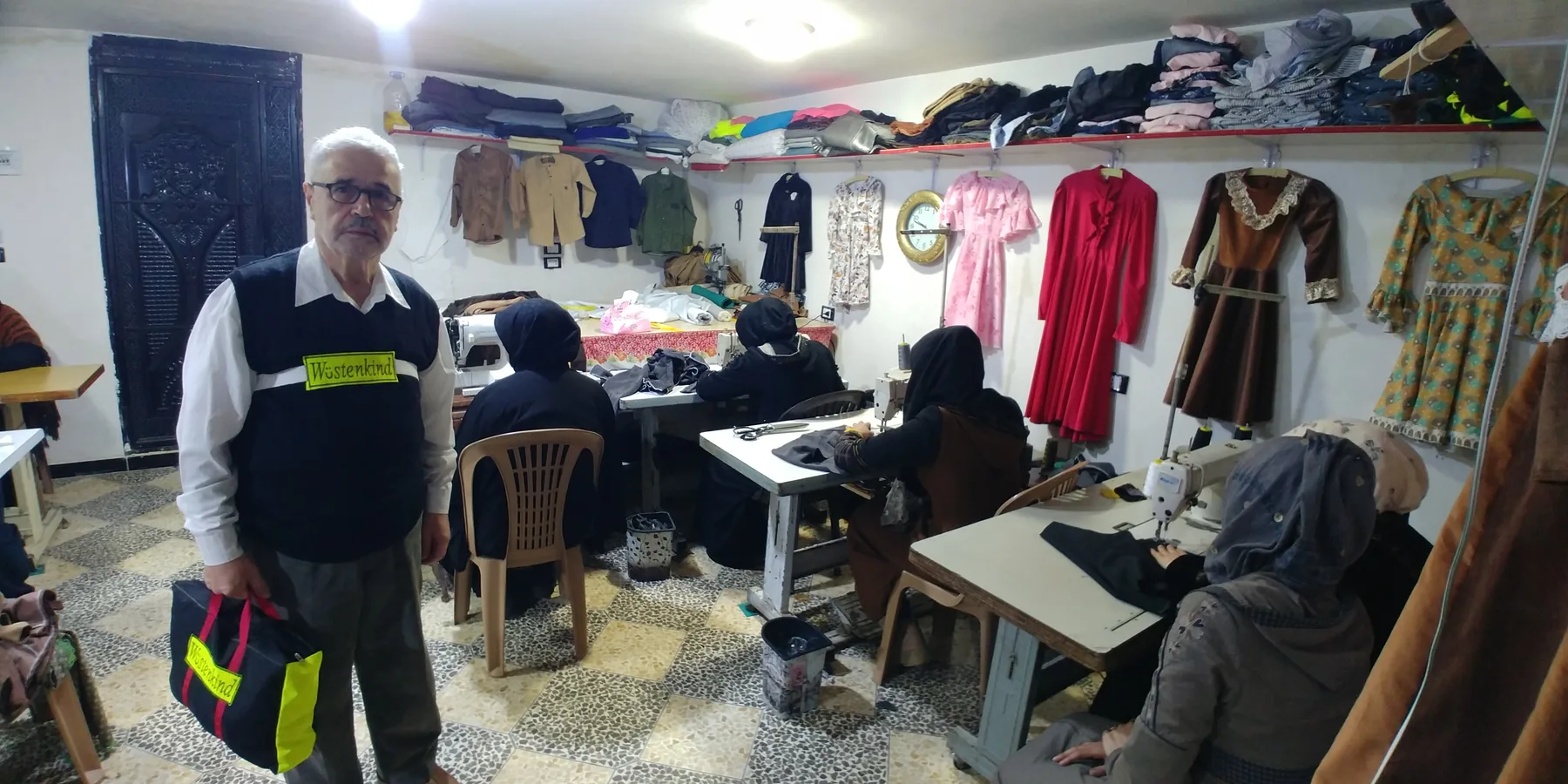
In Toubat village, six women at a time learn the tailoring craft in 6-month courses: two months of basic training, four months of production. They produce school uniforms for the Wüstenkind school, festive clothing for Eid, garments for orphans and earthquake victims.
6seamstresses per course
Vocational training
Electrical & PC training workshop
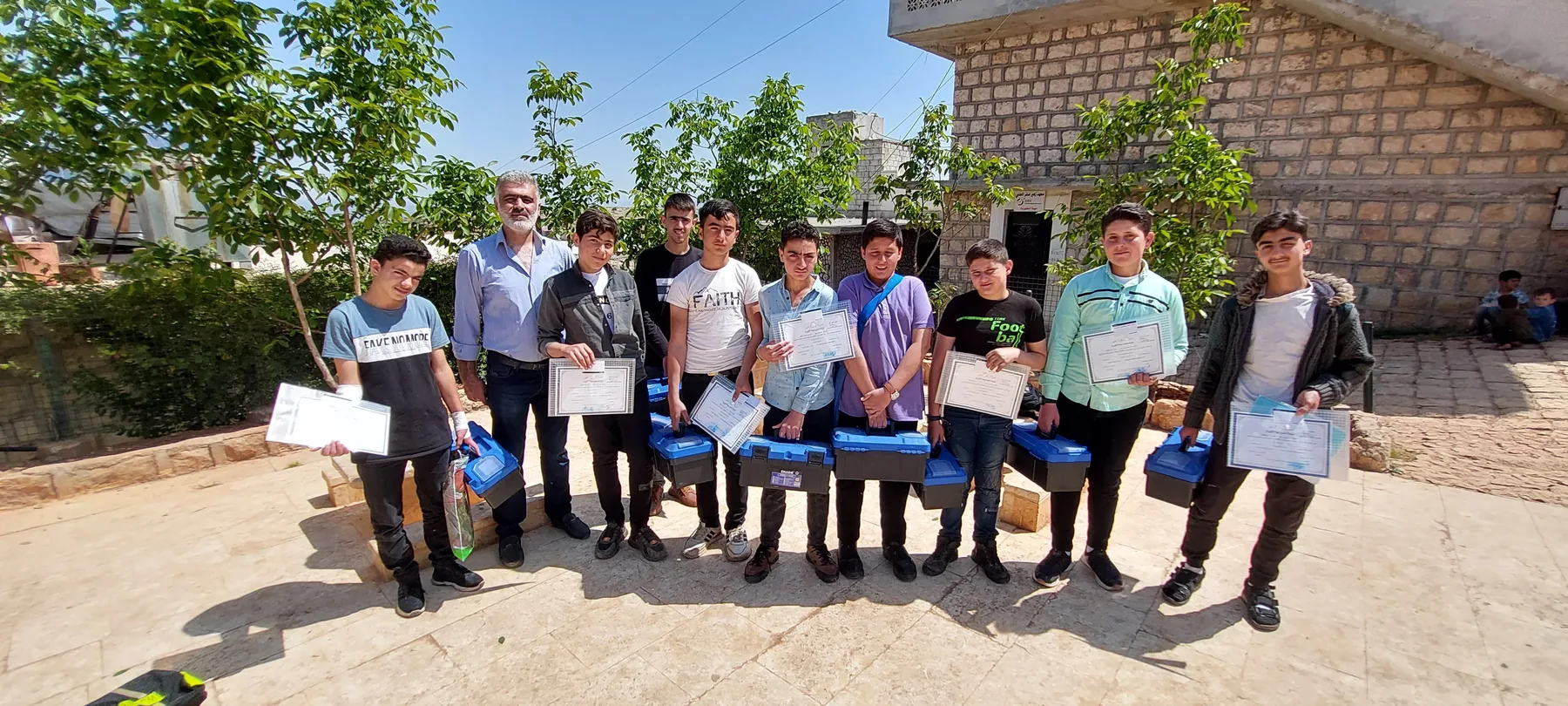
Since March 2023, an electrical engineer trains about twelve boys per year in theory and practice — funded by the German-Syrian Association (chair Safouh Labanieh). Since June 2024, a parallel PC training course for girls runs two hours daily in the afternoon.
12students per year
Reconstruction
"Roof over the head" in Ain Tarma
After the fall of the Assad regime in December 2024, many families returned to Ain Tarma near Damascus — their houses still stood, but doors and windows were missing, sanitary facilities destroyed. Over three winter months in 2025/26, 16 families were supported with 500 USD each for repairs.
16families · 500 USD each
Food aid
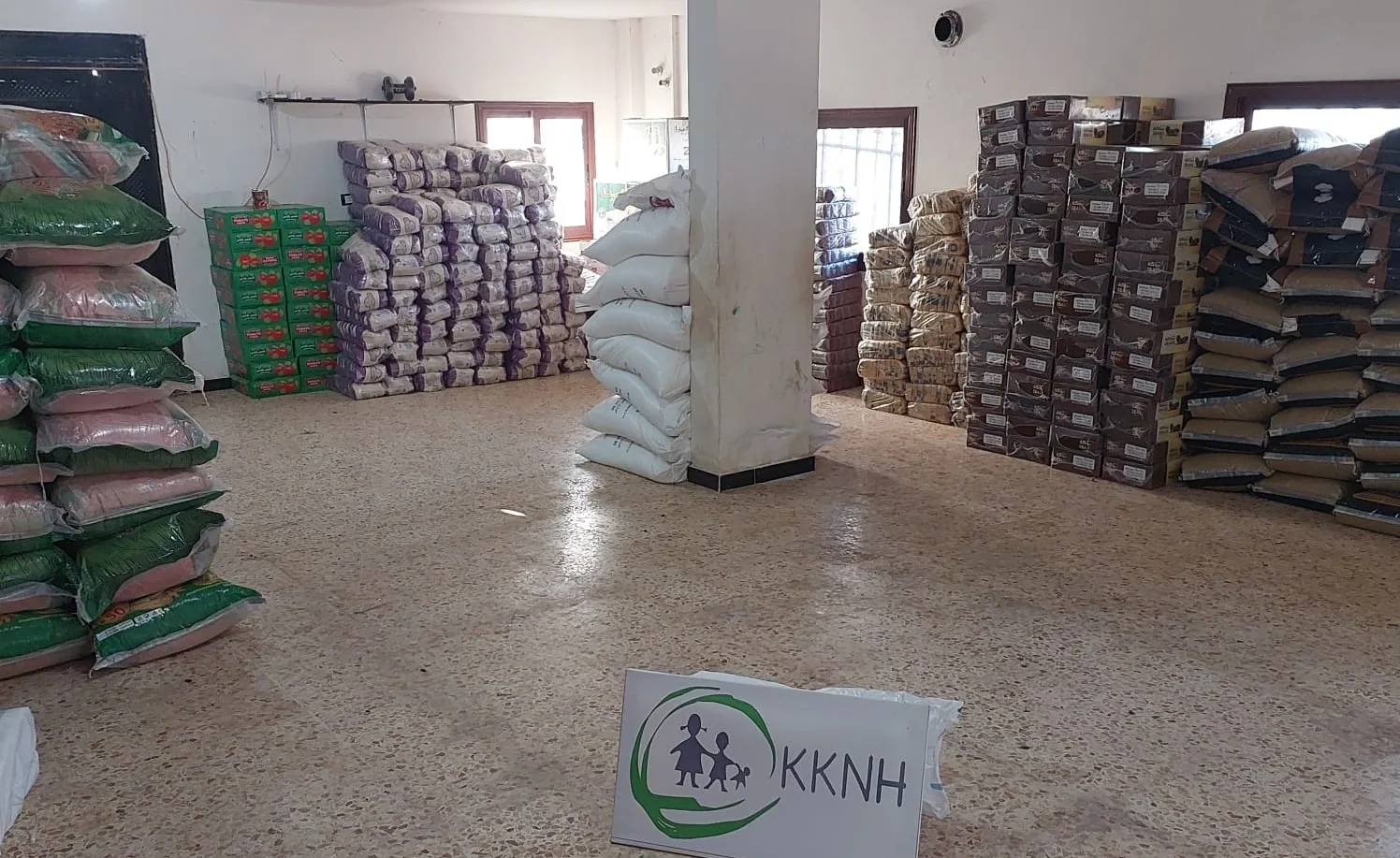
Ramadan packages for 500 families
For Ramadan, around 500–690 food packages of 24 kg each are distributed annually in the rural areas of Idlib, Aleppo and Damascus. Each package contains rice, pasta, lentils, vegetable oil, dates, tomato paste — basic supply for a family of four for three weeks. Bulk purchase cost: €30 per package.
500–690packages of 24 kg
Partners & supporters
The work is sustained by a network of private and institutional partners — from local service clubs to foundations and state funding programs.
Innerwheel Club OberschwabenWomen's Service ClubWüstenkind e.V.School & kindergarten in SalwaLindauhilfe für SyrienInitiative · citizens of Lindau and surroundingsKKNH e.V. RothWar-Children Emergency Aid · sponsoring associationPeter-Dornier-StiftungOrphan aidVIOLETSyrian partner organizationRotary & Lions ClubLindau service clubsUTT KrumbachTechnical textiles · logisticsBürgerstiftung WasserburgBenefit concertsfriedens räume Villa LindenhofPeace work & encounter · LindauLions Club AachenService Club · AachenDSV Deutsch-Syrischer Verein DresdenGerman-Syrian cooperation · Saxony
Khan Shaykhun · 6 April 2017
Two days after the chemical attack
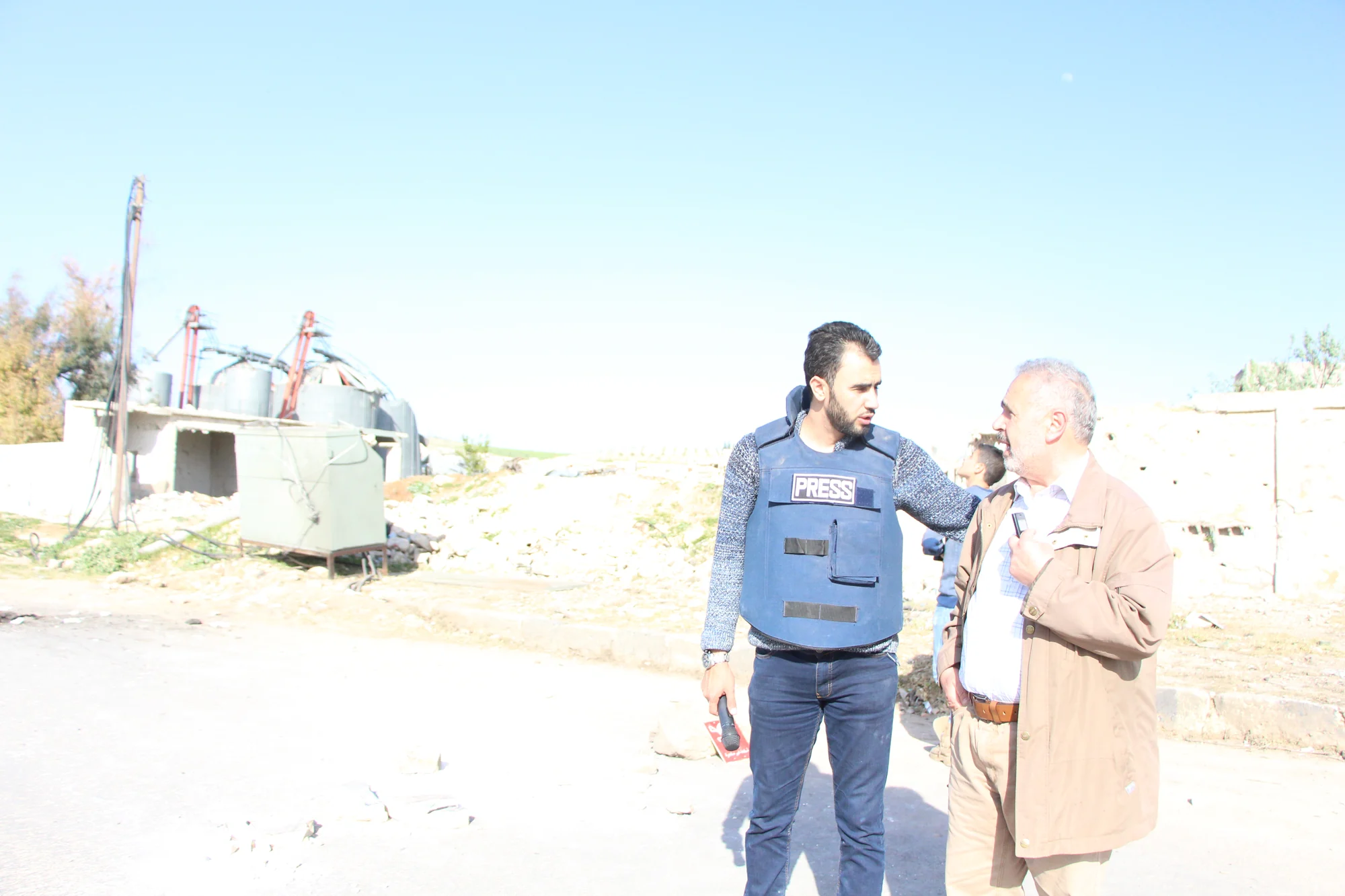
On 4 April 2017 the town of Khan Shaykhun in Idlib province was attacked with a chemical warfare agent. Two days later Adnan Wahhoud travelled there himself and photographed what he found.
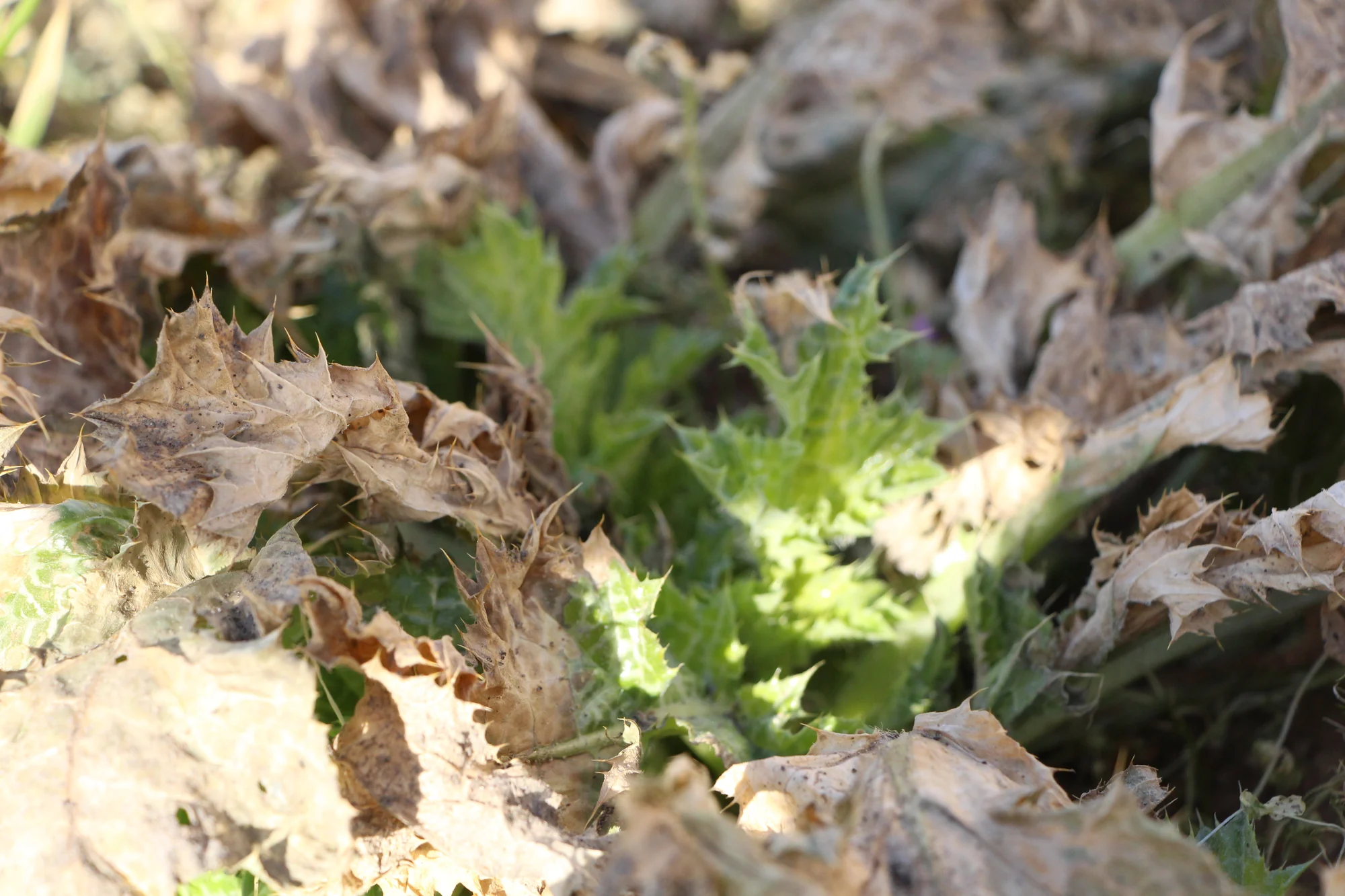
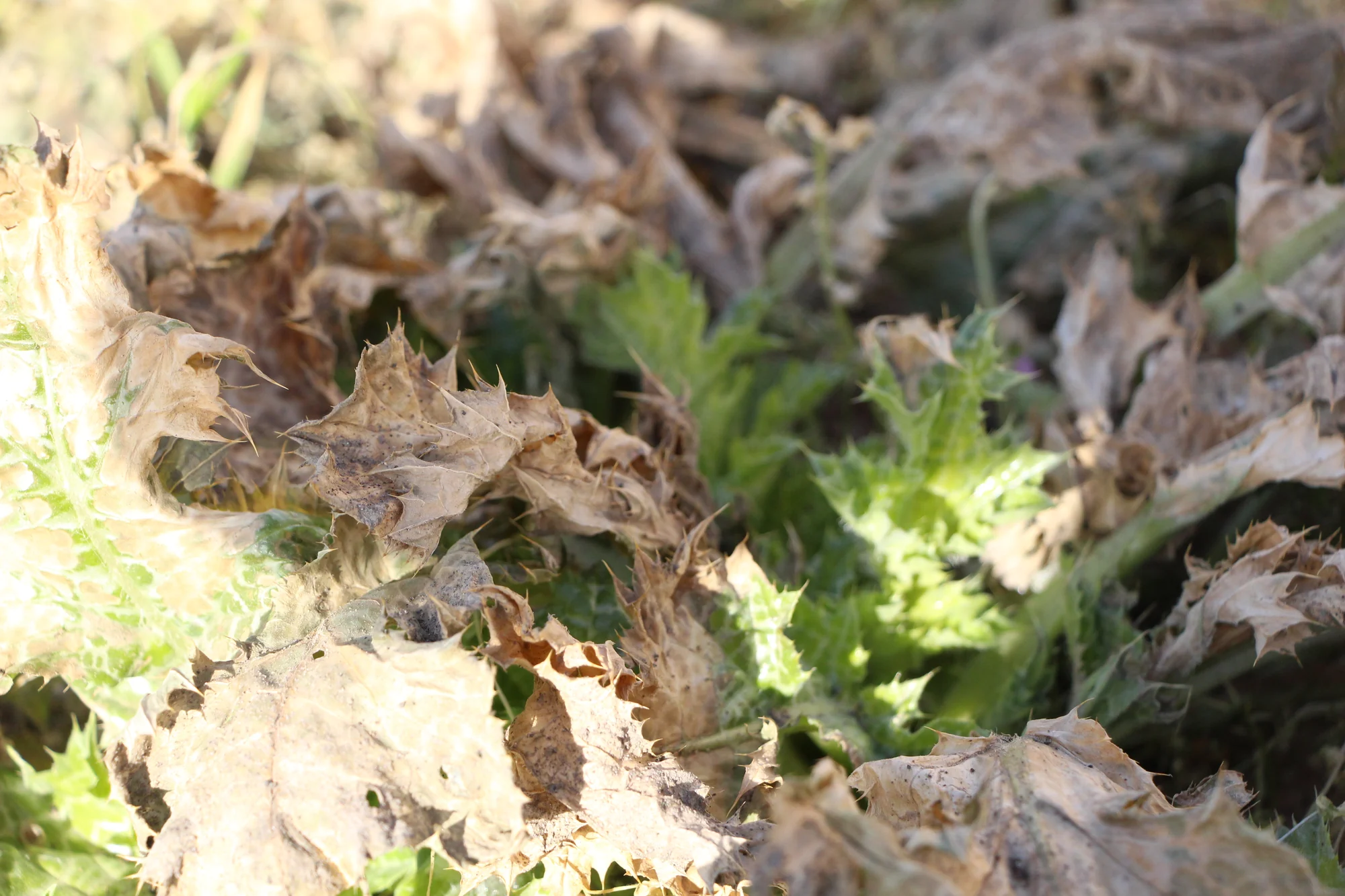
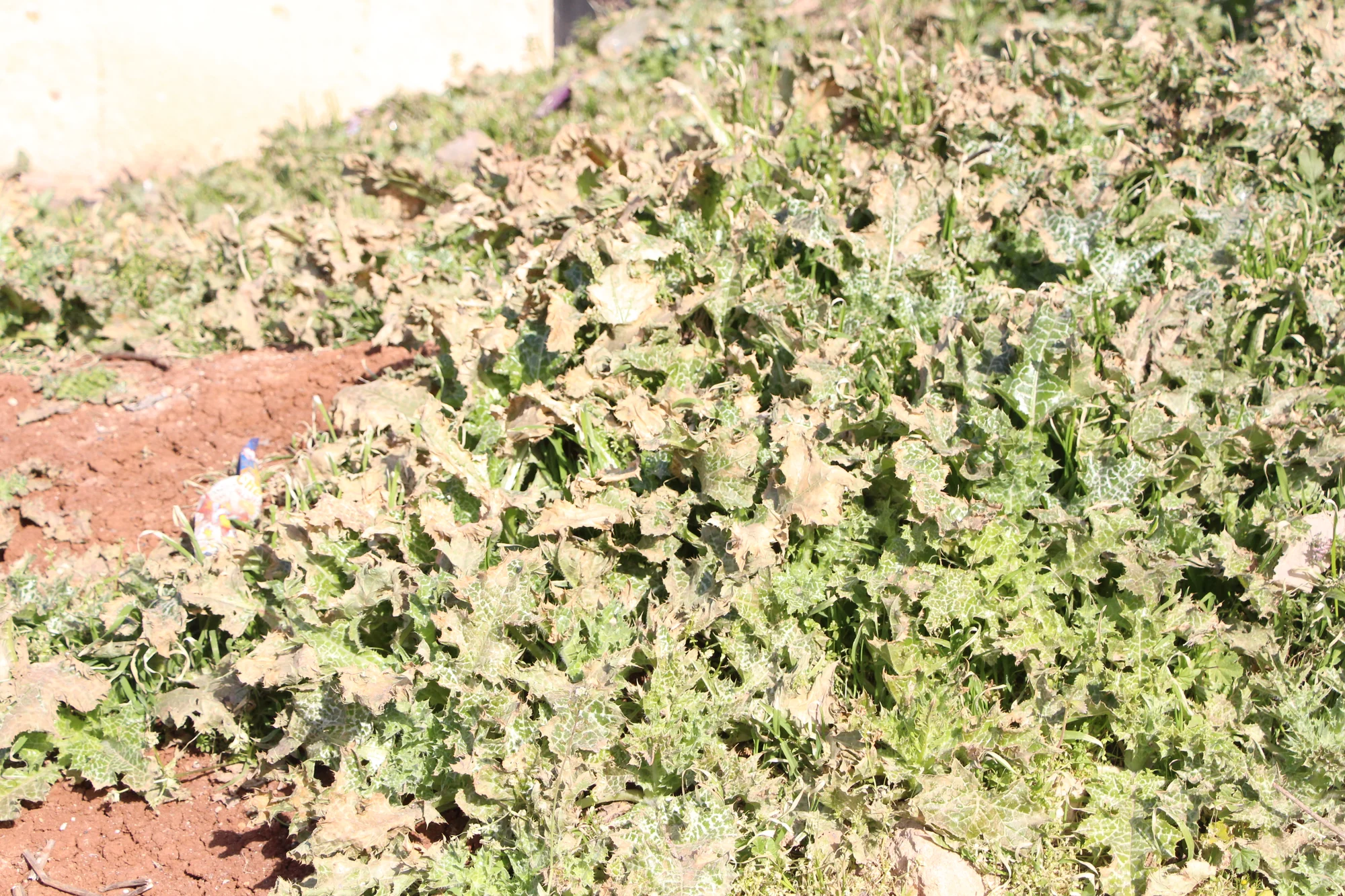
These are pictures of the place, not of its victims: the marked point of impact, the dead greenery at the roadside, the town gate.
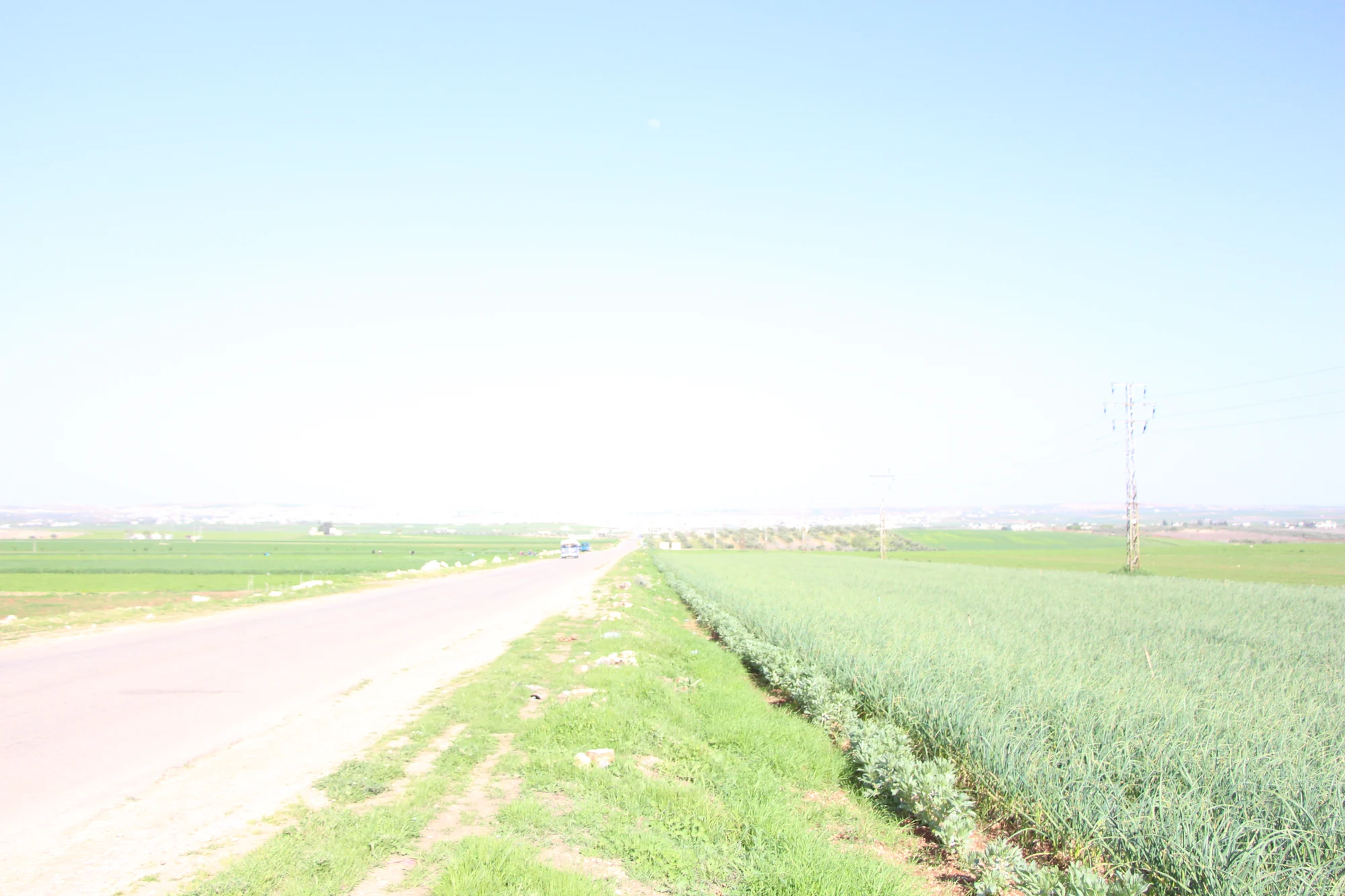
The country road towards the town. To the right, a field still standing.
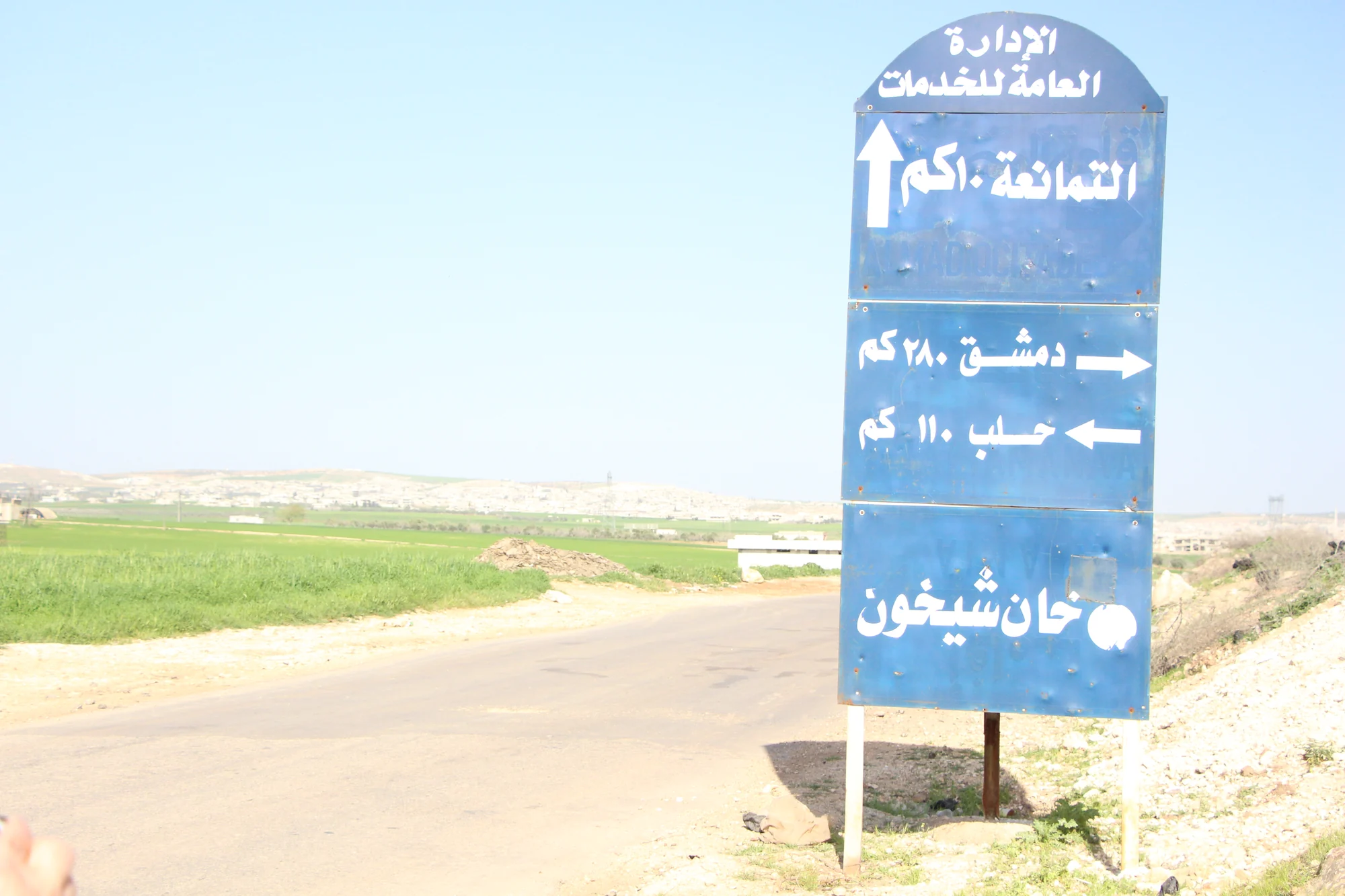
The road sign outside the town: Khan Shaykhun, 110 km to Aleppo, 280 km to Damascus.
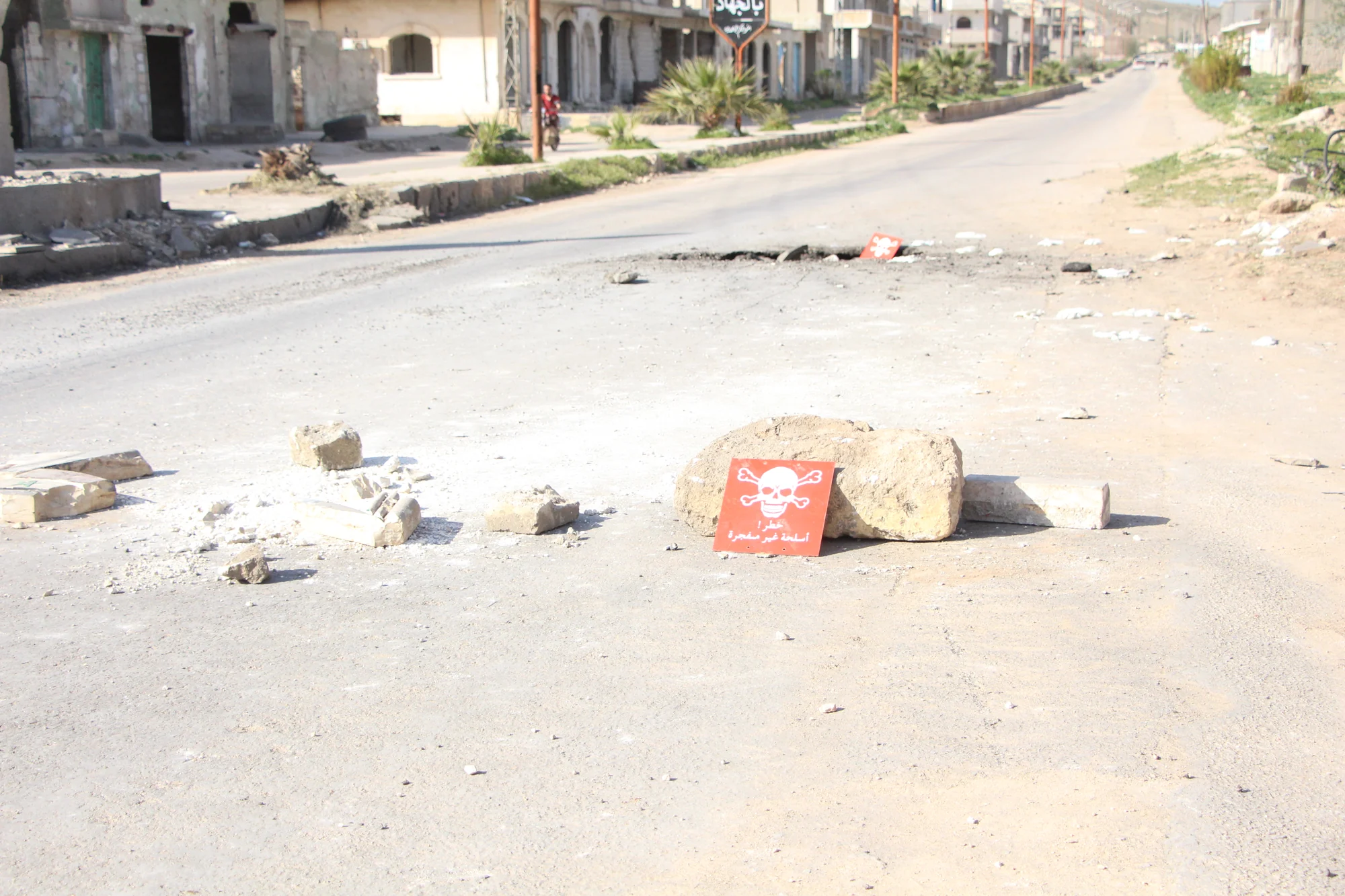
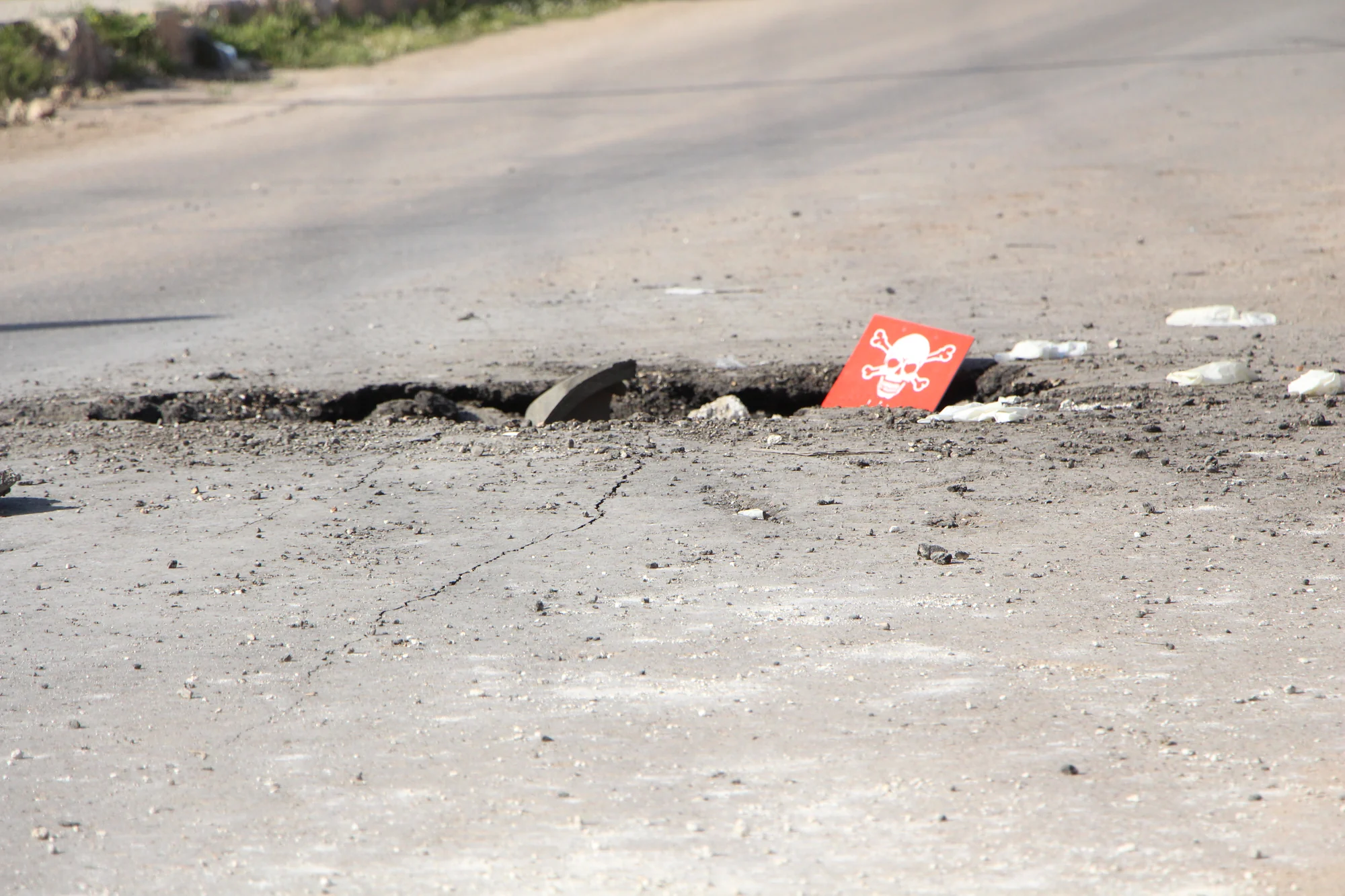
The marked point of impact in the roadway.
The same spot close up: the red warning sign with a skull symbol, right at the edge of the hole in the asphalt.
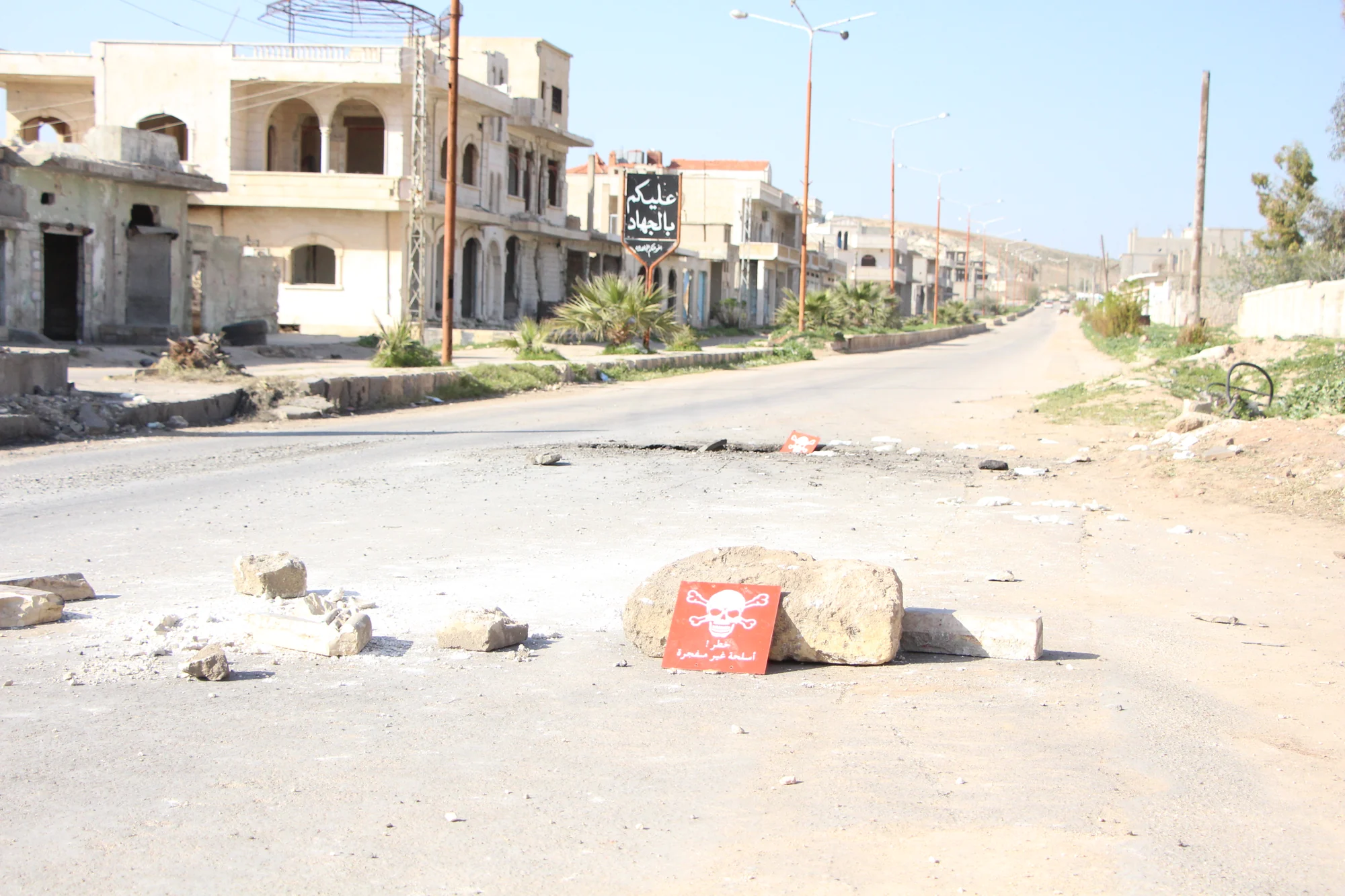
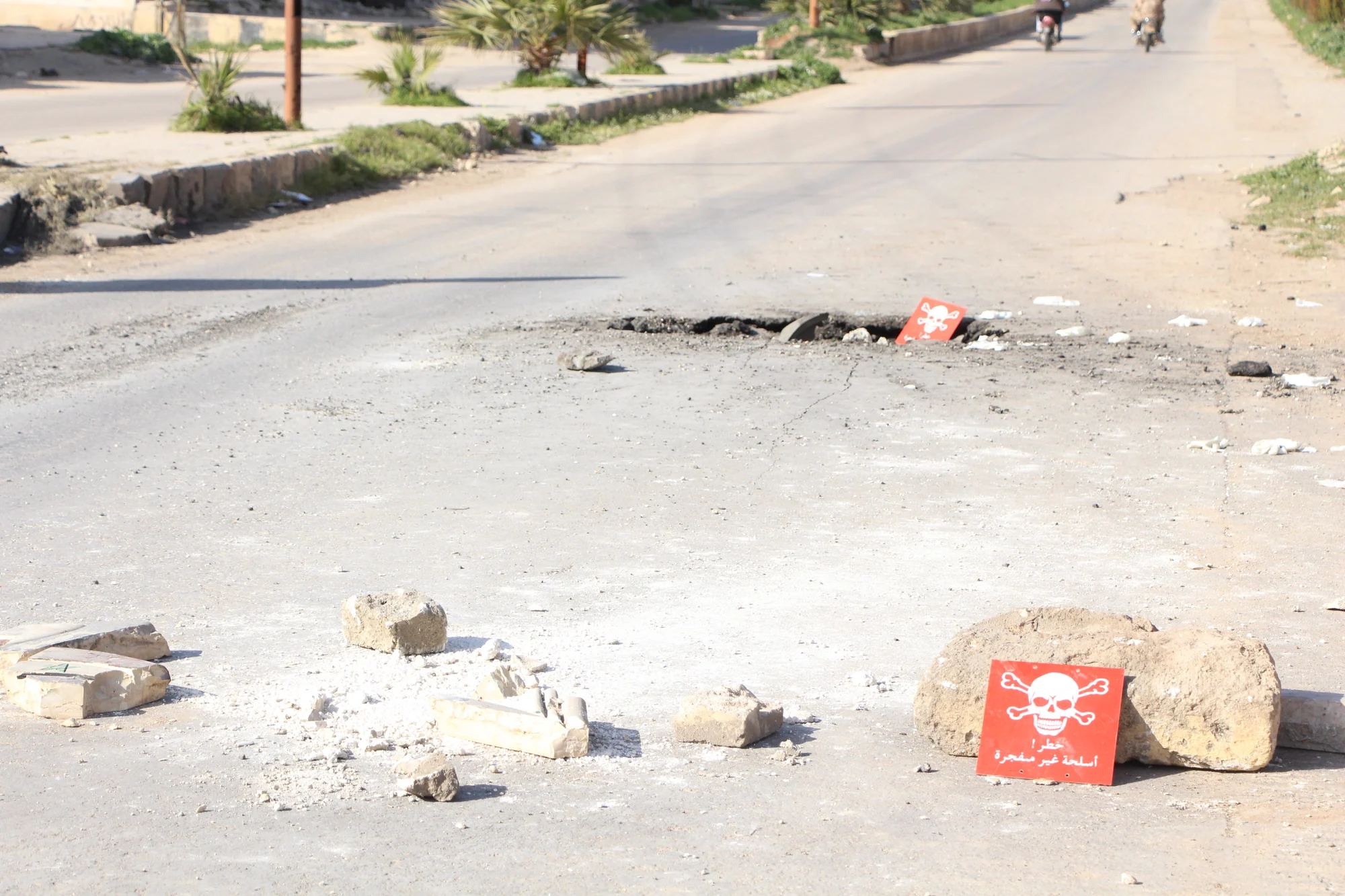
The street in the affected part of town. A red warning sign stands on the rubble in the middle of the road.
The same spot seen from the other side of the street.
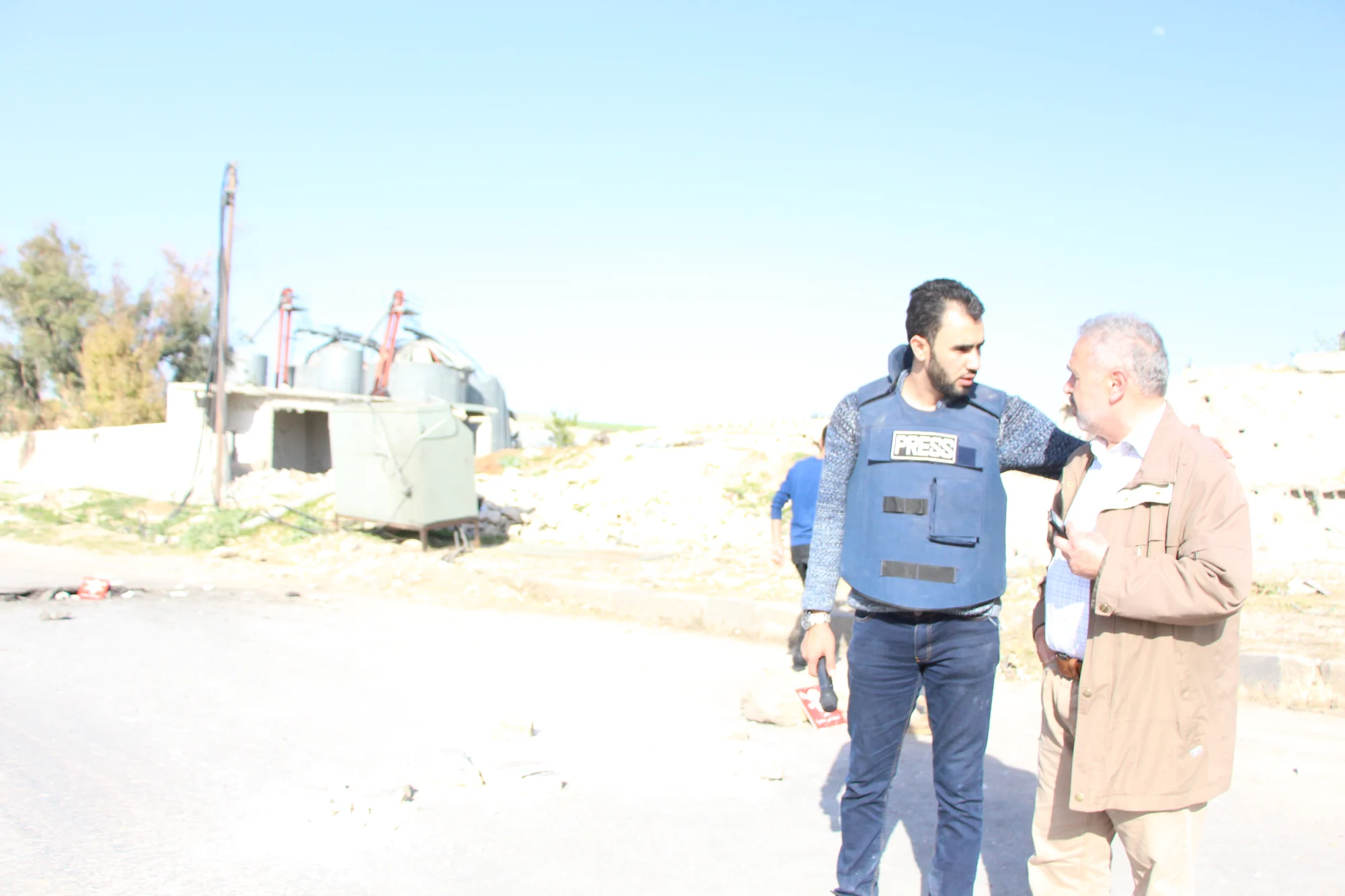
Wahhoud (right) at the site of impact, talking to a press photographer.
The same conversation from further back. The photographer wears a protective vest marked “Press”.
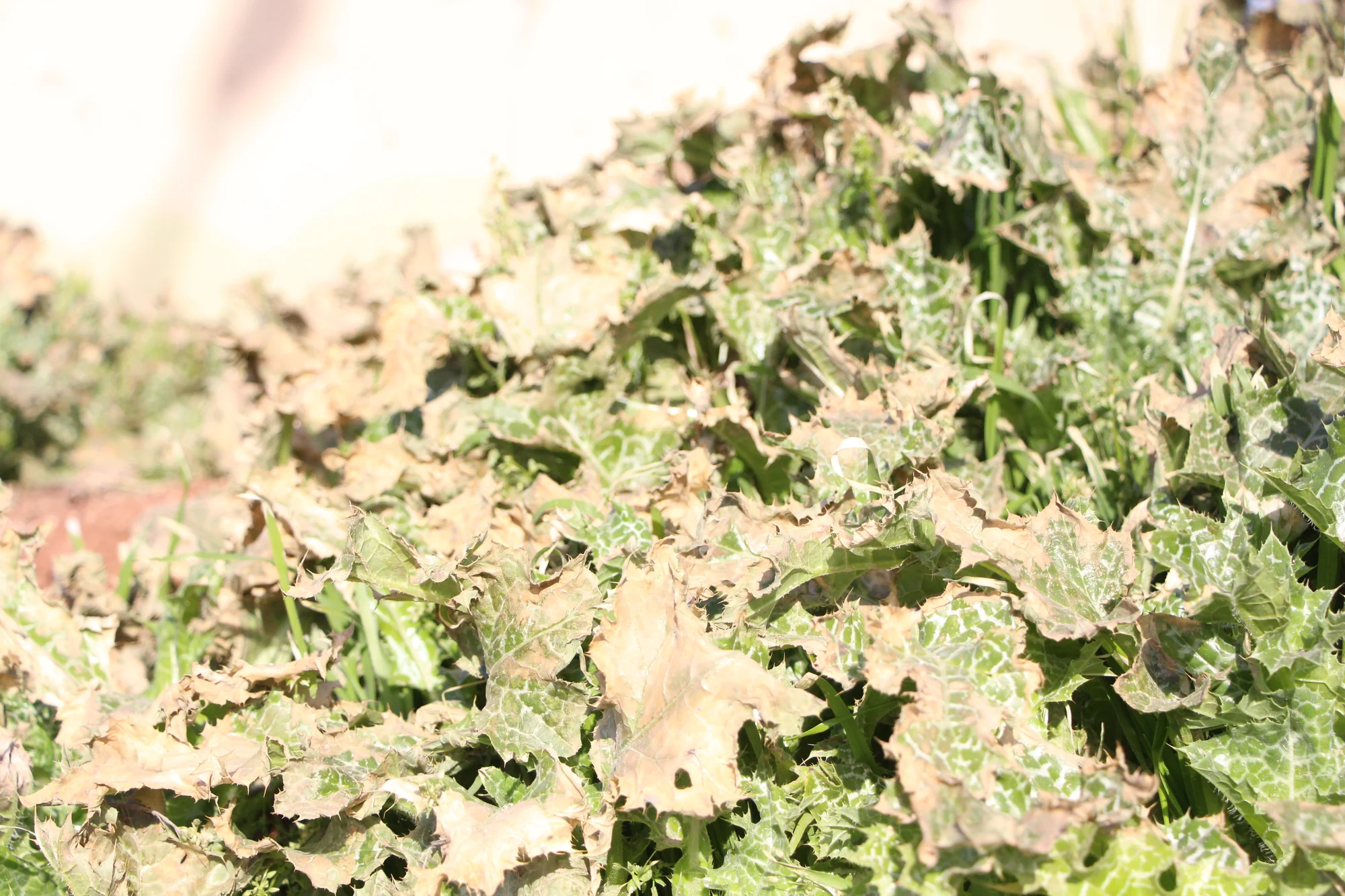
Withered foliage directly beside untouched green growth.
The same spot close up: dried-out leaves among undamaged ones.
An entire field margin at the edge of town, leaf by leaf dried out.
Further along the same field margin, the same mix of withered and green.
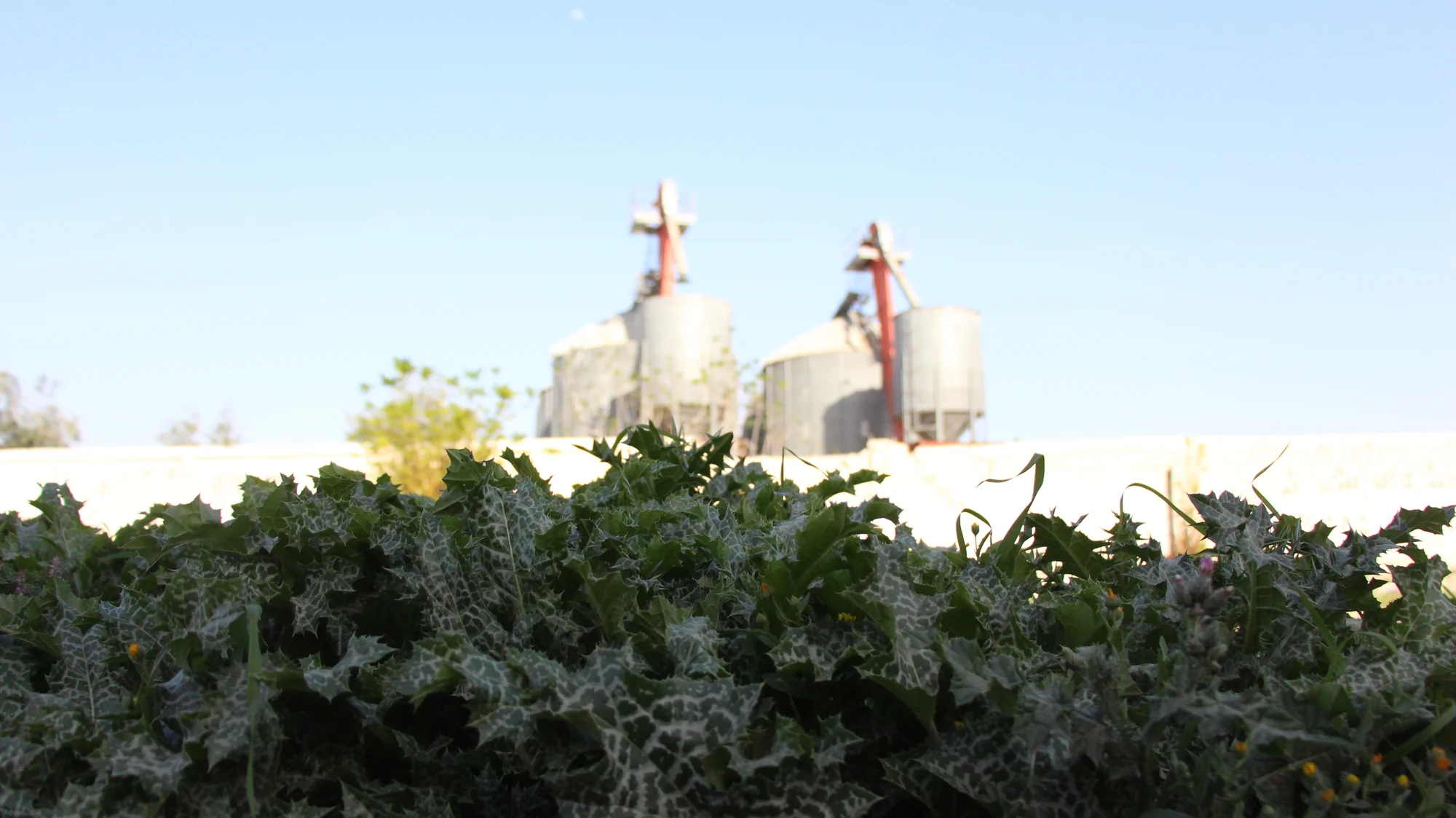
Thistles at the edge of town, behind them the silos of Khan Shaykhun.
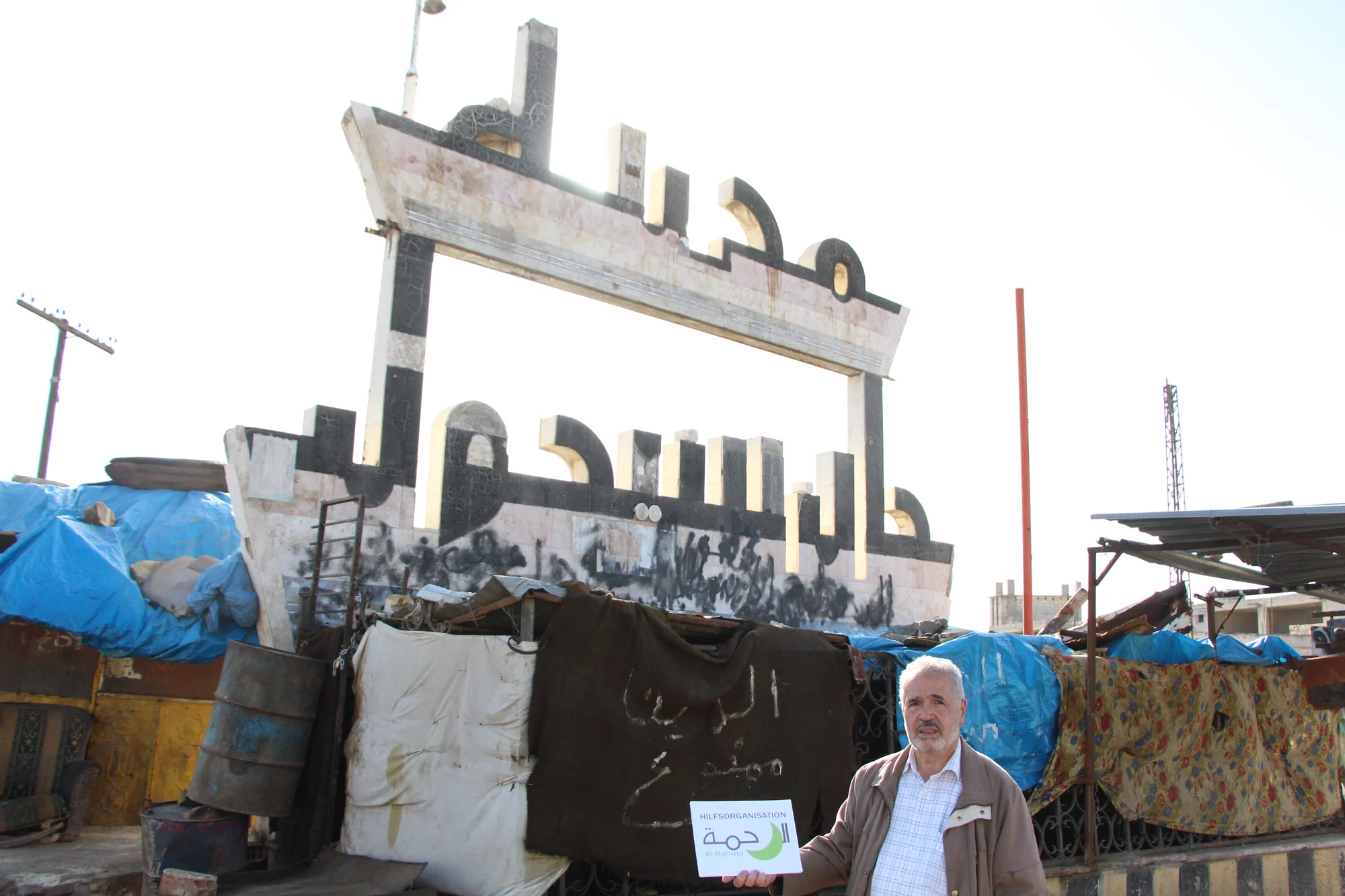
At the town gate of Khan Shaykhun, holding the sign of the Al-Rahma relief organisation.
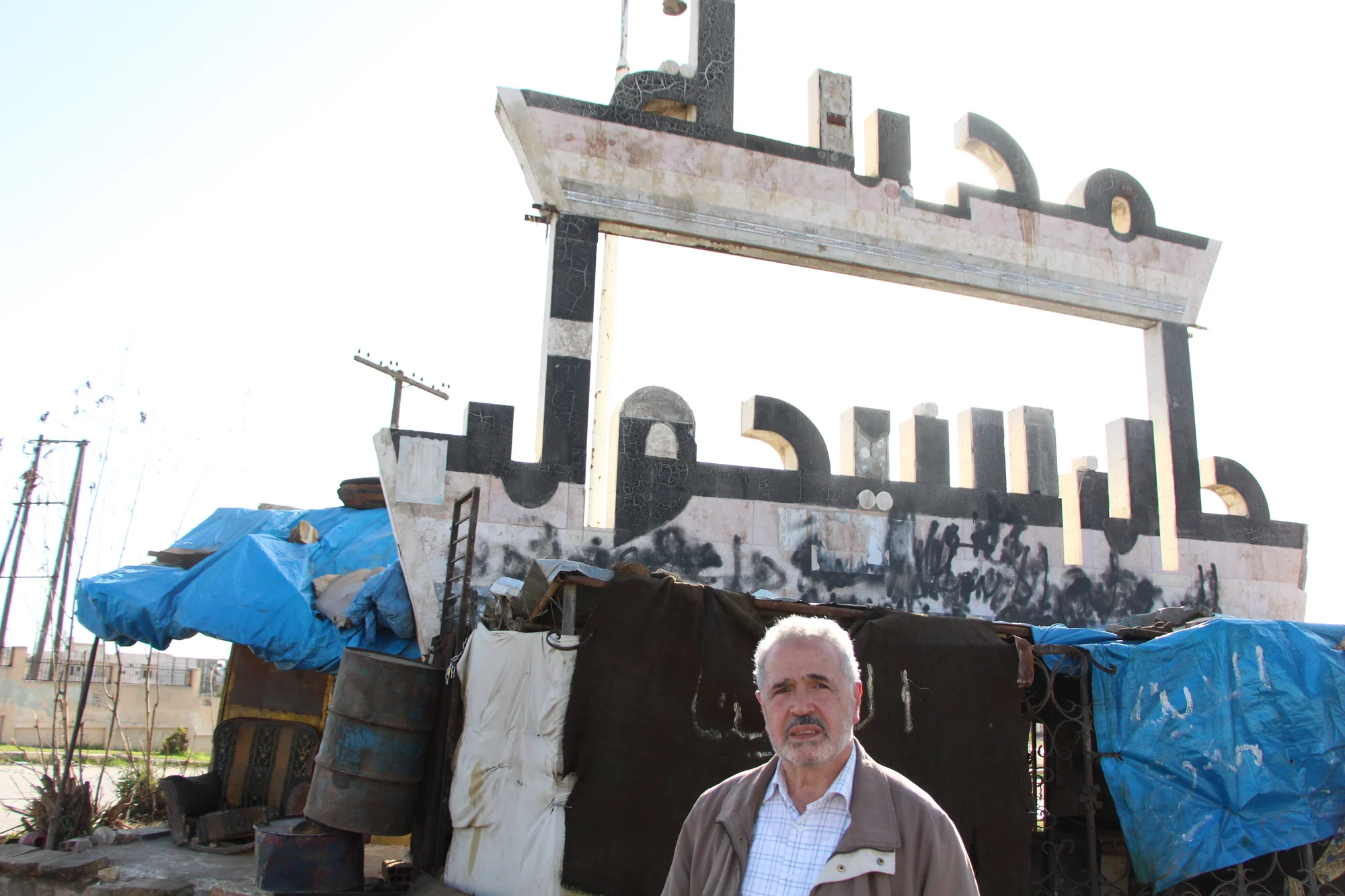
The town gate seen from the front, with market stalls under blue tarpaulins.
The marked point of impact in the roadway
The film footage of the same day
The footage has sound and therefore starts only on click, never by itself.
The approachAcross country to Khan Shaykhun, past green fields.Outside the townThe fields just before the town, from the moving car.The road signKhan Shaykhun, 110 km to Aleppo, 280 km to Damascus.At the town entrancePast the town sign, between olive trees.Through the affected quarterThe main street, destroyed houses left and right, no people.The point of impactThe marked spot in the roadway, with the red warning sign.At the edge of townA destroyed plant with silos, rubble up to the road.The way backOut of the town, back along the same road.
Support now
Every Euro heals.
The Medical Points are funded exclusively by private donations. There is no administrative apparatus — every Euro goes directly to people in need.
For questions on use, please reach out by e-mail at .
Recipient
Kriegskindernothilfe e.V.
IBAN
DE69 7735 0110 0038 0975 23
BIC
BYLADEM1SBT
Reference
Spende Lindauhilfe
Tax receipt issued on request — please add your full address in the reference field.